


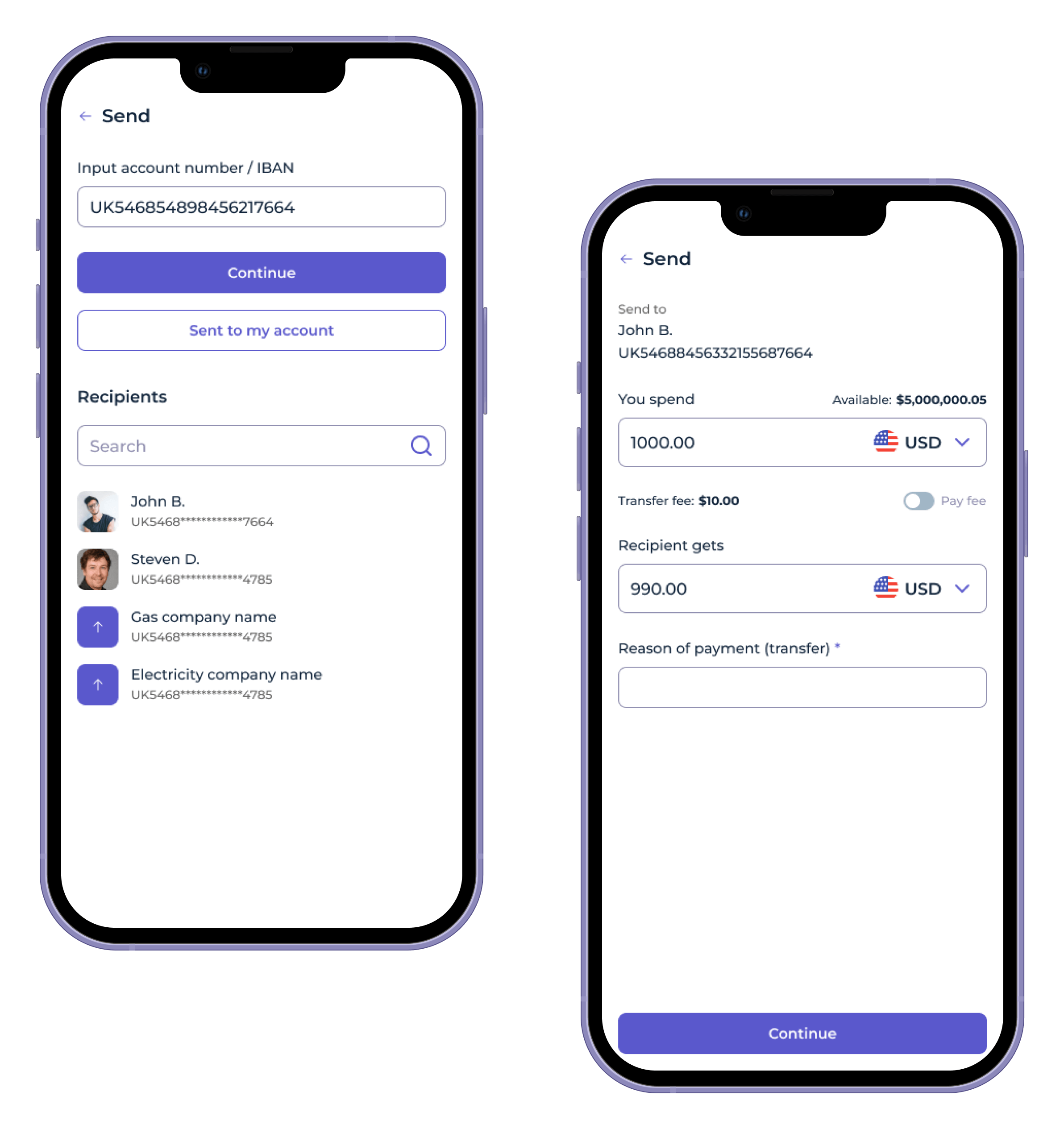
Sending money abroad used to mean a fee you could not see, a delay you could not predict, and an amount at the other end you could not confirm in advance. Wise addressed all three by showing the exchange rate, transfer fee and expected recipient amount before confirmation, while using local payment infrastructure to make many transfers faster.
That proposition scaled. In March 2026 Wise reported $243.5 billion in cross-border volume, 18.9 million active customers and $2,502.8 million in net revenue. In June 2026 its average cross-border take rate fell to 0.50% – half a cent of revenue per dollar moved.
Founders regularly ask how to build an app like Wise. This SDK.finance guide answers it in two parts: the first covers what Wise is, how it grew and how it earns money; the larger second part turns that into a money transfer app development plan – the modules such a product needs, what must be licensed or partnered rather than coded, and what drives cost and timeline.
What is Wise?
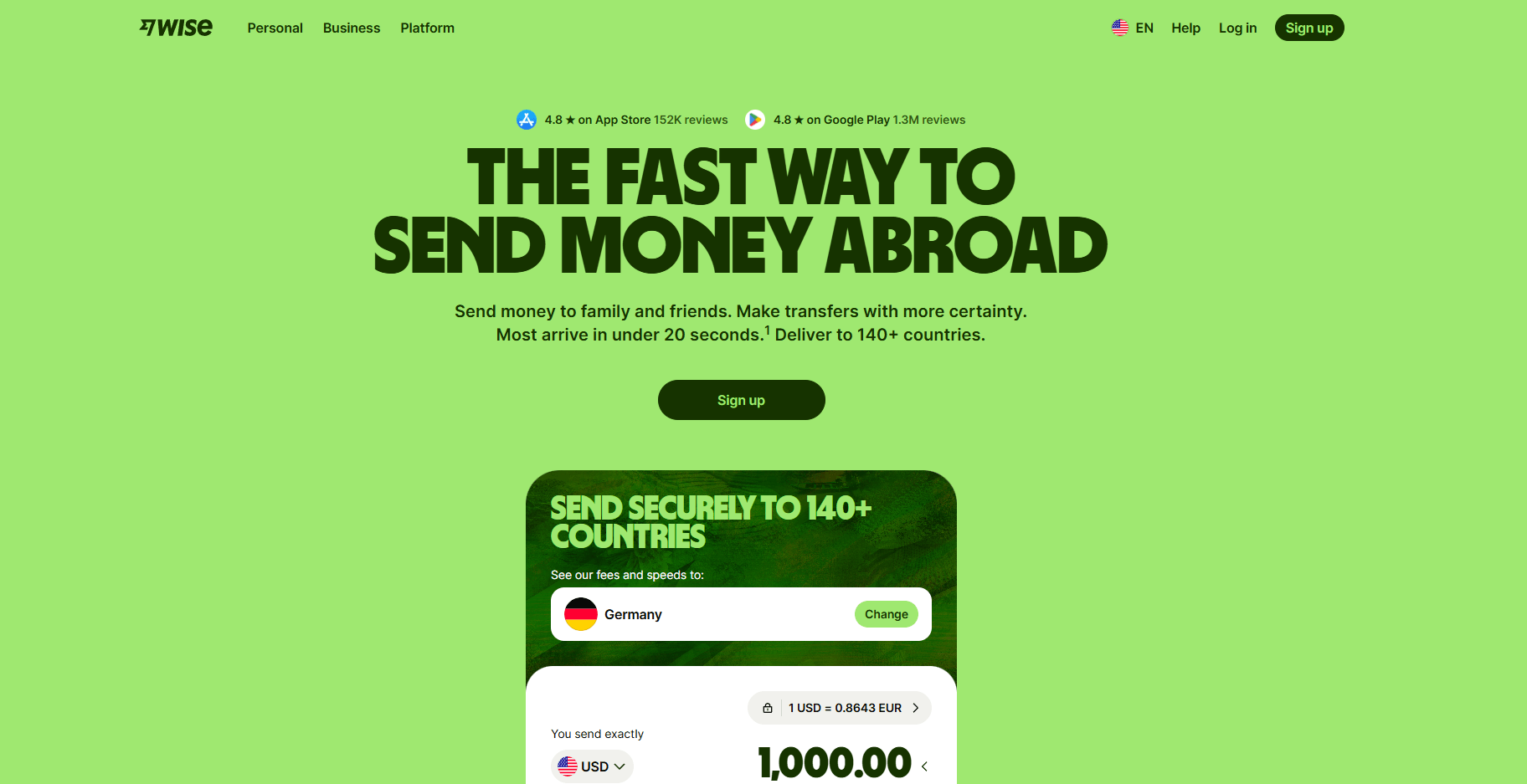
Wise is a financial technology company that helps individuals and businesses send, receive, hold, and spend money in different currencies. Its best-known service is international money transfer. A customer sends money in one currency, and the recipient receives it in another. Wise shows the exchange rate and transfer fee before the payment is confirmed, making the total cost easier to understand.
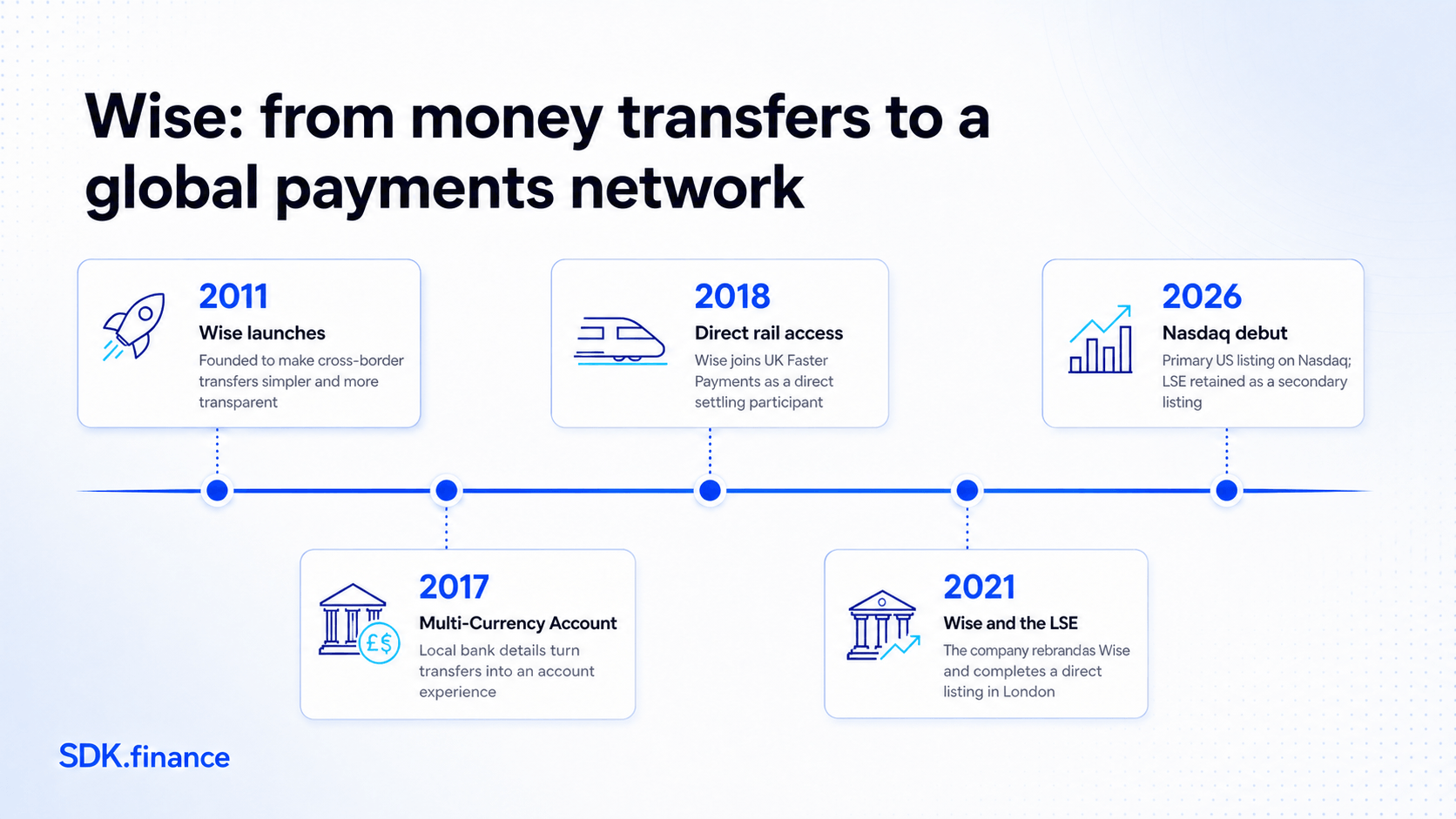
It launched in London in 2011 as TransferWise, rebranded in 2021, listed in London that July and debuted a US listing on Nasdaq on 11 May 2026.
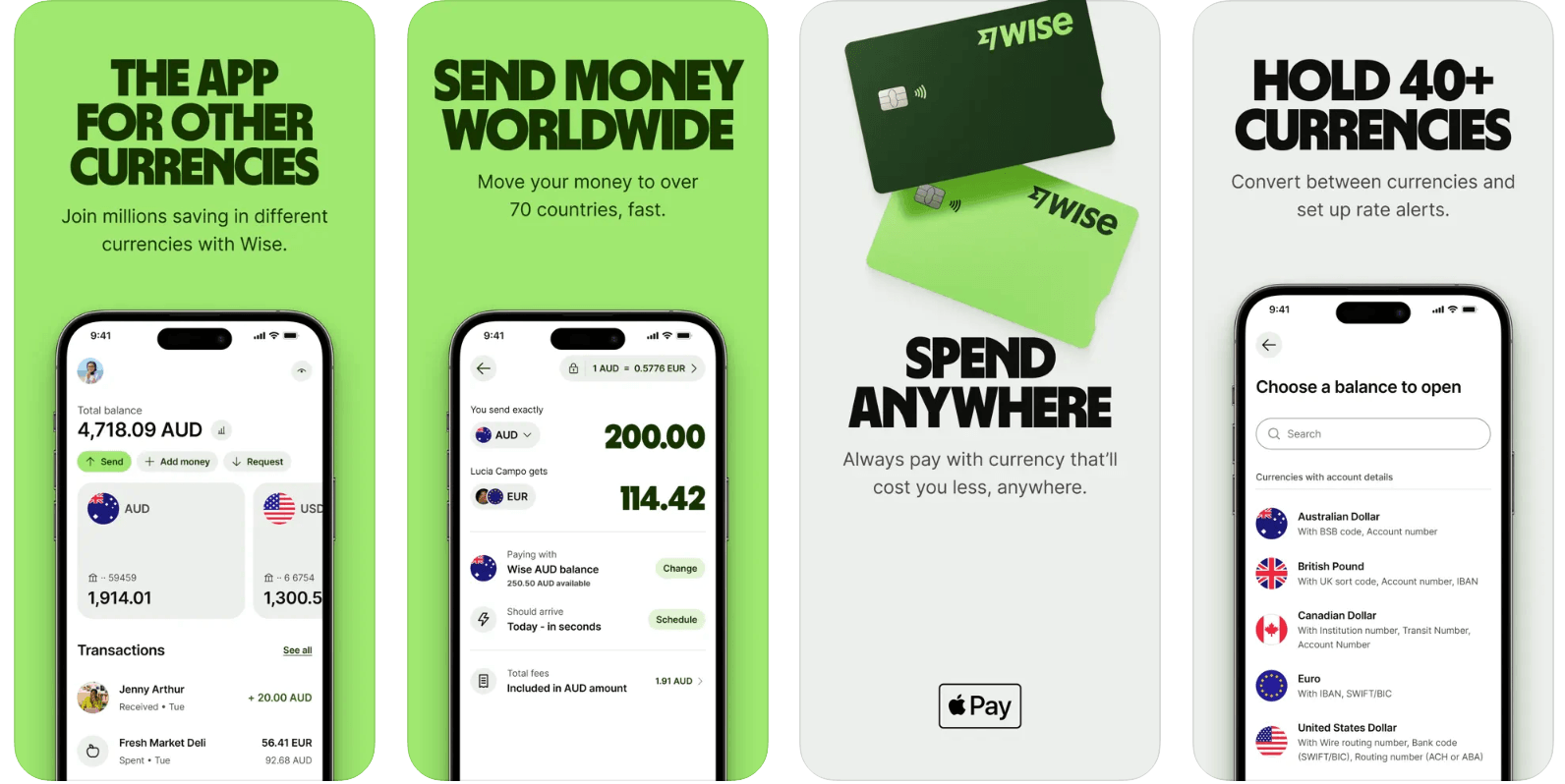
- Wise is not simply a money transfer app. It is a set of connected products sharing one financial core: transfers, multi-currency balances, local account details, debit cards, business payment tools, and cross-border infrastructure sold to other financial institutions.
- Wise should not generally be described as a bank. In most markets it operates under electronic money, payment institution or money transmitter permissions, and does not lend customer money out – its own wording is “We don’t lend out your money. Banks do.” It safeguards customer funds instead, keeping them separate from company money in liquid assets such as short-term government bonds and money market funds, plus partner bank accounts. Safeguarding is segregation, not deposit insurance, and should never be described as such.
Wise doesn’t operate under one global licence – it’s licensed separately in each region: an e-money licence in the UK, an EU-wide licence via its Belgian entity, money transmitter licences state-by-state in the US, and separate local licences in Canada, Australia, and Brazil.
Other services depend on outside institutions: partner banks hold safeguarded cash, Visa and Mastercard carry card transactions, regulated managers run Wise Assets, and domestic payment systems clear the local legs of transfers.
Wise key numbers in 2026
Wise has grown from a specialist international money transfer service into a global financial technology platform. Its latest figures illustrate the scale of its customer base, cross-border payment network and multi-currency services:
- 18.9 million – annual active Wise customers
- $243.5 billion – cross-border volume processed by Wise
- $2,502.8 million – Wise’s net revenue
- 77% – share of transfers completed instantly
- 40+ – currencies supported by Wise
- 70+ – countries where Wise services are available
- 80 – countries you can send a Wise transfer to
- 160+ – countries covered by the Wise Platform global network
Three points are most often misread. The two customer figures differ in kind: the annual number counts unique customers across a year, the quarterly one those active in a single quarter, and neither is a registered-user count. Holdings are not revenue – the $41.2 billion held at 30 June 2026 is customers’ money; revenue that quarter was $714.0 million. And the instant figure counts transactions, not volume, on a threshold of under 20 seconds.
From TransferWise to a global payments network
The founders’ problem was personal. Taavet Hinrikus and Kristo Käärmann, two Estonians in London, needed opposite currencies – one paid in pounds and needing euros, the other the reverse – and built a mechanism that matched their flows so money never crossed a border. That is history, not a description of the product today.
Wise now runs a network of local accounts and payment-system connections: money enters in the sender’s country, and a separate payout leaves from Wise’s balance in the recipient’s country. That requires payment routing, treasury and liquidity management (making sure enough cash sits in each currency so payouts don’t have to wait for the incoming money to arrive), regulated entities in each market and bank partners – not a matching algorithm.
Why Wise became popular
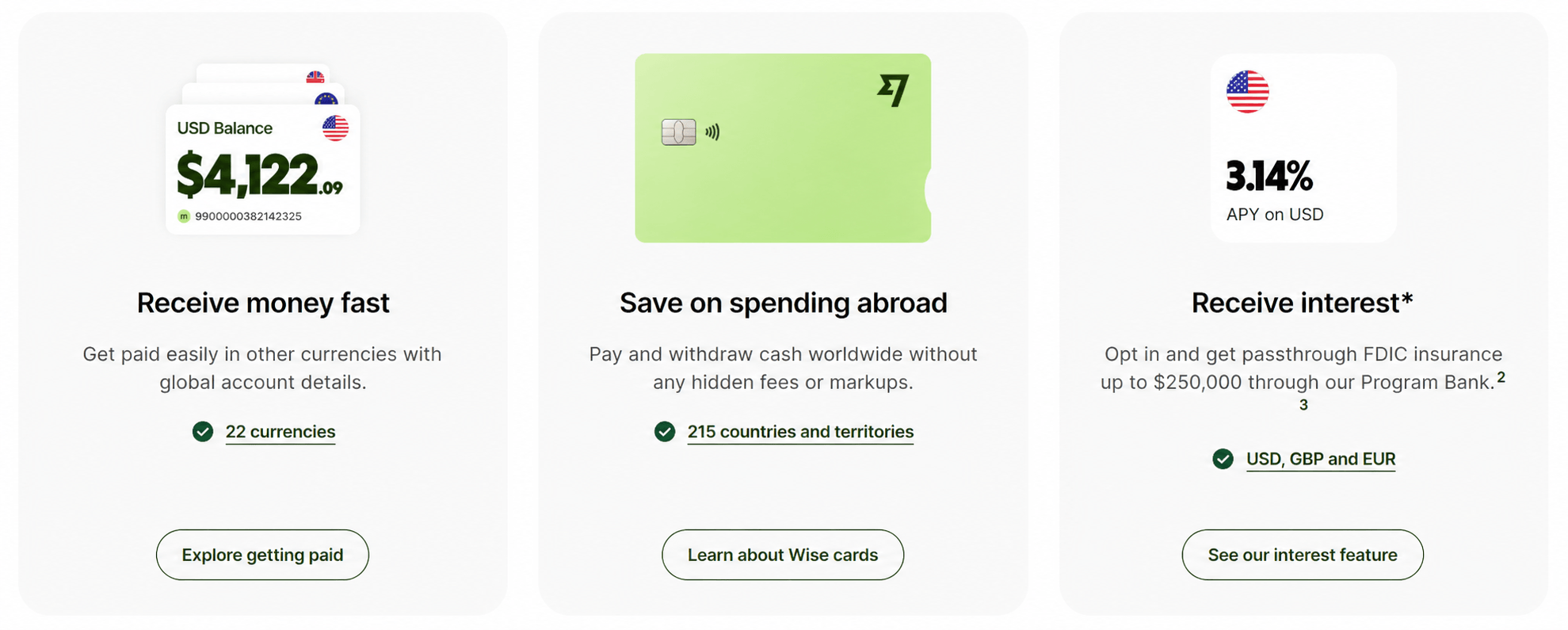
Wise became popular because it made an expensive and confusing financial service easier to understand. Its success was not based on one unique app feature. It came from combining transparent pricing, a focused customer proposition, efficient payment infrastructure and gradual product expansion.
It solved a problem customers could immediately understand
Wise initially addressed a simple problem: the true cost of international transfers was often unclear. By showing the exchange rate, fee and expected recipient amount upfront, it gave customers a more transparent way to compare costs.
This proposition shaped the economics of the business as it expanded:
- Transparent pricing gave Wise a position competitors could not copy without repricing their own products.
- Recipient-driven growth made distribution cheap – the recipient of every transfer learns about the service without the company paying to reach them.
- The Borderless Account, launched in May 2017 and now the Wise Account, turned a transfer tool into an account people keep money in, creating repeat usage, card spend and interest income.
- Direct payment-system access removed intermediaries, starting with UK Faster Payments. By November 2025 Wise was a direct participant in seven domestic payment systems and completing its eighth, Zengin in Japan, that month; the 2026 results confirm both Brazil and Japan went live during the year.
- Wise Platform turned the payout network into a product for banks, with UniCredit, Raiffeisen Bank, MBSB Bank and Capitec among named partners.
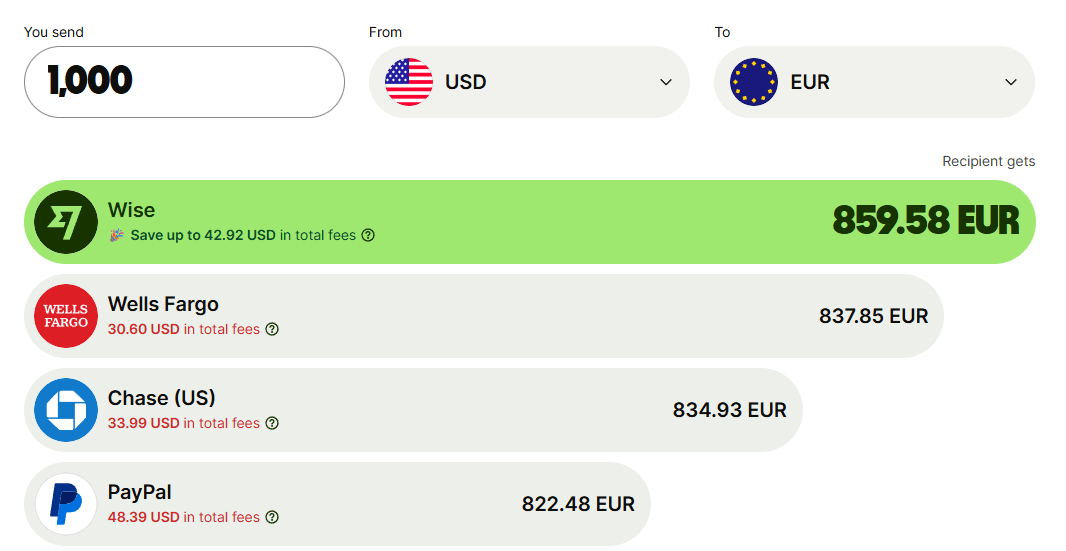
Wise is not necessarily the cheapest provider for every currency corridor. Its advantage is that customers can see and compare the total cost before sending money.
Local payment infrastructure made transfers faster and less expensive
Wise also changed how international payments could be processed.
A traditional international bank transfer may pass through several correspondent banks before reaching the recipient. Each intermediary can add cost, delay or another point of failure.
Wise developed connections to domestic payment systems and used locally held liquidity to fund payouts. In a typical transaction, money can enter Wise through a local payment method in the sender’s country while the recipient is paid from Wise’s local funds in the destination country.
This model can reduce the number of intermediaries involved. But it requires much more than a mobile application: Wise must manage liquidity, regulatory permissions, local banking relationships and payment routing across multiple markets.
By 2026, Wise reported that 77% of its transfers were completed in less than 20 seconds. The figure measures the share of transactions, not their monetary volume.
Growth allowed Wise to reduce prices
Higher transaction volume gave Wise an opportunity to spread its infrastructure and operating costs across more payments.
The company describes this as part of its “Mission Zero”: improving its infrastructure and passing some efficiency gains back to customers through lower prices. Lower prices can attract more customers, which brings more volume and creates further opportunities to reduce unit costs. In 2026, Wise reported an average cross-border take rate of 0.50%, down from 0.52% a year earlier. This does not mean all customers pay exactly 0.50%; the fee still varies by currency, amount and payment method.
It expanded beyond occasional money transfers
International transfers can be infrequent. Wise therefore expanded into products that customers can use more regularly:
- multi-currency balances;
- local account details;
- debit cards;
- business accounts;
- employee spending tools;
- Wise Assets;
- Wise Platform.
This changed the customer relationship. Instead of opening Wise only when sending money abroad, customers could hold money, receive payments, convert currencies and use a card for everyday spending.
The expansion also created additional revenue streams, including card-related revenue, income connected with customer balances, business fees and investment-related fees.
Customers and partners helped distribute the product
Each international transfer connects at least two parties. A recipient who receives money through Wise becomes familiar with the service and may later become a sender. This creates an organic discovery channel alongside traditional referrals and paid marketing.
Wise Platform added another distribution model. Instead of acquiring every customer directly, Wise allows banks and other companies to embed its cross-border payment infrastructure into their own products.
This gives Wise access to transaction volume generated through partner institutions and turns the company’s internal payment network into a B2B product.
Wise’s presence across global markets
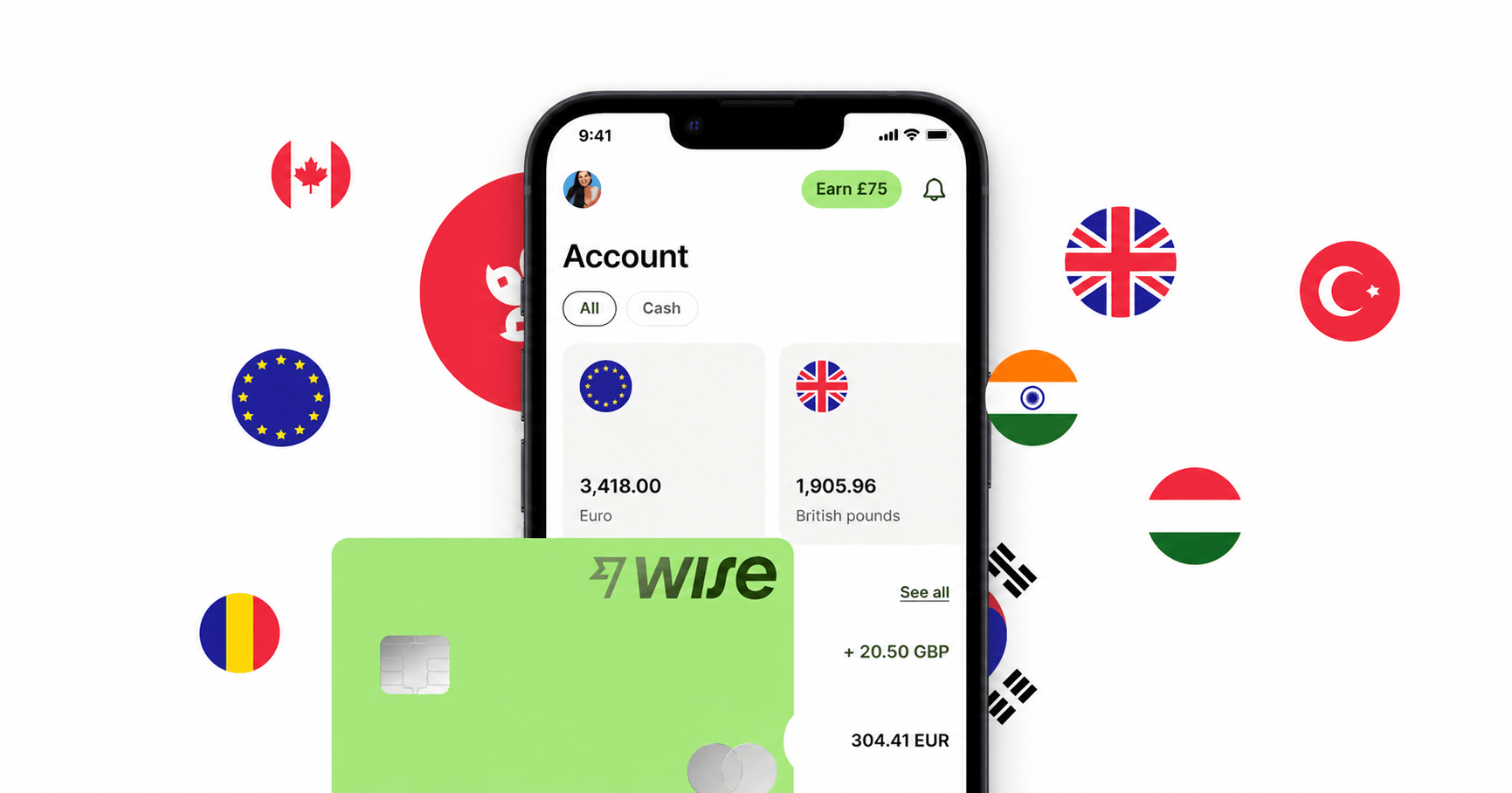
For a remittance app operating in licensed markets worldwide, availability is not adoption, and a licence is evidence of neither. Wise reports customers globally rather than by country, so market-level adoption figures are largely not publicly disclosed.
The evidence instead shows where infrastructure and licensing run deepest: the UK, Australia and the EEA, long-established markets with local regulated entities; the United States, the priority behind the May 2026 Nasdaq listing; Brazil, where Wise connects to Pix; and Central and Eastern Europe and the Nordics, where growth has come through Wise Platform bank partnerships. Licences added in South Africa, the UAE and Thailand during 2026 are a milestone, not demonstrated adoption.
How Wise makes money
In 2026, Wise generated $1,257.0 million in cross-border revenue, $636.6 million in card and other revenue, and $806.1 million in gross interest income. After returning $196.9 million of interest benefits to customers, total net revenue reached $2,502.8 million.
| Revenue source | How it works | Customer or payer | Relative importance |
|---|---|---|---|
| Cross-border fees | Fees on each transfer and conversion | Sender | Largest line ($1,257.0m, 2026) |
| Interest on balances | Yield on safeguarded funds; part paid back | Not charged to customers | Material ($806.1m gross, 2026) |
| Card revenue | Interchange and card fees | Merchants and cardholders | Growing; inside card and other revenue |
| Business account fees | One-off fee, £50 in the UK | Business customers | Secondary |
| Wise Assets fees | Management fees on invested balances | Investing customers | Emerging; inside other revenue |
| Wise Platform | Commercial agreements | Partner institutions | Strategic; not separately disclosed |
Safeguarded money is not company capital: it is segregated and unavailable for lending – the interest is Wise’s revenue, the principal is not.
Wise vs other international payment providers
| Provider | Primary focus | Main advantage | Main limitation compared with Wise |
|---|---|---|---|
| Revolut | Broad consumer financial app | Wider range of financial products | Cross-border transfers are only one part of the ecosystem |
| Payoneer | International B2B payments | Strong marketplace and freelancer coverage | Less consumer-oriented |
| Remitly | Consumer remittances | Cash pickup and corridor specialisation | Limited multi-currency account functionality |
| Airwallex | B2B payments and acquiring | Strong business infrastructure | Limited consumer proposition |
| PayPal | Wallet and merchant payments | Large merchant network | Higher and less transparent FX costs in many cases |
These are not interchangeable products and there is no overall winner:
- Revolut competes for the whole consumer relationship
- Remitly optimises corridors
- Payoneer serves business collections
- Airwallex sells acquiring
- PayPal owns checkout
Whatever position a new entrant chooses, essential features provide the foundation for a reliable and competitive money transfer product.
Essential features of a money transfer app like Wise
A money transfer app – or remittance app – like this is not just a transfer screen with a payment API behind it, but a set of interconnected modules, mostly invisible to the customer, that together determine whether the money is correct.
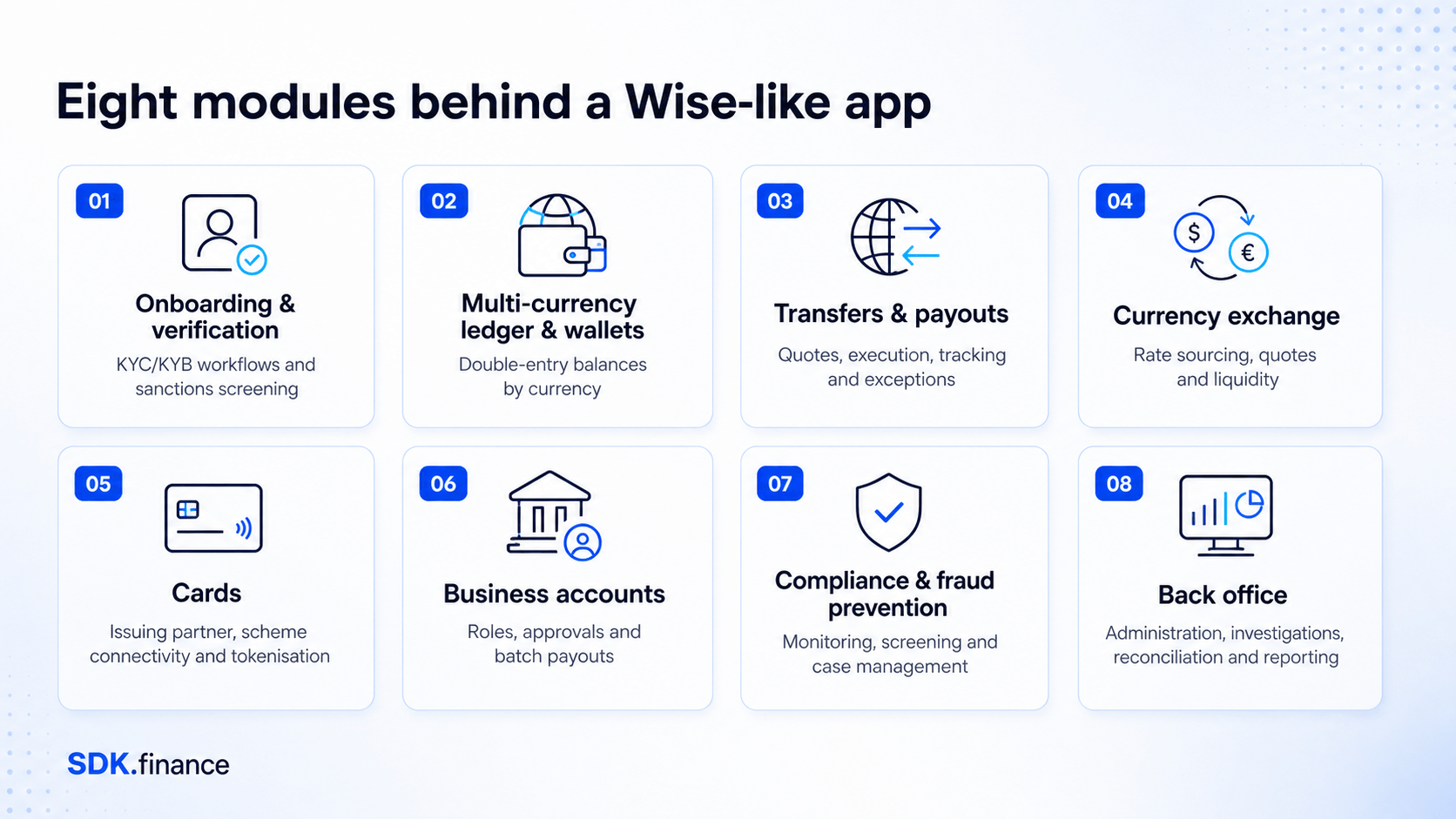
- Onboarding and verification covers registration, identity verification (KYC), business verification (KYB) and sanctions screening. Too loose and you absorb fraud; too strict and you lose good customers.
- Multi-currency accounts and wallets hold separate balances per currency and issue local account details where partners allow, backed by a double-entry ledger — every movement recorded as a debit and a credit. Such a balance is electronic money, not a bank deposit.
- Transfers need beneficiary management, upfront rate-and-fee quotes, multiple funding methods, execution over domestic rails or SWIFT, tracking and notifications. An undeliverable payment must return money automatically.
- Currency exchange means rate sourcing, quoting, expiry and execution. Displaying a rate is trivial; honouring it means liquidity providers, prefunded balances and a policy for market moves before settlement.
- Cards require an issuing partner and BIN sponsor, scheme connectivity, tokenisation for Apple Pay and Google Pay, freezing and limits — a certification process that rarely belongs in a first release.
- Business accounts add company onboarding, roles, employee cards and approval workflows. Business customers transact more: Wise’s business segment carried $21.3 billion of the $69.3 billion volume in 2026.
- Compliance and fraud prevention spans transaction monitoring, sanctions screening, fraud rules and case management — a continuous function, not one KYC check at signup.
- Back office covers administration, transaction search, fee and limit configuration, investigations, reconciliation and role-based access — the part teams underestimate until support can’t answer a customer’s question.
Launch your payment project in record time
Talk to Our TeamHow does a money transfer app like Wise work?
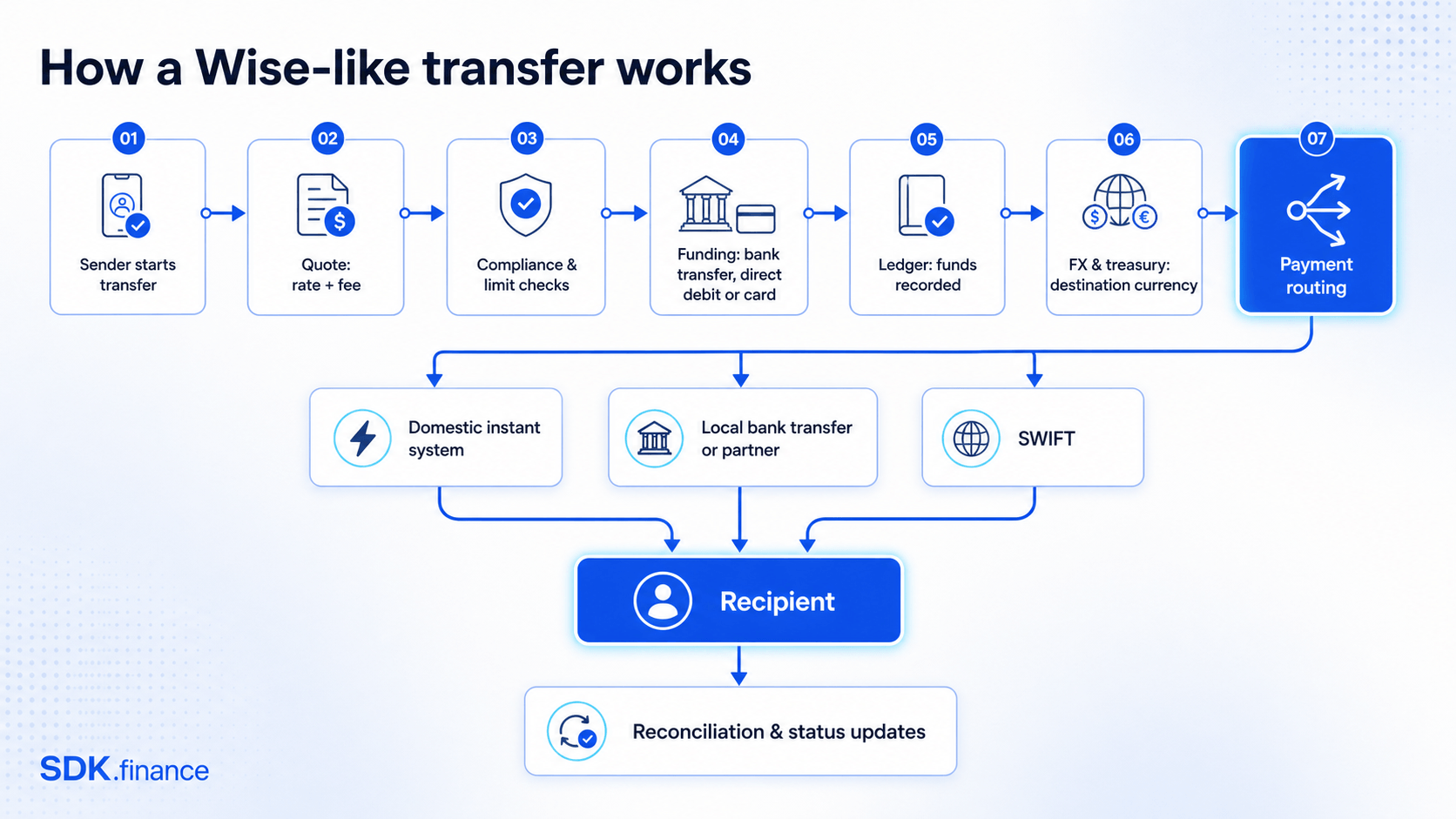
Sender → Funding method → Compliance checks → Internal ledger → FX and liquidity → Payment routing → Local payout network → Recipient
- The sender enters an amount and destination currency – the outcome, not the mechanics.
- The pricing service calculates rate and fee, showing both before confirmation, with a quote validity period.
- Compliance and limit checks run: is the customer verified, the beneficiary screened, the transfer within limits?
- The sender funds the transaction by local bank transfer, direct debit or card.
- The ledger records the funds as received and allocated, the moment they arrive.
- The FX and treasury layer supplies the destination currency, from an existing balance or a conversion.
- The routing system selects a payout method – a domestic instant system, a local transfer, a partner, or SWIFT.
- The recipient is paid in local currency over the chosen network.
- Reconciliation matches external records against internal ones.
- Both parties receive status updates, including on failure.
The exact path changes with country, corridor, funding and payout method, licence and partner.
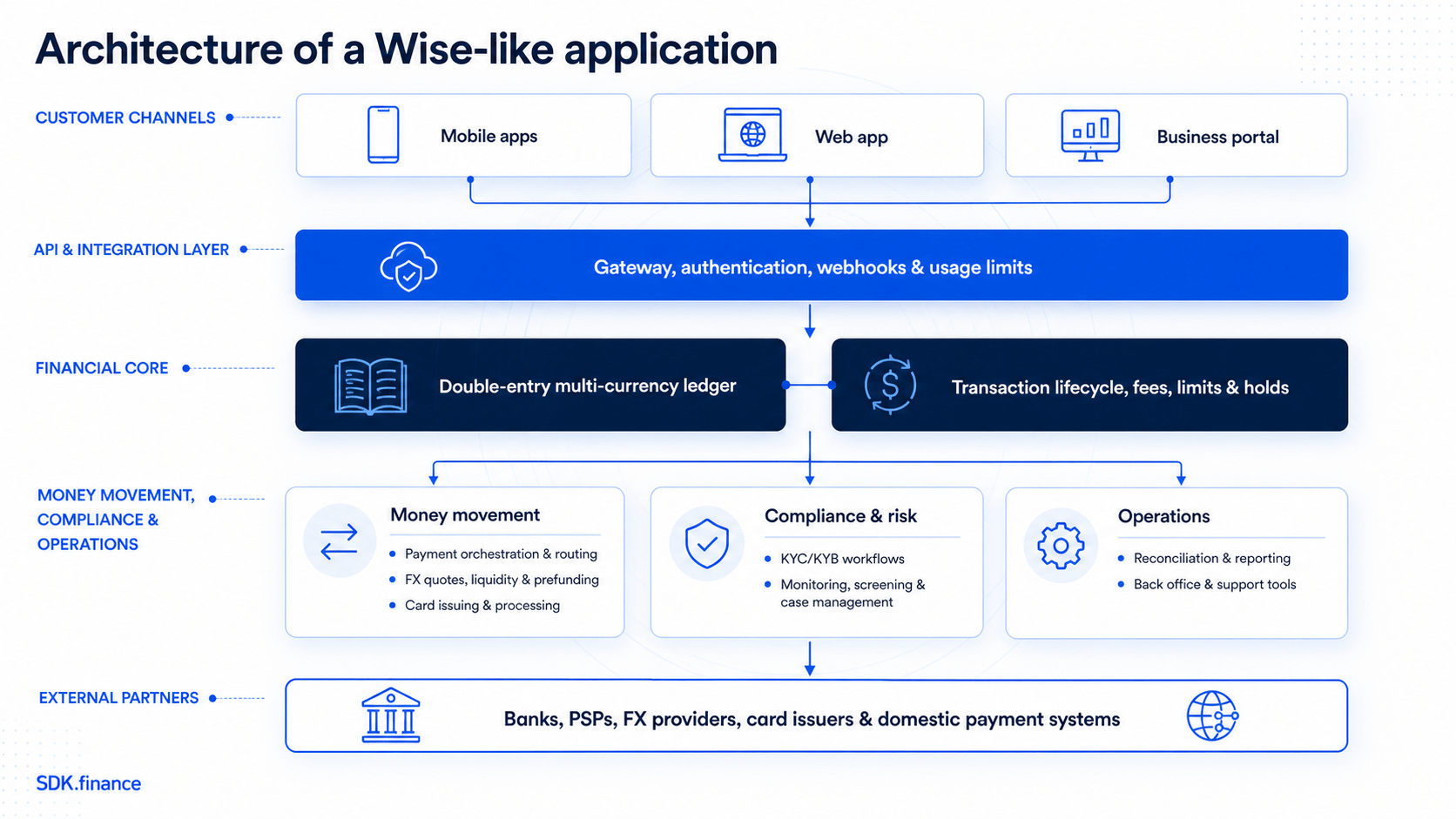
Architecture of a Wise-like application
What follows is a vendor-neutral logical architecture – the responsibilities any such product must cover, not a reconstruction of any company’s design. Six layers, moving from the customer inward to the systems that keep the product running:
- Customer channels – mobile apps, web application and business portal, plus authentication and notifications.
- API and integration layer – authorisation, partner integrations, webhooks, usage limits and duplicate-request protection: a financial control, since a retried request must not send the money twice.
- Financial core – the double-entry ledger, multi-currency accounts, transaction lifecycle, fees, limits, holds, reversals and settlement statuses. This is the system of record – the authoritative answer to whose money this is and what state it is in – and every other layer defers to it.
- Money movement – the payments layer (provider and network selection, beneficiaries, payout routing, card processing, failures) and the FX and treasury layer (rate providers, a quote engine, conversion, liquidity monitoring, prefunding – money placed with partners in advance so payouts complete before incoming funds clear – and currency exposure). An underfunded operation stops working whatever the code quality.
- Compliance and risk – KYC and KYB, AML monitoring, sanctions screening, fraud detection and case management.
- Operations – reconciliation, reporting, audit history, back office and support tooling, letting a small team run a product used by many thousands.
Launch your payment project in record time
Talk to Our TeamTechnical requirements for building a Wise-like app
A few requirements are non-negotiable, though none prescribes a language or cloud provider: a processing model guaranteeing financial consistency – a transfer either completes fully or not at all – plus real-time quotes and status, partner APIs, encryption in transit and at rest, strict access control, audit logging, tested backups and a disaster-recovery plan. Monitoring must alert on payment failures and reconciliation breaks, not only server health.
Two constraints carry commercial consequences. Data residency rules in some markets require customer data to stay in-country, affecting hosting decisions before launch. PCI DSS scope applies if you touch card data; the usual approach is to minimise it by leaving card data with certified providers.
Wise’s engineering team has publicly described using AWS, Java and Kotlin, Apache Kafka and PostgreSQL – signals mainstream technology suffices here, not a full account of any company’s systems.
How to build a money transfer app like Wise
The eight steps below are a practical money transfer app development sequence, from defining the product model to a gradual launch, in the order decisions actually need to be made.
Step 1: Define the product model
The options are different businesses: a consumer remittance app on specific corridors; a multi-currency wallet for travellers and expatriates; a business payment product for SMEs; an international account with local details; or embedded cross-border payments sold to other institutions. Choose one use case and one primary customer before writing a specification.
Step 2: Select countries and corridors
Decide the sending country, the receiving countries, the currencies, and how money enters and leaves in each. Corridor choice determines licensing, partner list, prefunding needs and unit economics at once. One sending market and a handful of receiving markets produces usable data faster and cheaper than a broad launch.
Step 3: Define the regulatory model
Three routes exist. Your own licence – an electronic money or payment institution authorisation in the UK or EEA, state-by-state money transmitter licences in the US, or the local equivalent – gives control but takes months to years and requires capital, governance and a compliance function. A partner’s permissions are faster but constrain product and economics. Or combine them, launching under a partner while applying for your own. Either way, safeguarding, AML and data protection obligations apply, and jurisdiction-specific legal counsel is required first.
Step 4: Select the technology approach
Building the platform in-house gives maximum control and costs the most time. Specialised vendors per function are faster but leave you owning the integration and the system-of-record question. A pre-developed FinTech platform as the financial core shortens the path but requires configuration work and an honest fit assessment.
Step 5: Define the MVP
A defensible first release contains onboarding and identity verification for one customer type, a few currencies and corridors, quotes and fees, payment execution, transaction history, notifications, a back office, reconciliation, and the compliance controls your regulator or partner requires – not optional scope. Leave out lending, investments, crypto and global card issuing unless one is core to the model.
Step 6: Integrate financial and technology partners
Software readiness is not market readiness. You still need a bank or safeguarding institution, payment providers for each funding and payout method, FX liquidity, KYC and AML vendors, an issuer-processor for cards, and domestic payment network access. Partner due diligence often takes longer than the software work and should run in parallel.
Step 7: Test the complete money flow
Test the money, not the screens. The scenarios that matter are the awkward ones: a transfer that fails at payout, a reversal, a duplicate request, insufficient funds, an expired rate quote, a reconciliation break, a sanctions alert mid-transfer, and behaviour under load. Each answers one question – do balances stay correct when something goes wrong?
Step 8: Launch gradually
Open a limited set of corridors with conservative limits and a monitored first customer group. Let the operational signals – failure rates by corridor, reconciliation breaks, screening false positives, support contact reasons – decide what gets built next.
Build from scratch or use a pre-built FinTech platform?
| Approach | Advantages | Limitations | Best suited for |
|---|---|---|---|
| Full custom development | Complete control of design, roadmap and data | Longest timeline, highest cost; ledger, fees and back office rebuilt from zero | Well-funded teams with in-house payments expertise |
| Multiple specialised vendors | Specialist components; fast per function | You own integration and the system-of-record question; lock-in in several places | Teams with a clear architectural owner |
| Pre-developed FinTech platform | Ledger, accounts, fees and back office exist on day one | Configuration work; external partners and licences still required | Teams differentiating on corridors or distribution |
The question is where your differentiation lives. If it is in the ledger, build it. If it is in corridors, pricing or distribution – as it usually is – rebuilding the accounting layer instead of adopting a white label platform spends the budget in the wrong place.
How long does it take to build an app like Wise?
The implementation timeline depends mainly on the chosen delivery model:
- SaaS – a few weeks: the provider sets up the development instance, while the customer configures currencies, accounts, fees and limits, adapts the interfaces and connects the required external services. Staging and production environments are prepared after testing.
- Source Code Licence – a few months: the process includes requirements analysis, a code audit, code transfer, infrastructure setup, customisation, integrations and end-to-end testing.
These estimates cover software implementation. Financial licensing, provider onboarding, certification and regulatory approval may extend the commercial launch date.
How much does it cost to build an app like Wise?
A realistic 2026 budget depends on the product’s scope and technology approach:
- Focused MVP: $150,000–$380,000 – one corridor and currency pair, customer onboarding, transfers, basic KYC/AML integration, a ledger, back office and one payment provider.
- Launch-ready product: $380,000–$750,000 – multiple integrations, stronger compliance tooling, reconciliation, branded applications, security testing and operational workflows.
- Multi-country custom platform: $750,000–$1 million+ – several corridors, extensive custom development, card functionality, complex infrastructure and country-specific requirements.
These are planning ranges, not fixed prices. They exclude financial licences, regulatory capital, prefunding, provider fees and ongoing compliance and operations. A product approaching Wise’s global scale would require substantially greater long-term investment.
Build a Wise-like product with SDK.finance money transfer software
Building a money transfer product involves two separate challenges. The first is creating the financial software that manages customer balances, currencies, fees, transfers and transaction records. The second is securing the licences, liquidity and financial partners needed to move real money.
SDK.finance addresses the software part.
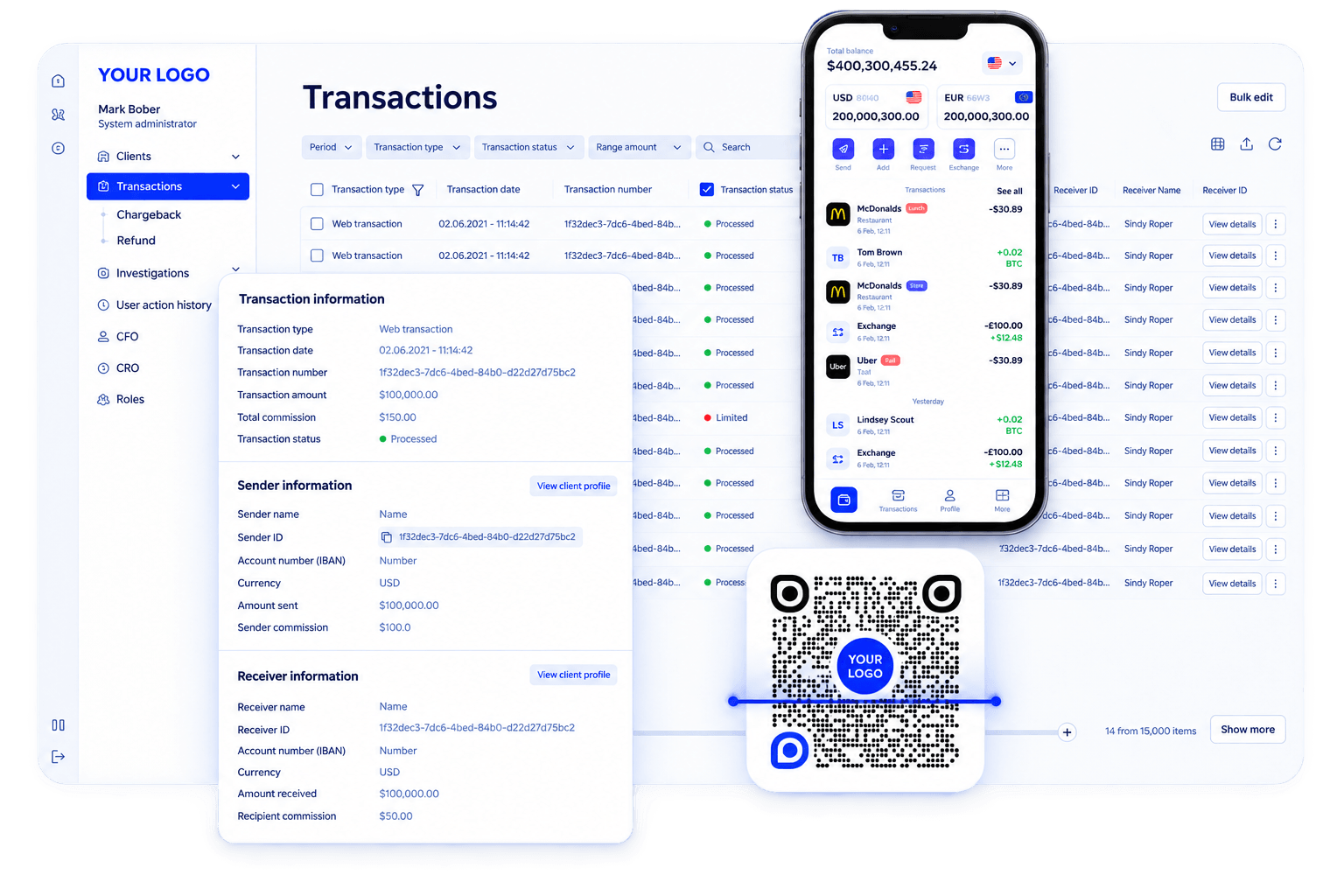
Its money transfer and remittance platform provides a configurable foundation for building a branded multi-currency transfer product. Instead of developing the ledger, wallet logic, back office and transaction workflows from the beginning, a company can start with these components already available and concentrate more of its resources on market-specific integrations, customer experience and distribution.
The capabilities most relevant to a Wise-like product include:
- Multi-currency wallets and accounts. Maintain customer balances in different currencies and keep every balance-changing operation recorded in a ledger-based system.
- Transfer workflows. Manage internal transfers, cash-in and cash-out operations, beneficiaries, payout statuses, failures and transaction history.
- Fees, limits and exchange operations. Configure fixed or percentage-based fees, transaction limits and currency exchange rules for different products or customer groups.
- Back-office operations. Give operations, finance and support teams the tools to manage customers, investigate transactions, configure fees and limits, and monitor system activity.
- Reconciliation and reporting. Compare internal transaction records with information received from banks and payment providers and identify discrepancies.
- Customer applications. Provide configurable web, iOS and Android interfaces for individual and business users instead of building every customer channel from the beginning.
- Integration layer. Use 650+ API endpoints, webhooks and pre-developed integrations to connect banking partners, KYC providers, payment gateways, card issuers and FX services.
The platform is available through two delivery models. A hosted SaaS deployment is designed for a more standardized and faster implementation. A source-code licence gives the customer greater control over customization, infrastructure and future development. The appropriate option depends on the company’s launch priorities, internal engineering resources and infrastructure requirements.
| SDK.finance can provide | The company still needs |
|---|---|
| Financial ledger and multi-currency wallet logic | Required payment, EMI or money transmitter licences |
| Transfer, fee and transaction workflows | Banking and safeguarding partners |
| Back-office and operational controls | FX liquidity and treasury arrangements |
| APIs and integration framework | Commercial agreements with payment providers |
| Reconciliation-ready transaction records | KYC, AML, card and payment providers selected for the target market |
| Configurable customer applications | Market-specific UX, compliance and product customisation |
SDK.finance is a software provider, not a bank, electronic money institution or Banking-as-a-Service provider. It does not issue financial licences, hold customer funds or provide direct access to every payment network. These regulated services must come from the product owner or its licensed partners.
The practical advantage is that a company does not have to build its financial core from an empty codebase. It can use an existing transaction, wallet and back-office foundation while developing the partnerships and customer proposition that differentiate its product. A focused SaaS implementation typically takes 4–6 weeks, while a Source Code implementation usually takes 2–6 months, depending on customisation, integrations and the customer’s technical readiness. These estimates cover software implementation, not licensing, provider onboarding or regulatory approval.
Companies planning a multi-currency account or remittance service can discuss their product model, target corridors and integration requirements with SDK.finance.
Building an app like Wise: the bottom line
Wise’s success does not come from its interface. It comes from transparent pricing customers could verify, regulatory coverage in each market, liquidity positioned in each currency it pays out, direct connections to domestic payment systems, an accurate ledger beneath all of it, and operations that stay reliable at scale. The app is the visible tenth.
A new entrant should not try to reproduce all of it. The realistic starting point for a money transfer app like Wise is focused: one customer type, a few corridors chosen for real demand, a regulatory route decided before development starts, financial partners contracted in parallel with the build, and a financial core correct from the first transaction.
Launch your payment project in record time
Talk to Our Team
