A virtual IBAN is not a separate bank account but a unique account reference linked to a master safeguarding or settlement account held with a licensed financial institution. It allows payment service providers, electronic money institutions, and fintech platforms to identify incoming and outgoing payments at client, merchant, or transaction level without opening individual bank accounts for each user.
For PSPs and EMIs, virtual IBANs are primarily used to support scalable payment collection, automate reconciliation, manage multi-currency flows, and operate platform-based business models. They are a core component for products such as payment gateways, marketplaces, payroll platforms, neobanks, and embedded finance services where funds must be clearly attributed and reported.
Unlike a standard IBAN, which represents a standalone bank account owned by a single legal entity, a virtual IBAN functions as a routing and identification layer on top of an underlying account. Multiple virtual IBANs can be issued under one master account, enabling efficient fund segregation and reporting while keeping the underlying banking structure simple.
In this article, we review some of the most widely used virtual IBAN providers in 2026 and explain how their offerings differ in terms of account structure, payment rails, geographic coverage, and onboarding requirements. The guide is intended for PSPs, EMIs, and fintech platforms evaluating virtual IBAN infrastructure as part of their payment or banking stack.
Introduction to Virtual IBANs
Virtual IBANs are account identifiers issued on top of a master safeguarding or settlement account held by a licensed bank or payment institution. Each virtual IBAN routes funds to the same underlying account while allowing payments to be attributed to a specific client, merchant, or use case. This structure is commonly used by PSPs, EMIs, and fintech platforms that need to manage large volumes of inbound and outbound payments without opening a dedicated bank account for every end user.
From an operational perspective, virtual IBANs simplify reconciliation by enabling client-level attribution of funds. Incoming transfers can be automatically matched to a specific customer or transaction based on the virtual IBAN used, reducing manual intervention and reconciliation errors. This is particularly important for platforms processing payments on behalf of multiple merchants or users under a single regulated entity.
Virtual IBANs can be issued under different account models. In a pooled setup, multiple virtual IBANs are linked to one master account, and funds are segregated at the ledger level rather than at the bank account level. In a named virtual IBAN model, each virtual IBAN is issued in the end customer’s name, which may be required by certain regulators or banking partners. The choice between pooled and named virtual IBANs affects onboarding complexity, compliance obligations, and reporting requirements.
Virtual IBAN vs dedicated IBAN vs pooled account
A dedicated IBAN is a standalone bank account opened for a single legal entity or customer, with funds segregated at the bank level. This model provides clear legal separation but is expensive and difficult to scale for platforms with many users.
A virtual IBAN is not a separate bank account but a unique account reference linked to a master safeguarding or settlement account. It enables client-level payment attribution and automated reconciliation without opening individual bank accounts.
A pooled account aggregates funds from multiple clients into one bank account, with segregation handled internally via a ledger. When combined with virtual IBANs, pooled accounts allow PSPs and EMIs to maintain clear attribution while keeping the underlying banking structure simple and cost-efficient.
How Virtual IBANs Work: Reconciliation, Settlement, and Compliance
Reconciliation and client-level accounting
Virtual IBANs are primarily used to attribute incoming and outgoing payments to a specific client, merchant, or transaction under a single regulated entity. Each virtual IBAN serves as a unique identifier, allowing payment data to be matched automatically without relying on payment references or manual reconciliation. For PSPs and EMIs operating pooled account models, this approach is essential for maintaining accurate client balances and audit-ready transaction records.
Multi-currency collections
Virtual IBANs are commonly issued in multiple currencies, enabling platforms to collect funds locally while holding balances centrally. This reduces the need to open separate bank accounts for each currency or country and simplifies treasury operations. For international platforms, multi-currency virtual IBANs support local collection in key markets while keeping currency conversion and balance management under the platform’s control.
Settlement speed and local rails
The settlement speed of virtual IBAN transactions depends on the payment rails available through the issuing provider. Access to local schemes such as SEPA, SEPA Instant, Faster Payments, or ACH allows platforms to offer predictable settlement times and, in some cases, near-real-time fund availability. Choosing a provider with direct scheme access can significantly reduce dependency on intermediary banks and improve operational reliability.
Compliance and safeguarding context
Virtual IBANs operate within the regulatory framework of the underlying licensed institution that holds the master safeguarding or settlement account. Funds are typically protected under safeguarding rules, with segregation enforced either at the bank account level or through internal ledgers. The specific account model, whether pooled or client-named, affects onboarding requirements, reporting obligations, and the level of regulatory oversight applied to the platform.
Top Virtual IBAN Providers 2026
Airwallex
HQ: Melbourne, Australia
Year founded: 2015
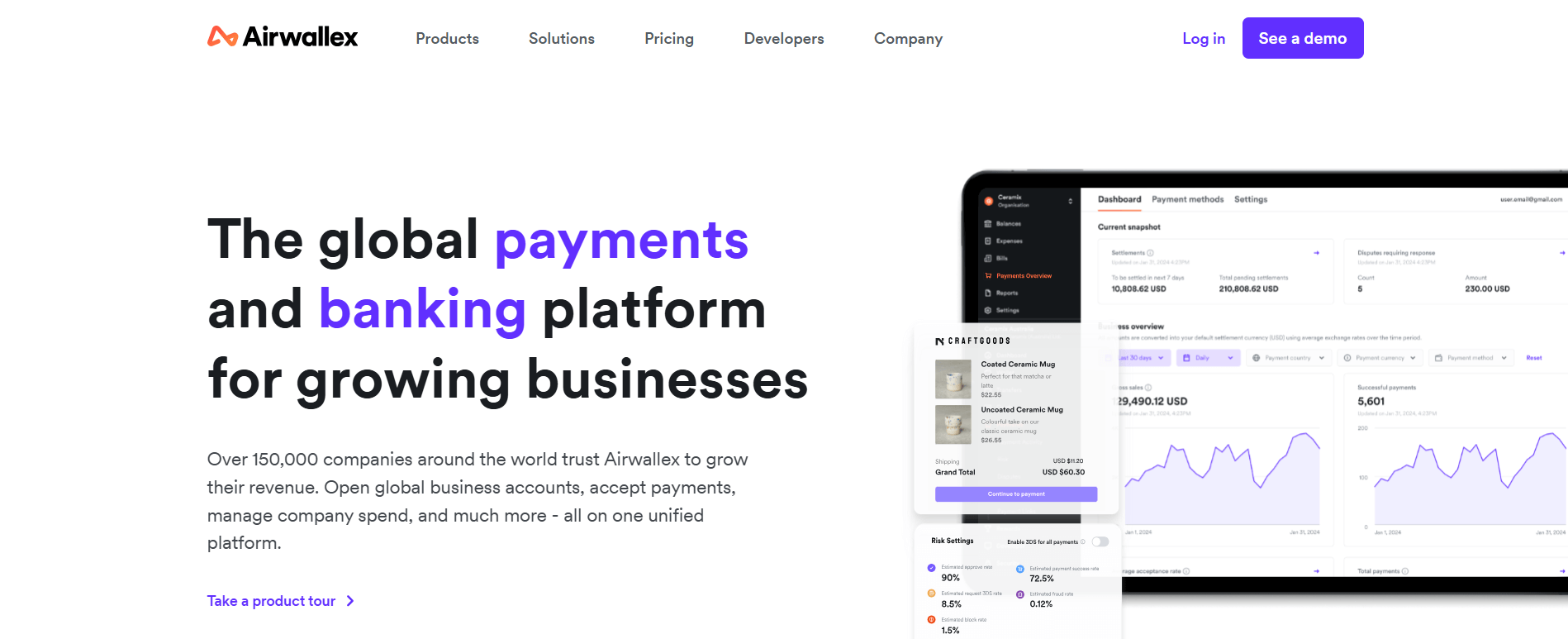
Airwallex has grown into a global payments infrastructure provider supporting multi-currency accounts, competitive FX, and a wide selection of payout corridors. Its platform is designed for companies operating across different markets, supporting businesses in different regions and enabling global business expansion, and is used by many digital-first businesses that need flexible account structures and strong international coverage.
Key features
- More than 60 supported currencies
- Multi-currency accounts with the option to generate virtual IBANs
- Access to SEPA, SEPA Instant (selected regions), Faster Payments, ACH, and multiple APAC domestic networks
- A competitive FX engine suited for cross-border flows
Best for
PSPs and marketplaces with global customer bases, technology platforms handling international payouts, and companies expanding across continents.
Geography
Europe, the UK, APAC, North America, the Middle East, Latin America.
OpenPayd

HQ: London, United Kingdom
Year founded: 2018
OpenPayd focuses on embedded finance and multi-currency account infrastructure. The company provides client-named IBANs, account segmentation, reconciliation features, and treasury management tools. Its modular APIs allow businesses to integrate financial operations directly into their product rather than relying on external portals.
Key features
- Multi-currency IBANs issued in the client’s name
- SEPA and Faster Payments
- Reconciliation and treasury controls
- Scalable account issuing suitable for platform business models
Best for
FinTech products, payout platforms, marketplace operators, and embedded finance services.
Geography
UK and EU, with additional regions served through partners.
Banking Circle
HQ: Luxembourg City, Luxembourg
Year founded: 2013
Banking Circle provides financial infrastructure built for high-volume PSPs and EMIs, with the capability to process high volumes of transactions and partnerships with top-tier financial institutions. It offers safeguarding accounts, multi-currency IBANs, and direct access to major payment schemes in the UK and EU. Banking Circle positions itself as a partner for regulated institutions that require predictable settlement processes and strong governance.
Key features
- 20–25 currencies
- Safeguarding accounts and multi-currency IBANs
- Direct access to SEPA, Faster Payments, CHAPS, and SWIFT
Best for
Regulated PSPs, EMIs, and institutions handling large settlement flows.
Geography
EU, UK, selected international corridors.
Clear Junction
HQ: London, United Kingdom
Year founded: 2016
Clear Junction is a UK-regulated payments institution serving PSPs, EMIs, remittance providers, and financial organisations. The company offers virtual IBANs, settlement accounts, and access to several core UK and EU payment systems. Clear Junction ensures accurate identification of the specific bank involved in each transaction, supporting secure and compliant fund transfers. It is known for its conservative risk tolerance and emphasis on regulatory compliance.
Key features
- EUR, GBP, and USD accounts
- Virtual IBANs across multiple regions
- SEPA, Faster Payments, CHAPS
Best for
PSPs and EMIs that require a partner with strong regulatory governance and predictable settlement processes.
Geography
UK, EU, with global reach via SWIFT.
Lorum
HQ: New York, United States
Year founded: 2023
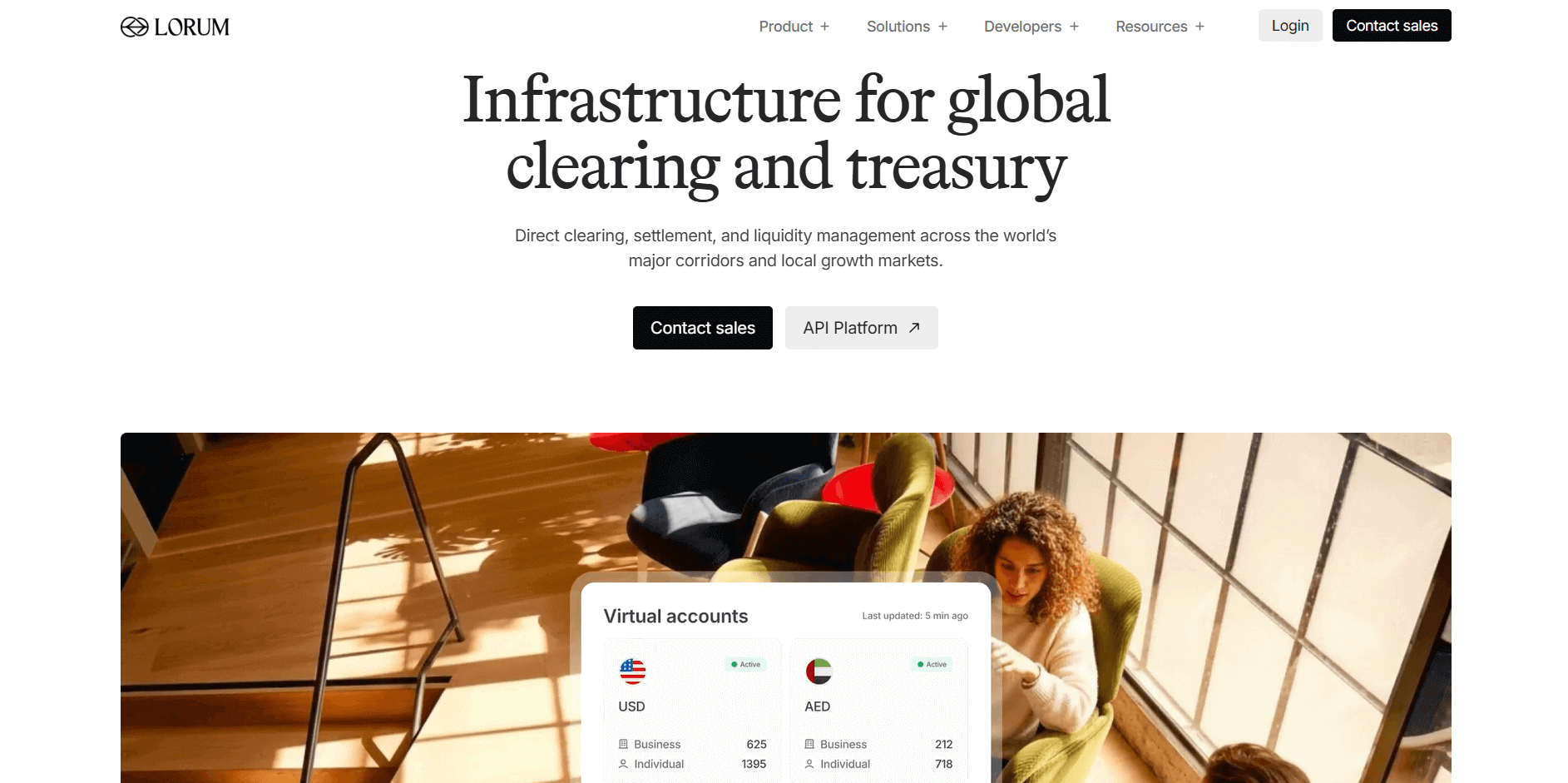
Lorum is an institutional clearing and treasury partner for regulated platforms and financial institutions across AED, USD, EUR, GBP, and other supported currencies.
It issues virtual IBANs in the customer’s name via API for platform collections and payouts.
Platforms manage operational and client-money accounts on one multi-currency ledger, keeping funds cleanly separated.
Key features
- Named virtual IBANs in each end customer’s name, issued by API
- Virtual IBANs in AED, USD, EUR, GBP, and other supported currencies
- Multi-currency clearing plus account structures and cash management on one platform
- Coverage across 30+ markets
Best for
PSPs, payroll, EOR platforms, and marketplaces.
Geography
EU, US, Middle East, Africa, and Asia.
Currencycloud
HQ: London, United Kingdom
Year founded: 2012
Currencycloud provides a multi-currency account and payouts platform used widely by digital banks, payroll tools, card programs, and cross-border fintech services. Its infrastructure focuses on multi-currency wallets, transparent FX, and global payout rails. Currencycloud enables businesses to process international payments, convert funds into other currencies, and support recurring billing for subscription services. Currencycloud is known for its developer-friendly tools and extensive corridor network.
Key features
- 35+ currencies
- Multi-currency accounts and wallet structures
- SEPA, Faster Payments, US ACH, APAC payments
- Transparent FX and treasury tools
Best for
Businesses requiring broad currency coverage, cross-border payouts, or multi-currency account infrastructure.
Geography
UK, EU, US, Canada, APAC.
Modulr

HQ: London, United Kingdom / Dublin, Ireland
Year founded: 2015
Modulr provides direct access to payment schemes in the UK and EU and is widely used for high-volume payout systems and payroll operations, with infrastructure designed to efficiently handle large transaction volume for businesses with demanding payment needs. Its infrastructure supports instant and scheduled payment flows, with a strong focus on automation and operational reliability.
Key features
- EUR and GBP accounts
- SEPA, SEPA Instant, Faster Payments, Bacs
- Direct scheme connectivity providing fast settlement
Best for
Payroll providers, embedded payments, PSPs focused on UK/EU corridors.
Geography
UK and EU.
Payset
HQ: London, United Kingdom
Year founded: 2018
Payset offers multi-currency business accounts and virtual IBANs, with business account solutions tailored for SMEs and digital businesses seeking efficient international payment capabilities, mostly used by SMEs, freelancers, smaller PSPs, and online businesses. The solution balances accessibility with essential multi-currency support, making it a good option for smaller organisations or early-stage companies.
Key features
- Around 30 supported currencies
- Multi-currency virtual IBANs
- SEPA and Faster Payments
Best for
SMEs, freelancers, early-stage PSPs, and digital businesses needing straightforward international payment capabilities.
Geography
UK, EU, and global corridors via partners.
Virtual IBAN Providers Comparison Sheet
| Provider | HQ | Year | Currencies | Local Rails | Best For | Geography |
|---|---|---|---|---|---|---|
| Airwallex | Melbourne, Australia | 2015 | 60+ | SEPA, SEPA Instant*, FPS, ACH, APAC | Global PSPs, marketplaces | Global |
| OpenPayd | London, UK | 2018 | Broad EU/global | SEPA, FPS | Embedded finance, fintech | UK/EU/global |
| Banking Circle | Luxembourg City, Luxembourg | 2013 | 20–25 | SEPA, FPS, CHAPS, SWIFT | Large PSPs & EMIs | EU/UK |
| Clear Junction | London, UK | 2016 | EUR, GBP, USD | SEPA, FPS, CHAPS | Regulated institutions | EU/UK/global |
| Lorum | New York, US | 2023 | ~30 | SEPA, FPS | PSPs, payroll | EU, US, Middle East, Africa, Asia |
| Currencycloud | London, UK | 2012 | 35+ | SEPA, FPS, US/APAC | Multi-currency platforms | Global |
| Modulr | London, UK / Dublin, Ireland | 2015 | EUR, GBP | SEPA, SEPA Instant, FPS, Bacs | Payroll, payouts | UK/EU |
| Payset | London, UK | 2018 | ~30 | SEPA, FPS | SMEs & small PSPs | UK/EU |
*Availability may vary by country.
SDK.finance: Powering Your Payment Business with IBAN-Ready Core Infrastructure

Creating an IBAN-enabled payment product demands more than access to banking rails. It requires a flexible transactional core, multi-currency account management, a reliable ledger, compliance-friendly operations, and tools that can support day-to-day financial workflows. SDK.finance delivers this foundation, acting as the core layer behind modern PSPs, EMIs, neobanks, and embedded finance products.
With SDK.finance, companies can integrate with any IBAN or virtual IBAN provider and build a payment platform tailored to their markets and regulatory context. The platform includes:
- A ledger-based multi-currency core
- Accounts and sub-accounts for clients and merchants
- More than 470 API endpoints for transfers, limits, fees, reconciliation, and reporting
- A back-office for AML checks, operations, customer management, and settlement
- Tools for treasury and balance control
- Flexible integration options with any IBAN/vIBAN provider
- Deployment via SaaS or source-code licence
With SDK.finance as your core infrastructure, you gain the stability and flexibility needed to launch and scale IBAN-enabled financial services.
How to Choose an IBAN or Virtual IBAN Provider
Selecting the right provider is crucial – look for one that offers personalised service and a dedicated account manager to ensure tailored support and quick issue resolution for your business needs.
Virtual IBAN providers differ in their licensing, risk appetite, currency range, pricing model, and technical capabilities. When choosing a partner, consider the following:
- Regulatory alignment: Some onboard only licensed PSPs and EMIs; others accept early-stage fintechs.
- Currency and regional coverage: Check which currencies and corridors match your operating markets.
- Payment rails: The availability of SEPA, SEPA Instant, Faster Payments, ACH, and APAC rails affects settlement speed.
- Account structure: Confirm whether accounts are client-named and whether sub-accounts or merchant-level accounts are available.
- Integration approach: API maturity, documentation quality, and webhook support matter for time-to-market.
- Risk appetite: High-risk industries face additional checks or exclusions.
- Pricing model: Understand account fees, payment fees, FX markups, minimum commitments, and especially monthly fees, as these ongoing costs impact your total cost of ownership and should be transparent and clearly communicated.
- Scalability: Choose a provider capable of supporting your growth and future geographic expansion.
Requirements Companies Must Meet to Work With an IBAN Provider
IBAN providers evaluate whether a prospective client meets regulatory and operational standards before issuing accounts. Key requirements include:
- Transparent ownership: Providers require full UBO details, director documentation, and a validated business address.
- Clear business model: Companies must provide a detailed explanation of their service, customer types, and flow-of-funds.
- AML/KYC readiness: Policies for customer onboarding, sanctions checks, and transaction monitoring, plus an appointed compliance officer.
- Financial stability: Proof of capital, financial statements, and a realistic operating plan.
- Geographic suitability: Restrictions may apply to high-risk jurisdictions or sanctioned regions.
- Industry category: Crypto, gambling, high-chargeback e-commerce, and adult content sectors may be excluded.
- Intended use of accounts: Providers assess the number of expected sub-accounts, volume forecasts, and operational complexity.