


On 13 November 2026, OpenAI began rolling out ChatGPT Wallet, a feature that lets its AI agents, called dots, complete online purchases after the customer approves them. OpenAI built Wallet with American Express, Mastercard, and Visa. The initial rollout covers US ChatGPT Pro subscribers aged 18 or older with an eligible US-issued card and a US billing address.
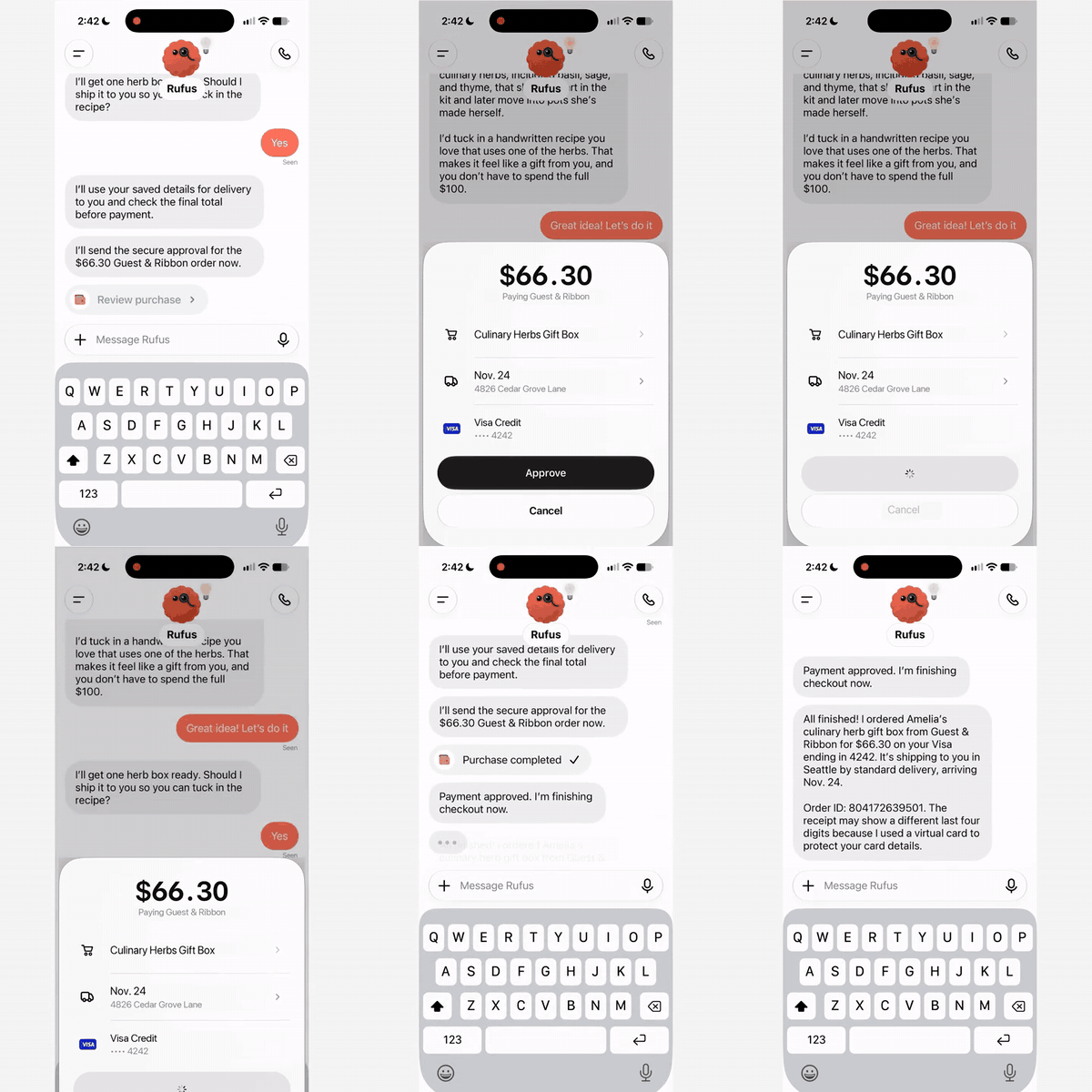
A shopper can approve a purchase in ChatGPT while the merchant processes it through its own checkout. That splits a familiar journey across different systems. The shopper sees what they agreed to in ChatGPT, the merchant sees whether an order was created, and the issuer sees the card transaction. If something goes wrong, those records need to tell the same story.
How ChatGPT Wallet works
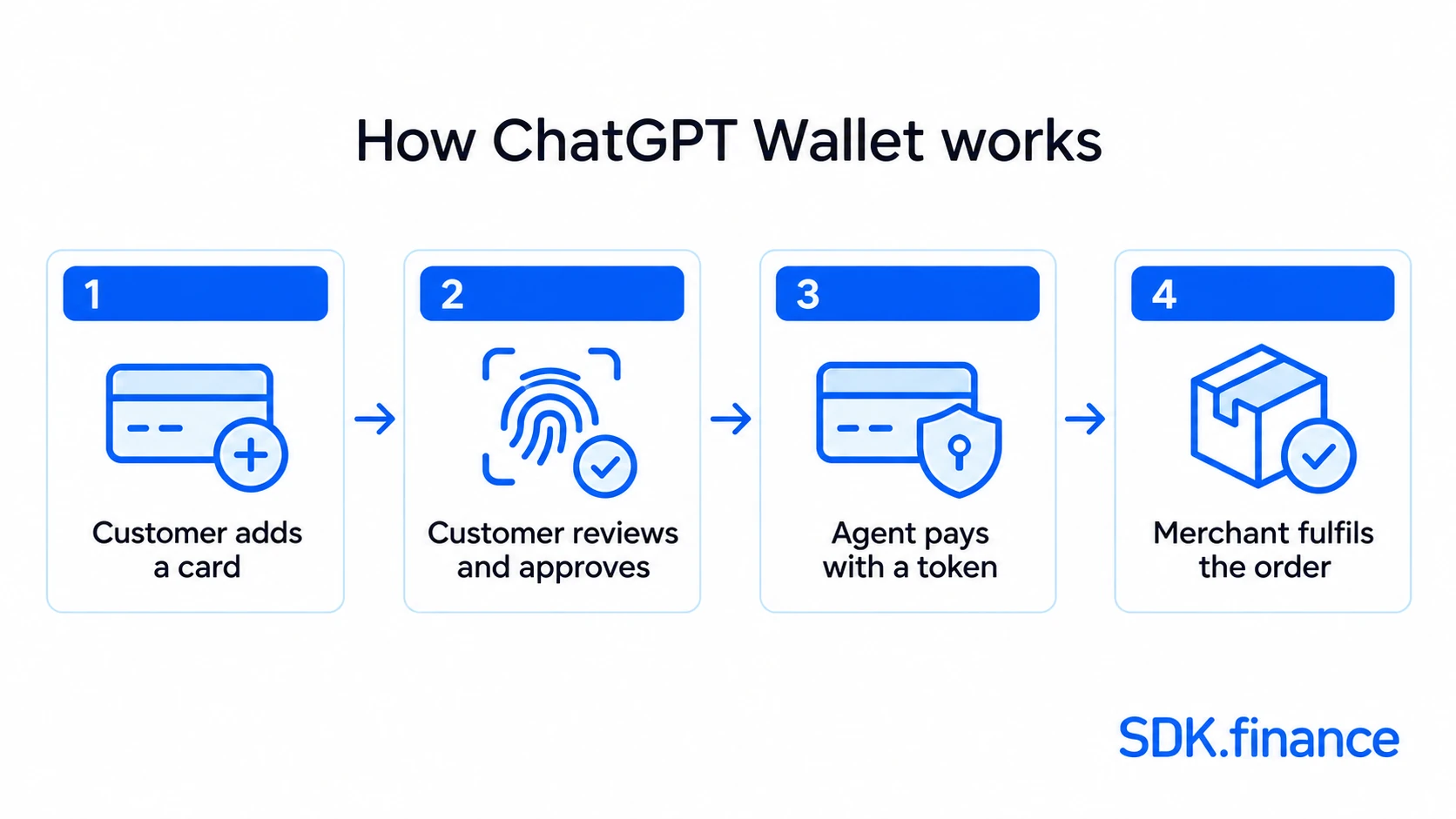
- The customer adds an eligible card. The issuing bank may ask them to verify it during setup.
- The dot prepares a purchase. The customer reviews the merchant, items, total, and selected card, then approves that specific purchase with a biometric check such as Face ID or Touch ID.
- The dot completes checkout using a payment token. The card network provides a substitute credential. The merchant’s checkout processes the payment against the selected card, and the customer’s underlying card number stays hidden from both the dot and the merchant.
- The merchant handles the order. The merchant confirms and fulfils the purchase and handles returns and customer service. Existing card rewards and protections for eligible disputes still apply.
OpenAI describes advance permission within spending limits, purchase categories, or time windows as a future direction. At launch, the customer approves each purchase individually.
For merchants, the challenge is getting from product discovery to a confirmed order
A dot can find a product and still fail to buy it. A firewall may block its cloud browser, the product feed may show stock that has already sold, or shipping fees may only appear at the last step. Merchants that want to sell through agents need to check what the agent can see and do across the entire journey, including whether it can read the final price, select the right variant, and retrieve the order confirmation.
OpenAI says existing checkout forms can accept Wallet payments without a Wallet-specific integration. Its playbook recommends using Web Bot Auth to verify signed requests from ChatGPT’s cloud browser. Merchants can also submit a product feed to improve discovery. A current feed helps the agent find the product, while verified browser access helps it reach checkout without broadly relaxing bot protection.
For payment providers and card networks, the challenge is recognising legitimate agent traffic
Fraud systems often look at the browser and IP address they can observe. A cloud browser acting for a real shopper can therefore resemble the automation those systems were built to stop. OpenAI is rolling out a way to relay selected user context through the Forwarded HTTP header. Payment service providers and fraud teams need to check which signals reach their systems, whether they come through a trusted path, and how they affect declines and manual reviews.
Web Bot Auth helps a merchant verify that a request came from ChatGPT’s cloud browser. The Forwarded header can add context about the shopper’s session for fraud scoring. To verify that the shopper approved the specific merchant, items, and total, the fraud team needs separate evidence linked to the payment. OpenAI says Wallet records each approval. Its merchant guide explains which session signals may be forwarded, while merchants and acquirers still need to confirm what approval evidence their payment provider can retrieve if a transaction is flagged or disputed.
Card networks face a related challenge. A payment token protects the card credential. Evidence of what the cardholder approved answers a separate question, especially during a dispute. Mastercard’s broader Verifiable Intent initiative illustrates how networks can link the cardholder’s instructions to the resulting purchase. For providers that route through multiple acquirers, the practical question is which agent and approval signals survive each route and which references remain available for refunds, reconciliation, and disputes.
For issuing banks, the challenge is making a decision with enough context
A customer can approve the purchase in ChatGPT and still have the card transaction declined. The issuer makes its own authorisation decision using the information it receives. Issuers will need to establish how agent-assisted purchases appear in their risk systems and which cases call for additional verification. The same visibility matters in customer support. If a cardholder calls about an unfamiliar charge, the bank needs to know what evidence it can retrieve about the merchant, the payment, and the customer’s approval.
There is a commercial question for issuers as well. If shoppers repeatedly pay with a card saved in an AI wallet, card selection can happen before they reach a merchant’s checkout. Issuers have a reason to track whether customers can add their cards successfully, recognise Wallet purchases on their statements, and resolve problems through the channels they already use.
The test case is a pending charge with no order confirmation
Imagine a customer approves a $120 purchase. Checkout times out, the banking app shows a pending charge, and the merchant has sent no confirmation. That entry may be an authorisation hold. The merchant can check whether it created an order, the payment provider can trace whether the original payment was captured or reversed, and the issuer can explain the pending entry to the customer.
“An agent-led checkout has three separate events: the customer approves a specific purchase, the issuer authorises a card payment, and the merchant confirms an order. Each event has its own record and can succeed while the next one fails. The architecture has to link those records to the same purchase attempt, so a timeout doesn’t trigger a second charge and a dispute can be traced back to what the customer actually approved.”
Pavlo Sidelov, CTO at SDK.finance
For FinTech teams building their own agent-assisted payment flows, the SDK.finance Transaction Platform can compare internal transaction records with external bank or provider data and surface discrepancies for review. The checkout integration needs to supply the references that connect those financial records to the merchant’s order and, where available, the customer’s approval.


