Building a financial product for Nigeria means finding a useful role in an established ecosystem. Consumers already have payment apps, merchants can choose between acceptance providers, and financial institutions rely on shared infrastructure. A new entrant needs a clear answer to what it will make easier, for whom, and how it will deliver that improvement.
The opportunity for FinTech in Nigeria extends beyond launching another consumer app. It includes merchant collections, focused wallets, marketplace payouts, and better financial records for existing providers. Founders, product leaders, and software delivery teams need to understand both the market and the operating dependencies behind those opportunities.
This guide maps the companies, trends, infrastructure, and constraints that matter when planning a Nigeria-focused product. It also explores how SDK.finance, a FinTech software provider for building digital wallets and payment products, can support development through practical capabilities and a choice of delivery models.
Discover how the SDK.finance TPS can power high-speed, secure operations across banking, fintech, and retail
Talk to Our TeamFinTech in Nigeria: market structure and customer needs
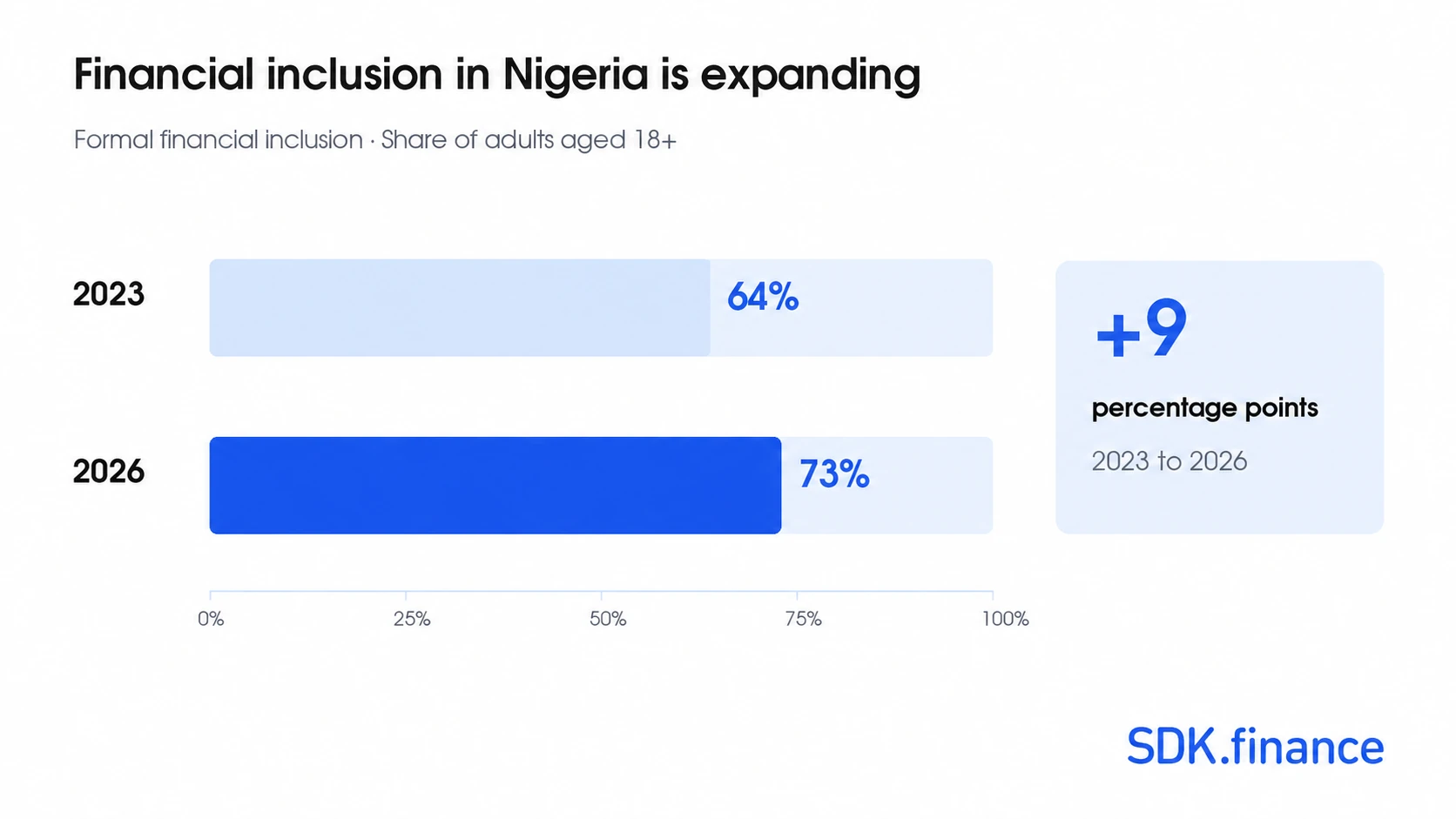
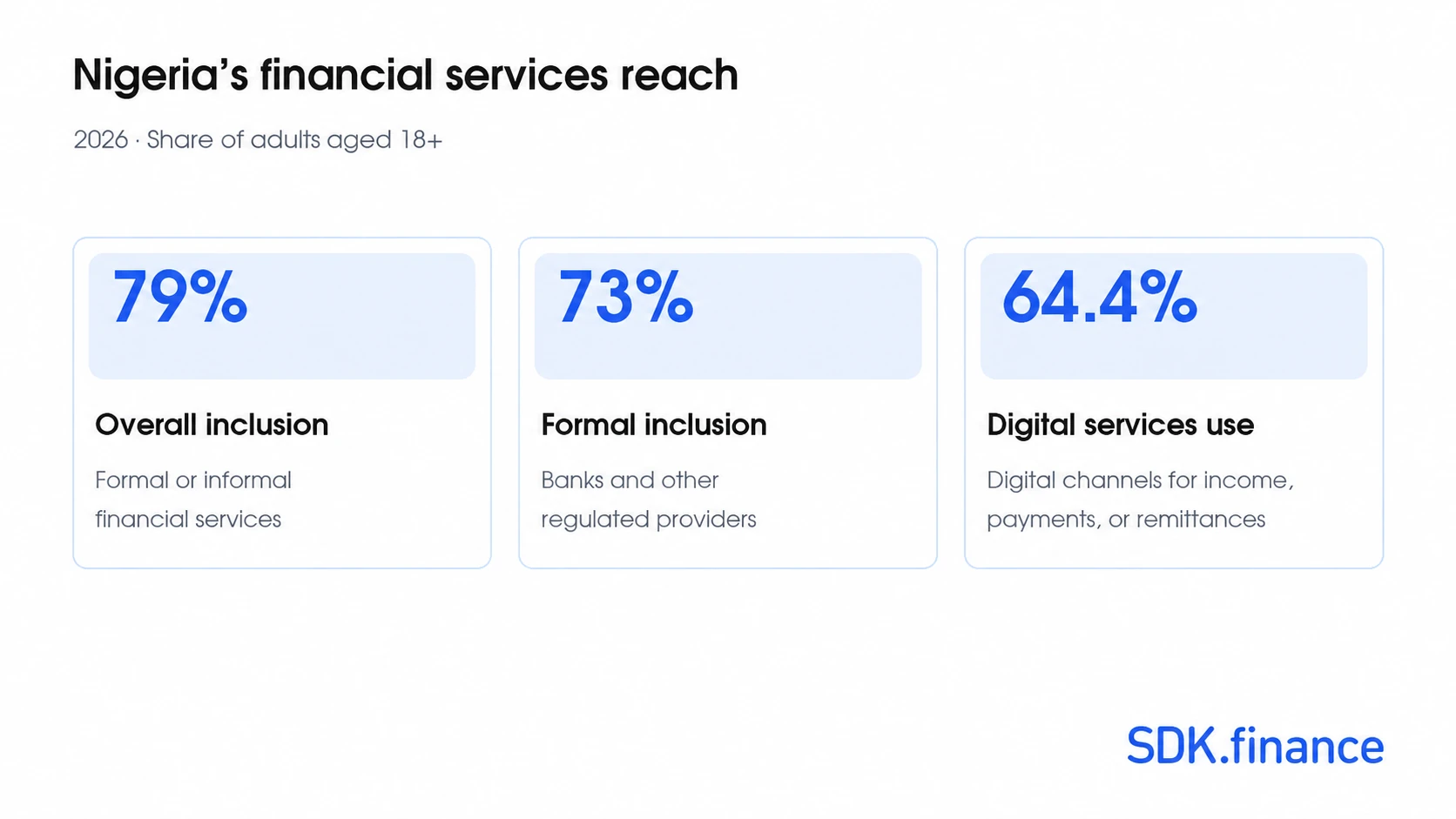
Nigeria’s financial inclusion figures show both progress and room for more useful services. EFInA’s 2026 Access to Financial Services survey highlights report that formal financial inclusion reached 73% of adults, compared with 64% in 2023. Overall financial inclusion, which also includes people using only informal services, reached 79%.
These measures describe different things. Formal inclusion covers banks and other regulated financial providers. Overall inclusion also counts informal financial services. Neither figure tells a product team whether a particular customer is satisfied with their payment experience.
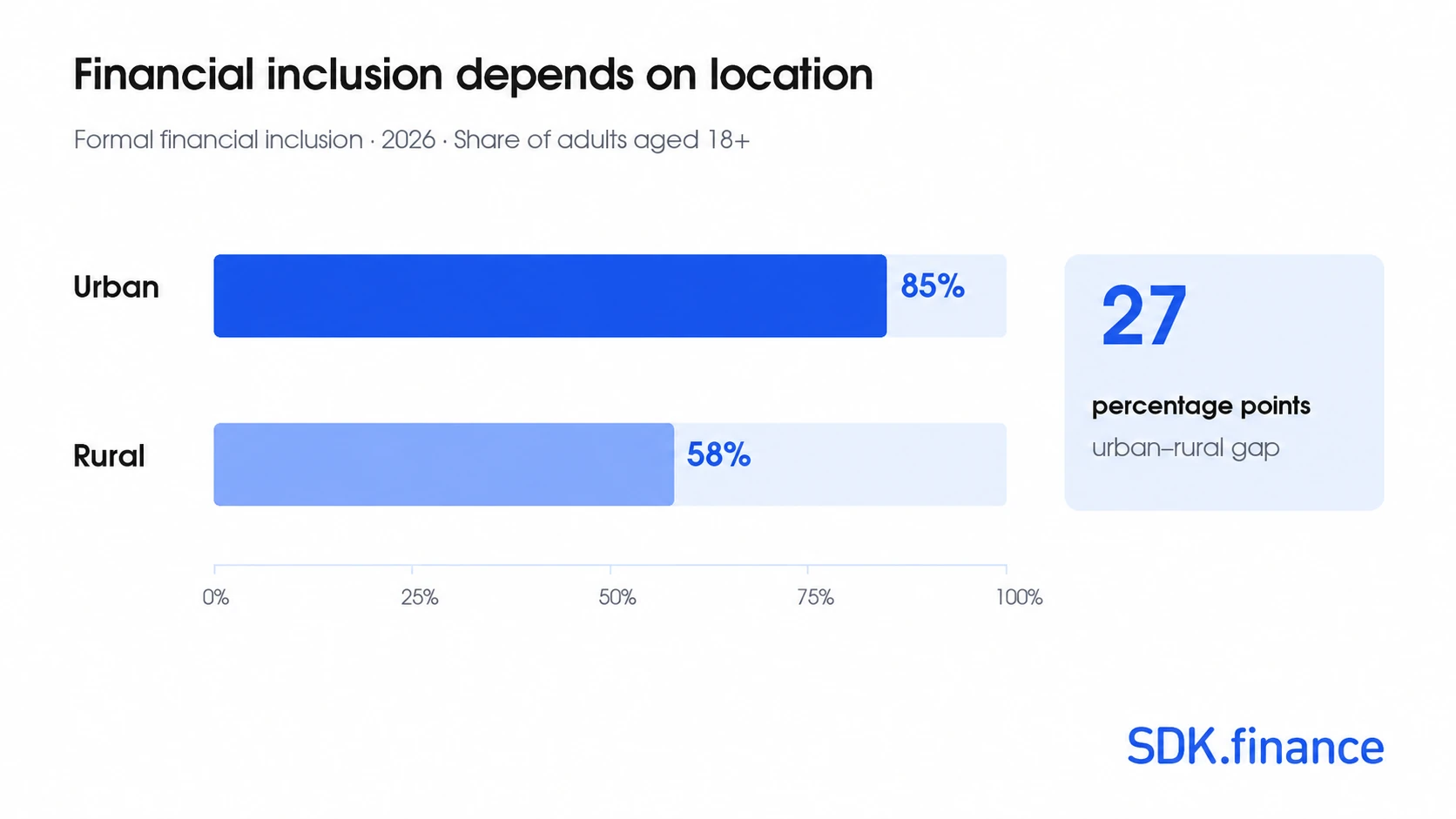
Financial inclusion in Nigeria also varies by location. The same EFInA report puts formal inclusion at 85% among urban adults and 58% among rural adults in 2026. A national average therefore gives only part of the picture. A product designed around one customer group’s access and habits may not suit another.
Access is only part of the picture. EFInA reports that 64.4% of adults used digital channels to receive income, make payments, or remit in 2026. This measures use, rather than simply having access to a formal provider. It does not measure transaction frequency or the quality of every customer experience.
For product planning, divide the market into customer jobs and match each job to the product it needs:
- Consumers need to receive income, pay bills, and understand unfamiliar charges. A wallet should offer a clear balance and simple journeys.
- Shop owners need to confirm that money has arrived before releasing goods. Merchant tools should connect payment confirmation with useful sales records.
- Payment providers need to investigate why their records differ from a bank report. Operations software should bring related information together so staff can resolve problems without searching across dashboards.
Before defining an MVP, research where the intended audience still relies on cash, needs assistance, or abandons a transaction. For a software development company or systems integrator, the answers establish which workflows need custom development and which can use an existing software foundation.
FinTech providers and companies in Nigeria
For planning, group Nigeria’s FinTech market into payments and mobile money, digital banking, lending, savings and investments, insurance, and the software supporting these services. Each category solves a different customer problem: collecting revenue, accessing credit, setting money aside, or managing risk. This guide focuses on payment products and the operational software behind them, where founders and delivery teams can define concrete workflows. The companies below illustrate selected roles; their services and permissions must be assessed separately.
The following selection groups providers by role rather than ranking their size or quality. SDK.finance supplies software that can support a Nigeria-focused project, subject to local implementation and partnerships. For Nigerian payment entities, check the CBN’s payment service provider register; for investment activities, consult the SEC’s registered FinTech operators.
| Provider | Entity or category | Role and example use |
|---|---|---|
| SDK.finance | FinTech software provider | Provides software for building wallets, payment services, and financial records. |
| Paystack | Payment acceptance and processing | Online and in-person collections, helping merchants accept payments and manage transaction information. |
| Flutterwave | Payment acceptance and payouts | Collections and transfers for businesses, including supported cross-border use cases. |
| Interswitch | Payments infrastructure and processing | Payment processing and business payment tools that connect organisations with digital payment services. |
| Moniepoint | Business banking and merchant services | Business accounts and payment acceptance tools for merchants managing daily collections. |
| OPay | Mobile-money services | Consumer transfers, bill payments, and other everyday payment functions. |
| PalmPay | Mobile-money services | Digital bill payments and everyday payment services through its consumer offering. |
| Paga | Mobile-money and payment services | Transfers, bill payments, and agent-supported access for consumers and businesses. |
| Cowrywise | Savings and investment platform | Savings plans and access to mutual-fund investments, serving customers setting money aside or investing. |
| PiggyVest | Savings and investment platform | Goal-based and automated savings features, alongside investment offerings with their own terms. |
Use these examples to decide whether you will serve end users, improve a business workflow, or supply infrastructure to other providers. That choice determines which companies are competitors, potential customers, or partners.
Trends shaping Nigeria’s FinTech landscape
Nigeria’s payment strategy is moving towards wider access and better connections between services. The CBN’s Payments System Vision 2028, launched in 2026, prioritises interoperability, inclusion, consumer protection, and cross-border integration. These are policy objectives, not proof that every connection is available today. The developments below show how that direction relates to practical product decisions.
Account transfers connect payments with everyday commerce
NIBSS Instant Payment, or NIP, supports real-time account-based transfers between participating institutions. Payment acceptance providers such as Paystack also offer bank transfers alongside other methods. For product teams, account transfers therefore belong in the checkout and collections discussion, not only in person-to-person payments.
The next layer of value is connecting the incoming payment to an order, invoice, or customer. A merchant needs to recognise what has been paid and continue the sale. A business collecting recurring invoices needs a dependable reference for matching each receipt. These workflows create room for specialised products around shared payment infrastructure.
Mobile money combines digital and assisted access
The CBN lists OPay, PalmPay, and Pagatech among mobile-money operators. Their presence illustrates a market in which mobile-money services sit alongside bank-led channels. A customer’s journey may include an app, an agent, a cash deposit, and a bank transfer.
For teams serving customers who need assistance, the service design extends beyond the phone screen. Agent access, understandable charges, and a clear handover to support all matter. Research the actual journey in the intended location before assuming that an app-only model will work equally well for every audience.
Open banking creates a framework for permissioned data
The CBN’s 2023 operational guidelines for open banking set out how participants should share customer-permissioned data. They address consent, including explaining the purpose of requests and obtaining time-bound permission. This gives product teams a framework for designing data-based services, while actual bank coverage still needs to be checked.
A potential use case is a business cash-flow view across supported accounts. Another is reducing repeated information entry during an application. These opportunities depend on available connections and lawful data use. A regulatory framework is not evidence that every bank or data service is already accessible through a chosen provider.
Embedded finance connects payments with business workflows
Marketplaces, logistics services, and industry software providers already know when customers owe money and suppliers should be paid. Embedded finance can connect those commercial events with collections, balances, or payouts within the same workflow.
A useful product test is whether the financial feature removes a specific interruption, such as exporting seller earnings into a separate payout tool. Map that interruption before deciding which financial functions to add.
Cross-border integration is a policy priority
The CBN’s Payments System Vision 2028 identifies regional and international integration as a priority. Flutterwave’s services provide an example of commercial offerings spanning acceptance, payouts, and cross-border transfers. For a Nigeria-focused team, the opportunity starts with a customer’s specific trade or payment route, rather than a promise of universal coverage.
Confirm the supported corridor, currencies, and customer type with the provider. Then design around exchange-rate quotes, charges, recipient details, and returned or delayed payments. These requirements make cross-border services a distinct product decision, even when the same customer already uses domestic transfers.
The infrastructure behind digital payments in Nigeria
A useful way to understand payment infrastructure is to separate the customer experience, the software rules, the financial providers, and the records. They work together, but they have different jobs.
The first three layers handle the request:
- Customer channel: the app, website, terminal, or other interface used to start an action.
- Transaction software: checks the request against the product’s rules, such as the available balance, fees, and permitted amount.
- Provider connection: passes the required information to the bank or payment service involved.
The provider then uses the relevant payment rails, the infrastructure that supports money movement between participating institutions. A product may access these services through a financial partner rather than by joining the rail directly.
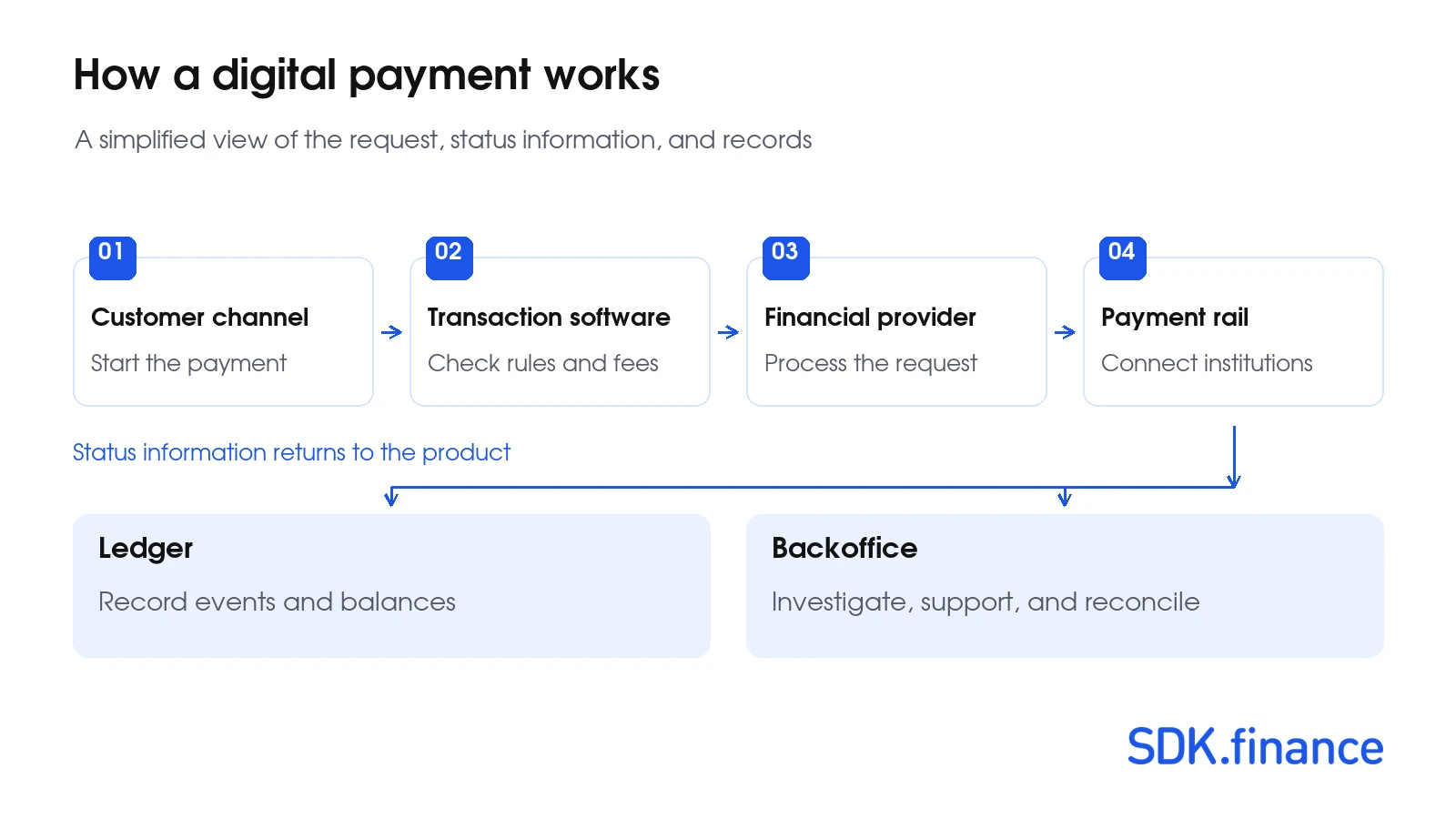
Alongside that flow, a ledger records financial events and their effect on balances. The backoffice gives authorised staff the tools to manage accounts, investigate issues, and support customers. Both need useful information from the payment process.
For a merchant payment, the product links a transfer to a purchase; the ledger records its financial effect; operations compares those records with the provider’s report. Each step answers a different question.
Keep these three terms separate when defining requirements:
- Payment confirmation tells the product what happened to a payment.
- Payment reconciliation compares internal and provider records to identify differences.
- Settlement concerns the transfer of funds that discharges obligations between the relevant parties.
Nigeria’s NIP makes this distinction concrete: NIBSS describes it as a deferred net settlement system, even though the beneficiary receives value in real time. Customer availability and settlement between institutions therefore operate on different timelines.
Identity services form another part of the infrastructure. The Bank Verification Number, or BVN, supports identity verification across Nigeria’s banking industry. A product team still needs to establish the appropriate verification process, provider access, and handling of customer information for its service.
An internal wallet balance also needs careful explanation. It is a record within the product; it should not automatically be described as a separate bank account. The underlying financial arrangement determines where funds are held and which services the customer receives.
For a buyer, these distinctions make vendor conversations more productive. Instead of asking whether a platform “does payments”, ask which parts it supplies, which partners are required, and how status updates, records, and unresolved cases move between them.
Challenges and regulatory considerations
Nigeria offers established financial infrastructure, but a product still needs an operating model that works for its audience. The main constraints affect the service scope, customer experience, and cost of delivery.
Match permissions to the activity
Start with the activity and the legal entity that will perform it. Use these official sources to organise the initial checks:
| Planned activity | What to verify | Official starting point |
|---|---|---|
| Payments or mobile money | Exact legal entity, licence category, and services covered by the partner’s permissions. | CBN payment service provider register |
| Investment services | Operator category and current status; distinguish registered activities from participation in regulatory incubation programmes. | SEC FinTech directory |
| Processing personal data | Lawful basis, customer rights, and the responsibilities of each organisation receiving the data. | NDPC: Nigeria Data Protection Act 2023 |
A brand name or sandbox listing does not establish permission for every service. Confirm the current status and permitted activity with Nigerian regulatory expertise. Assign responsibility for customer verification, complaints, reporting, and customer funds in the operating agreements.
Protect customer data throughout the journey
The Nigeria Data Protection Act 2023 provides the legal framework for processing personal data. Map what onboarding collects, who receives it, and which staff can access it. Establish the relevant lawful basis and retention requirements before deciding which information the product should store.
Use that map to make practical decisions: collect only necessary information, restrict staff access, and define how customer requests and incidents are handled. Consent for an open-banking connection is one part of this work, not a substitute for the wider data-protection responsibilities.
Design for interrupted journeys and fraud attempts
Test the product on the devices and connections used by the intended audience. A lost connection should not leave users guessing whether to repeat a payment. Provide recoverable journeys, understandable statuses, and a route to support.
Treat identity checks and transaction controls as separate needs. Verifying an identity does not establish that every later instruction is legitimate. Plan controls for suspicious activity, changes to account access, and disputed payments, with clear escalation responsibilities. Avoid adding friction indiscriminately: decide which situations need further checks and explain them to customers.
Check the cost of serving the customer
Evaluate provider charges, identity checks, messaging, support, and integration maintenance alongside the software price. Where agents or cash access are part of the service, include those arrangements too.
Model the economics for the actual customer journey, including failed attempts, refunds, and support contacts. A feature can attract use while remaining expensive to operate. A focused launch helps test whether the customer benefit and the cost of delivering it fit the business model.
Discover how the SDK.finance TPS can power high-speed, secure operations across banking, fintech, and retail
Talk to Our TeamSoftware opportunities for Nigeria-focused financial products
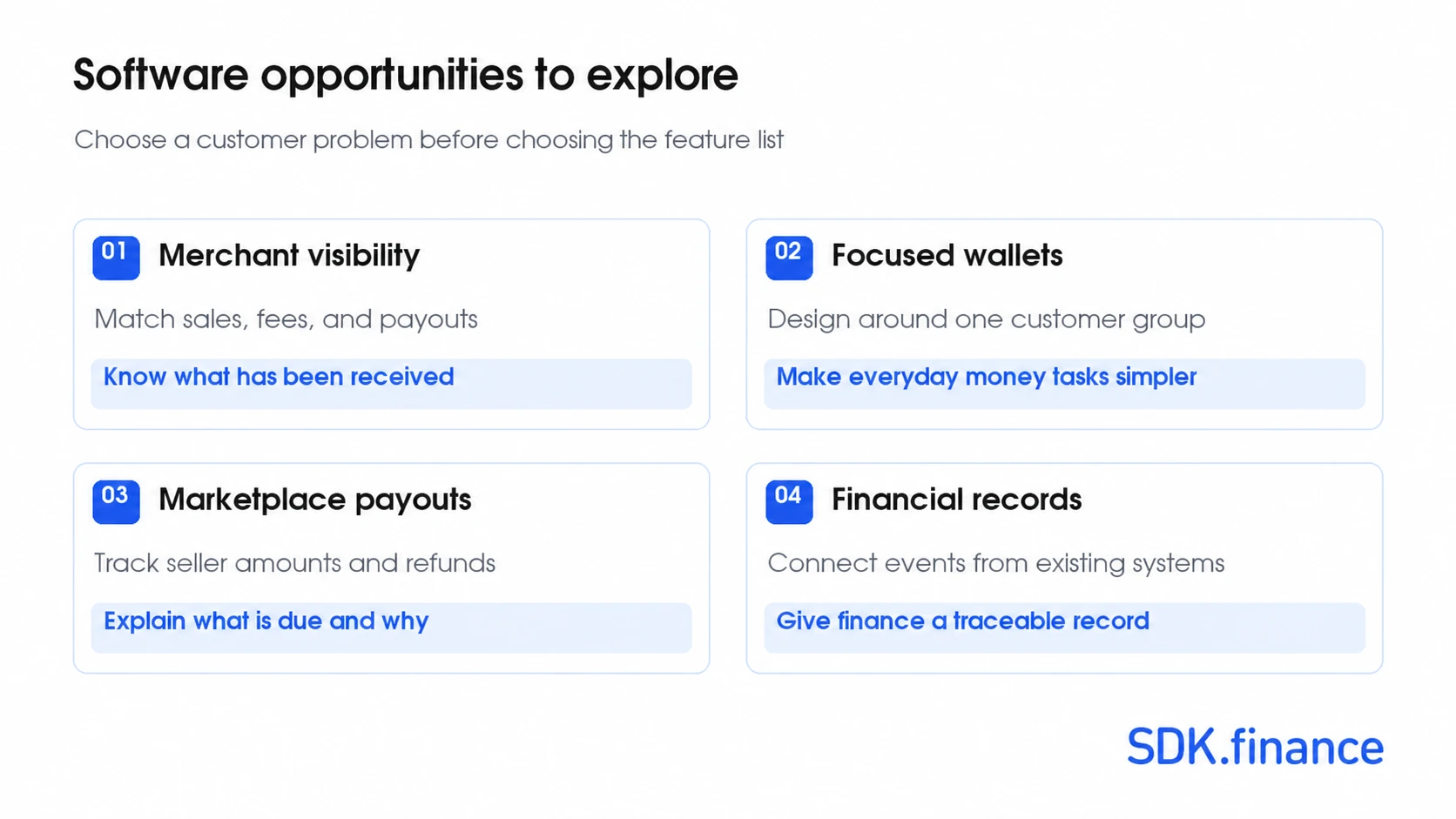
The following opportunities are starting points for customer research. Their commercial value depends on the chosen segment, the cost of serving it, and the ability to secure the necessary financial partnerships.
Merchant payment visibility
Merchants accepting payments through several channels need to connect collections with orders, fees, refunds, and payouts. A useful tool brings those amounts into one view, flags mismatches, and distinguishes expected payouts from money already received. Its value depends on dependable provider data and clear transaction references.
For example, a multi-location retailer could review payments by store and provider, then assign unmatched transactions to staff. Test the workflow with real businesses: measure investigation time and identify which questions still require a spreadsheet or support call. This provides evidence of value before expanding the product.
Wallets for specific customer groups
An illustrative wallet for delivery riders on a Nigerian logistics platform could show earnings, deductions, transaction history, and withdrawals to a bank account. Payments to participating maintenance providers could follow if rider research shows demand. The initial value is a clear view of money earned and available to use.
Digital wallet software can provide accounts, balances, fees, and limits, while the product team designs the journey and arranges external financial services. Map how money enters and leaves the wallet, including charges and withdrawal access. This proposed scenario depends on suitable provider connections; it is not an existing deployment.
Marketplace payouts
A marketplace needs to explain what each seller has earned, what remains pending, and how fees, delivery charges, refunds, or adjustments affect the payout. Connecting payment records with the original order gives sellers and operations teams the same explanation.
Consider a partial refund after delivery: the product must trace its effect on the seller’s amount, the platform fee, and any payout already sent. Agree with the financial provider when funds become available and how later adjustments are handled. Those rules determine the balances and statuses the software should display.
Better financial records
An established provider with working payment services may need better financial records rather than a replacement platform. A separate ledger layer can receive events from existing systems and create structured accounting entries. Double-entry recording pairs debit and credit entries to help maintain balanced records.
This approach depends on complete events, consistent references, and agreed accounting rules. Define how fees, refunds, and reversals should be recorded before integration. A new ledger can organise the information, but it cannot resolve missing data or unclear accounting decisions automatically.
How to choose your first opportunity in Nigeria
Select the problem before selecting the software. Compare opportunities using evidence from customers and prospective financial partners:
- Customer access: can you reach the intended users and observe their current process? Existing relationships with merchants, a logistics network, or financial institutions can make a focused pilot easier to organise.
- Partner readiness: can the chosen financial provider support the proposed collections, withdrawals, or payouts? Confirm access to the required services and reports before making them central to the proposition.
- Cost to serve: will the expected revenue cover provider charges, verification, support, and maintenance? Compare a typical customer journey with one that includes a failed payment or support request.
- Evidence of demand: can users show where the current process costs them time or money, and will they try a proposed improvement? Separate observed problems from requests for a longer feature list.
For example, a team with merchant relationships and access to transaction reports could validate a collections view before considering a broader wallet. A provider with working payment services but fragmented records could begin with a ledger project. These are starting hypotheses to test, not rankings of market attractiveness.
Define a pilot around one audience, one problem, and an observable result, such as less time spent explaining payouts. The FinTech Association of Nigeria offers industry networks and events that can help teams identify people to speak with. Those conversations support discovery; they do not replace customer validation or partner due diligence.
What to evaluate before building or buying FinTech software
Once the product scope is clear, evaluate how the software will deliver it. Give each supplier the same funds flow, required integrations, and operating scenarios so that proposals cover comparable work.
Compare delivery models against your team’s capacity
Compare building from scratch, SaaS, and a source code licence against the same requirements: the workflows that must be distinctive, the integrations needed for launch, and the engineering capacity available after it. Assess both the initial implementation effort and the ongoing responsibility your team can take on.
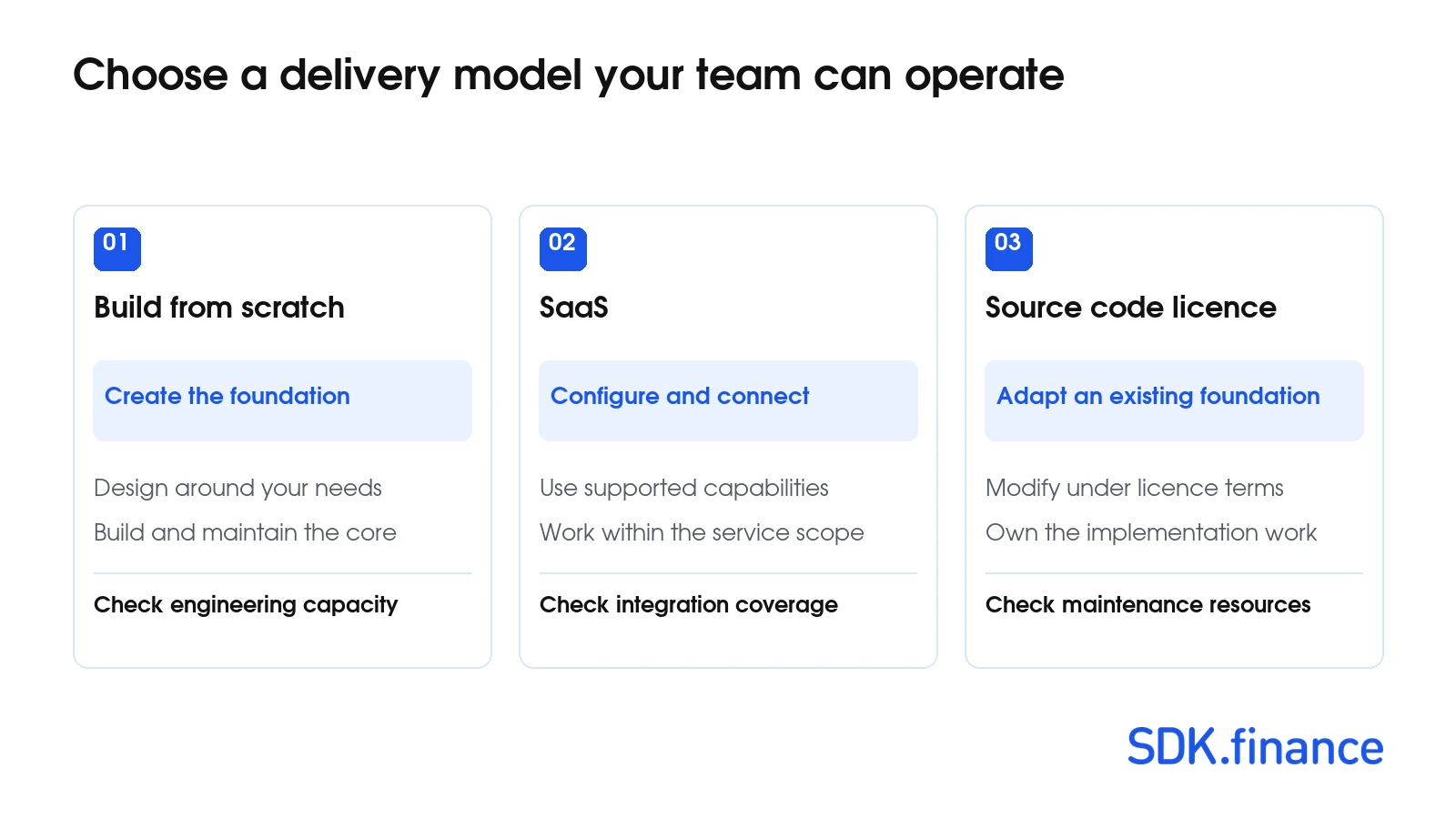
For each option, request a clear breakdown of configuration, integration work, custom development, and ongoing support. When considering a FinTech software source code licence, establish what the licence permits and what your team will maintain. Compare suppliers using the same launch scope so that an apparently lower price does not hide missing work.
Test the difficult cases before launch
A demonstration should cover more than a successful payment. Use these cases to test how the product behaves:
- Delayed confirmation: can staff find the current status without asking the customer to pay again?
- A repeated action: can the team establish whether the request created another payment?
- A refund after payout: can operations trace the effect on the seller’s amount and financial records?
- An unexpected provider amount: can finance identify the difference and assign it for investigation?
Include support and finance staff in the demonstration. They should be able to trace a successful payment, fee, refund, and reversal from the original request to the financial record. For an exception, they should identify the responsible person and the approved next step without relying on an engineer to interpret every status.
Agree acceptance criteria before selecting a vendor. For a merchant tool, these could include finding an unmatched receipt and explaining a payout. For a wallet, they could cover account funding and recovery after an interrupted journey. Tie the decision to the task the business needs to improve.
Build Nigeria’s next wave of financial products with SDK.finance
For a team launching a wallet, merchant service, or marketplace payment product in Nigeria, the challenge is turning local payment access into a service customers can use and operations teams can manage. SDK.finance provides a software foundation for that work, helping your developers focus on the customer proposition and Nigerian provider connections.
Build around the capabilities your product needs
The SDK.finance Transaction Platform brings together core functions relevant to the opportunities described in this article:
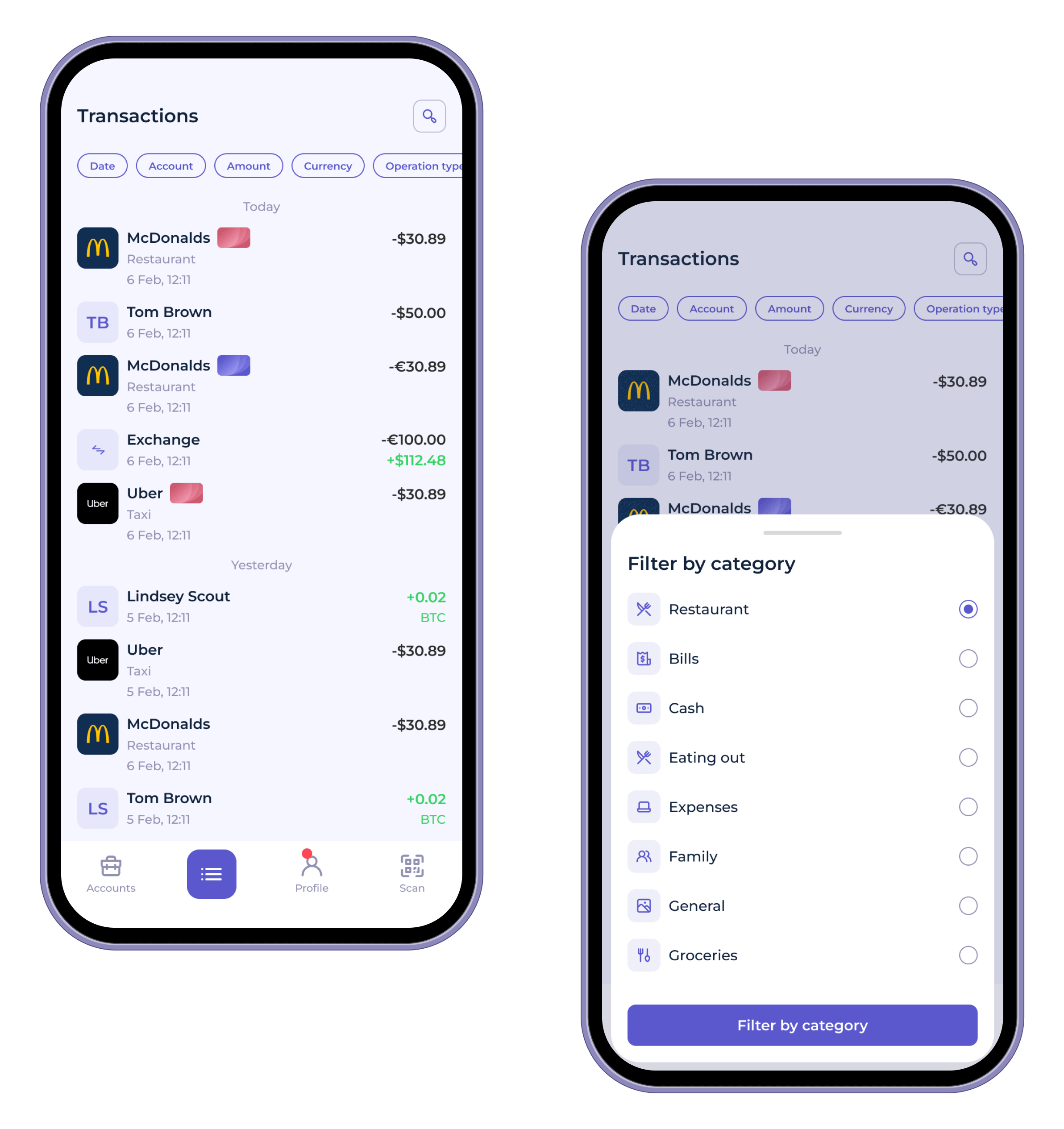
- Accounts, wallets, and balances: give consumers or businesses a clear record of funds and transactions within your product. This provides a foundation for a focused wallet or an account-based service.
- Configurable fees and limits: define charges and transaction boundaries for different customer groups and operations, so the software can reflect your commercial model and agreed operating rules.
- Payment workflows and integrations: connect funding, transfers, and withdrawals to external providers through APIs, webhooks, or middleware. For a Nigerian launch, scope the required bank and payment-provider connections, including arrangements for NIP access and BVN verification.
- Backoffice controls: give authorised staff access to account and transaction information, with role-based permissions. This helps a local support team investigate a payment query without giving every employee unrestricted access.
For an established Nigerian provider whose main challenge is financial records, SDK.finance General Ledger offers a separate accounting layer. It converts incoming financial events into double-entry records under configured rules, with integration and data mapping required. This can support modernisation while retaining the existing transaction system.
Choose SaaS or source code for your launch
SaaS: use SDK.finance as a subscription service, with platform updates and support within the agreed scope. This can suit a team that wants to focus on its Nigerian customer journey and provider integrations while reducing the work of maintaining the platform itself.
Source Code Licence: give your developers or delivery partner the ability to customise the software and manage deployment under the licence terms. This model suits a business that needs deeper control over product workflows and its technology environment, and has the team to handle testing, infrastructure, and ongoing maintenance.
In both models, Nigerian financial permissions and partner arrangements remain separate from the software. Confirm who holds and moves funds, performs verification, and handles compliance responsibilities.
Match the opportunity to the operating model
Nigeria’s FinTech opportunity spans customer-facing services and the software that helps providers operate them. The useful starting point is a defined customer problem within a clear market segment.
Compare the relevant companies, understand the local payment and identity infrastructure, and establish the financial arrangements behind the service. Then select software around the workflows and records that the business needs. A focused product, with realistic dependencies and a workable operating cost, provides a stronger basis for growth than a broad feature list.
Discover how the SDK.finance TPS can power high-speed, secure operations across banking, fintech, and retail
Talk to Our Team