Selecting the right core banking software in 2026 is no longer about finding the “best” overall platform – it is about finding the right architectural fit for your specific business model. In a market projected to reach $21.61 billion by 2030 (source: Grand View Research), the shift toward modular, API-first and cloud-ready infrastructure is reshaping how banks and fintech companies evaluate core banking vendors.
There is no single best core banking provider for every financial institution. Large banks, neobanks, PSPs, EMIs, digital wallets, embedded finance platforms and crypto-friendly banking products evaluate core banking software by different criteria:
- Enterprise banks usually prioritize scale, compliance and legacy modernization.
- FinTech companies often need Cloud deployment, API-first architecture, ledger infrastructure, payments, wallets, integrations and faster launch.
This guide compares leading core banking vendors by use case, including SDK.finance, Temenos, Mambu, Thought Machine, FIS, Fiserv/Finxact, Oracle FLEXCUBE, Finacle, Finastra and other providers.
Quick Comparison: Best Core Banking Software Providers List by Use Case (2026)
| Use case | Best-fit vendors |
|---|---|
| Enterprise core modernization for large banks | Temenos, FIS, Oracle FLEXCUBE, Finacle, Finastra, TCS BaNCS |
| US regional/community banking | Fiserv, Finxact, Jack Henry, FIS, Nymbus |
| Cloud / SaaS core banking platforms | SDK.finance, Mambu, Thought Machine, Finxact, 10x Banking, Skaleet, Nymbus |
| API-first fintech core banking infrastructure | SDK.finance, Mambu, Finxact, Thought Machine, 10x Banking |
| Ledger-based fintech infrastructure | SDK.finance, Mambu, Thought Machine, Finxact, 10x Banking |
| Embedded finance / BaaS infrastructure | SDK.finance, Unit, Railsr, Galileo, Solaris, Treasury Prime |
| Digital wallets, PSPs, EMIs and payment-led fintechs | SDK.finance, Galileo, Railsr, Solaris, Unit |
| Crypto banks / crypto-friendly banking products | SDK.finance, Galileo, Solaris, Railsr, Unit |
| Neobanks and mobile-first banks | SDK.finance, Mambu, Thought Machine, 10x Banking, Finxact, Nymbus |
| Source-code ownership / deeper customization | SDK.finance |
| Modular / composable banking platforms | SDK.finance, Mambu, Thought Machine, 10x Banking, Skaleet, Finxact |
| Lending-focused banking software | Mambu, Finastra, nCino, Temenos |
| Digital banking experience layer | Backbase, Q2, nCino |
| Global banking platform vendors | Temenos, FIS, Fiserv, Oracle FLEXCUBE, Finacle, TCS BaNCS, Finastra |
| Best fit for fintech startups | SDK.finance, Mambu, Unit, Railsr, Solaris, Galileo |
| Best fit for incumbent banks | Temenos, FIS, Fiserv, Oracle FLEXCUBE, Finacle, Finastra, Jack Henry |
SDK.finance provides core banking infrastructure with ledger, payments, wallets, ready applications and flexible deployment options
Talk to Our TeamMethodology: How We Evaluated the Top Core Banking Vendors
This 2026 update is based on public vendor information and SDK.finance’s 15 years of hands-on experience building payment and banking infrastructure for FinTech companies, PSPs, EMIs, digital wallets, neobanks and other financial products.
We evaluated each provider from a practical implementation perspective, focusing on five criteria:
- architecture
- deployment flexibility
- speed to market
- regulatory and security readiness
- ecosystem maturity.
Specifically, we looked at whether each platform supports cloud deployment, API-first integrations, modular architecture, ledger capabilities, payment infrastructure, KYC/AML workflows, security standards, ready applications, back-office tools and integrations with card issuing, payment rails, reconciliation and reporting systems.
We also considered deployment models, including SaaS, Cloud, hosted, on-premise, hybrid and source-code options, because infrastructure control and long-term customization can be critical for fintech companies and financial product builders.
Transparency note
SDK.finance is included in this comparison. To keep the analysis useful, we categorize vendors by their strongest fit rather than presenting one universal winner.
Enterprise vendors such as FIS, Temenos, Oracle FLEXCUBE and Finacle are often stronger for large banks and complex legacy modernization. SDK.finance is positioned for FinTech companies and financial product builders that need API-first core banking infrastructure with ledger, payments, wallets and ready applications, with source-code ownership for deeper control and customization, or Cloud deployment for a faster start.
How to Choose a Core Banking Software Provider
The best core banking provider depends on your business model, regulatory setup, product roadmap and the level of control you need over your infrastructure. Before comparing vendors, define what type of financial product you are building and which deployment model fits your long-term strategy:
- For large banks, the key criteria are enterprise scale, regulatory coverage, migration support and proven legacy modernization. For neobanks and digital banks, cloud readiness, API maturity and product configuration speed usually matter more.
- For FinTech companies, PSPs, EMIs, digital wallets, crypto-friendly banking products and embedded finance platforms, the most important factors are ledger capabilities, payment infrastructure, ready applications, integrations, compliance workflows and deployment flexibility.
- Cloud/SaaS deployment can support a faster start, while source-code ownership gives teams deeper control and customization options.
Use these questions to narrow the shortlist:
- Do you need a traditional bank core, a cloud-native banking platform, or fintech infrastructure with ledger and payments?
- Do you need Cloud/SaaS for a faster start, or source-code ownership for deeper control and customization?
- Does the platform support your key use case: neobank, PSP, EMI, wallet, marketplace, embedded finance or crypto-friendly banking?
- How mature are the APIs and third-party integrations?
- Does the platform include ledger, accounts, wallets, payments, reconciliation and back-office tools?
- What security certifications and compliance workflows are available?
- How quickly can you launch your first product, and how much customization will be needed later?
Below is our 2026 leading core banking software list, covering leading core banking software companies, banking software vendors and core banking system providers. The selection includes established enterprise platforms, cloud-native banking software, digital banking vendors and fintech infrastructure providers, grouped by their strongest market fit and technical positioning.
Best Core Banking Software Providers in 2026
1. SDK.finance: Core Banking Software for FinTech Builders, PSPs, Digital Banks, Embedded Finance and Crypto Banking
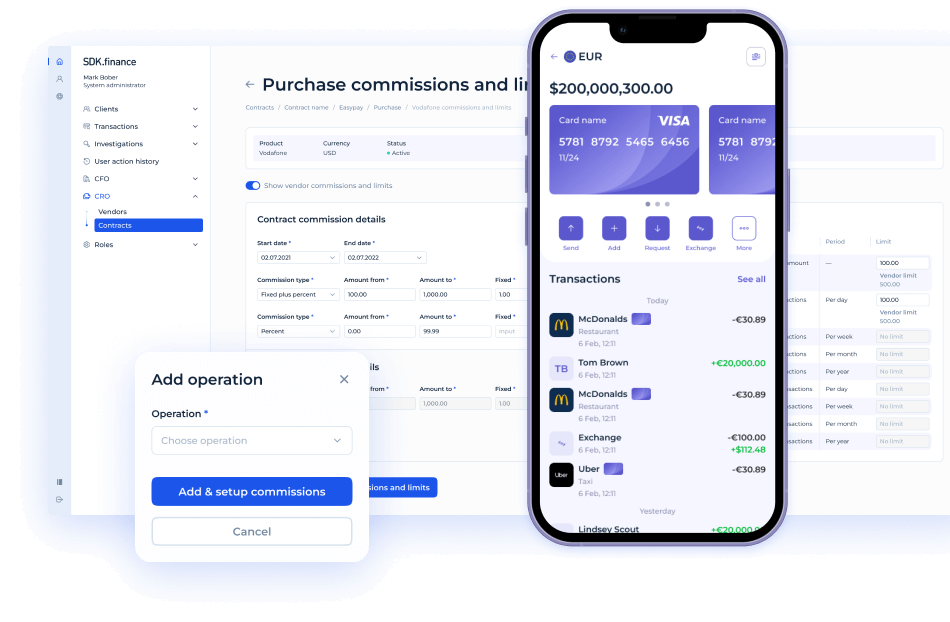
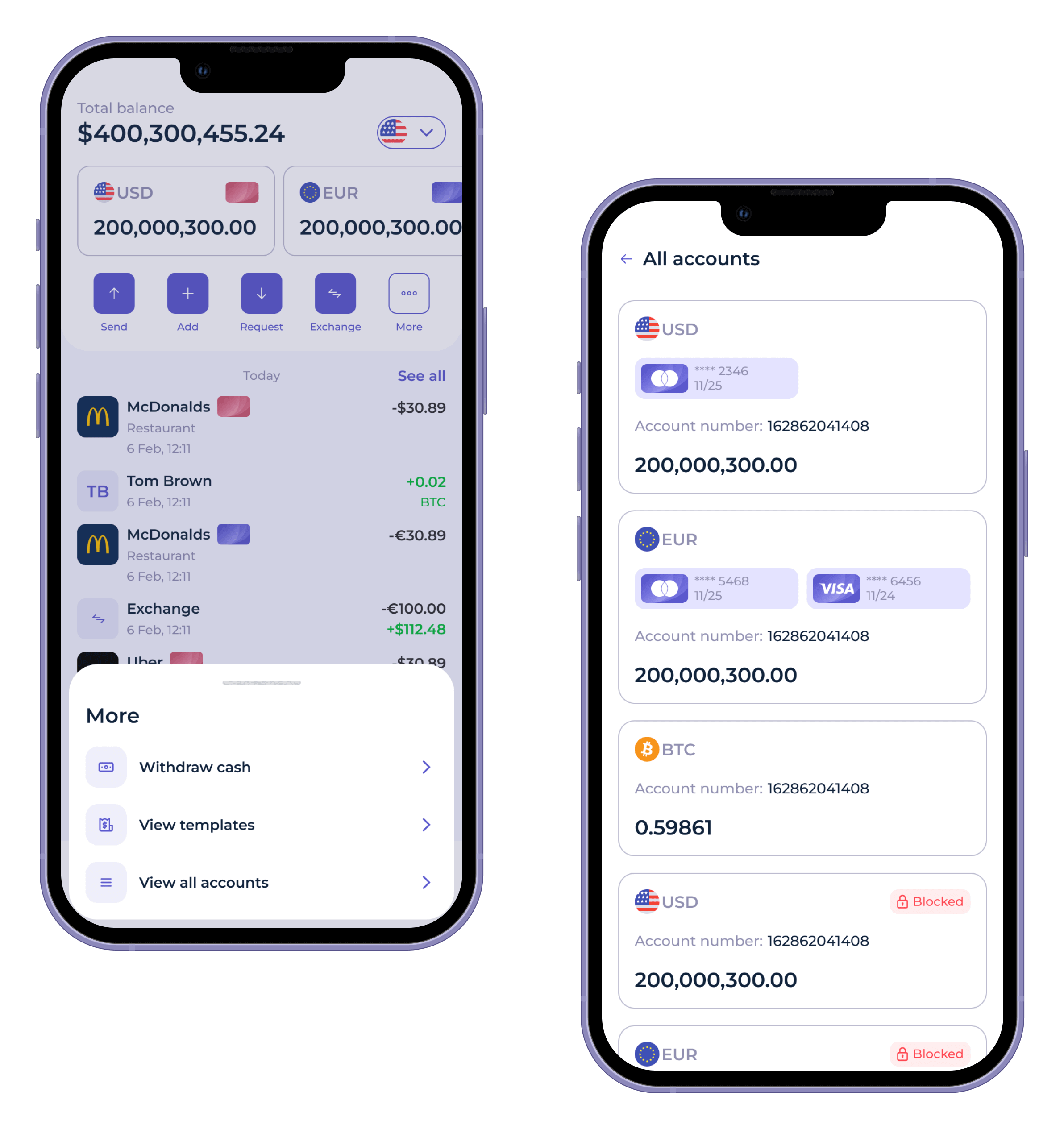
SDK.finance platform interface: back-office and mobile banking applications for digital banking and payment products.
Best for: FinTech companies, PSPs, EMIs, neobanks, digital banks, digital wallets, marketplaces, embedded finance products and crypto-friendly banking solutions.
SDK.finance is a core banking software provider for FinTech companies, PSPs, EMIs, digital wallets, neobanks, marketplaces, embedded finance products and crypto-friendly banking solutions. Drawing on 15 years of market expertise, the platform provides ledger infrastructure, accounts, wallets, payments, card issuing support, ready mobile applications and integrations for modern financial products.
One of SDK.finance’s key advantages is deployment flexibility. Companies can choose Cloud/SaaS deployment for faster market entry or source-code ownership for deeper control, customization and long-term infrastructure independence. You can compare available deployment and licensing options on the SDK.finance pricing page. This makes SDK.finance especially relevant for companies that treat financial technology as a strategic asset rather than a temporary software layer.
Internationally recognized as a regular finalist of the PayTech Awards and Banking Tech Awards, SDK.finance serves clients across the United States, Canada, Europe, MENA and Africa through both source-code license and Cloud subscription models.
Key strengths:
- Double-entry ledger infrastructure: supports accounts, multi-currency balances, wallets, complex fee structures, commissions, settlements and real-time reconciliation.
- Ecosystem connectivity and integrations: supports integrations with Mastercard, Visa, Fireblocks, KYC/AML providers, payment rails and other financial infrastructure services.
- Source-code availability: gives scale-ups and financial companies deeper control over customization, infrastructure and long-term product development.
- Cloud/SaaS deployment: supports faster launch for companies that want to start without managing the full infrastructure from day one.
- Rapid time to market: 60+ functional modules, 650+ APIs and ready-made mobile and back-office applications help reduce development time.
- Compliance readiness: PCI DSS Level 1 and ISO 27001:2022 certifications support secure handling of sensitive financial data.
Good fit for:
- Digital wallets, payment apps and neobanks that need a modular financial technology base.
- PSPs and EMIs that need ledger, payments, wallets, reconciliation and back-office tools.
- Marketplaces, super apps and embedded finance teams building financial services into broader customer journeys.
- Crypto-friendly banking and fiat-to-crypto products that require wallets, ledger infrastructure, compliance flows and integrations with digital asset providers.
- Scaling fintech companies that need source-code ownership or deeper customization.
May not be the best fit for:
- Tier-1 retail banks seeking a traditional branch-first core replacement with a long legacy migration program.
- Companies looking for a very simple turnkey reseller product with no need to influence the technical roadmap.
SDK.finance provides core banking infrastructure with ledger, payments, wallets, ready applications and flexible deployment options
Talk to Our Team2. Temenos: Enterprise Core Banking Software for Large Banks
Best for: Large banks, universal banks, private banks, corporate banks and financial institutions running complex modernization programs.
Temenos is one of the most established core banking software companies for large banks, universal banks and global financial institutions. As a core banking system provider, it is often considered by banks running complex modernization, compliance and multi-country banking programs.
Because Temenos implementations are typically enterprise-scale projects, cost and timeline planning are important parts of vendor evaluation. For more detail, see our guide on how much Temenos core banking software costs.
Key strengths:
- Broad enterprise core banking software functionality
- Strong global presence and long banking software track record
- Support for large-scale modernization and migration projects
- Extensive partner and implementation ecosystem
- Suitable for complex banking products and multi-jurisdiction operations
Good fit for:
- Large incumbent banks
- Universal and corporate banks
- Multi-country banking groups
- Institutions replacing or modernizing legacy core systems
May not be the best fit for:
- Early-stage fintech companies looking for lightweight infrastructure
- Teams that need faster launch with ready wallet, PSP or EMI-focused modules
- Companies looking for source-code ownership or deep product-level control
3. Mambu: Cloud-Native Core Banking Software for Digital Banks
Best for: Neobanks, digital banks, lenders and financial institutions looking for a cloud-native SaaS core.
Mambu is a cloud-native core banking software provider known for SaaS banking infrastructure, composable product configuration and digital-first banking launches. It is frequently included in best core banking software shortlists for neobanks, lenders and challenger banks.
Key strengths:
- Cloud-native SaaS architecture
- Strong fit for lending, deposits and digital banking products
- Composable product configuration
- API-driven integration model
- Well-known brand in the neobank and challenger bank market
Good fit for:
- Neobanks and digital banks
- Lending-focused fintech companies
- Institutions launching new digital banking products
- Banks seeking a SaaS core banking model
May not be the best fit for:
- Companies that need source-code ownership
- PSPs, EMIs or wallet-first businesses needing broader payment operations out of the box
- Teams that require full control over core infrastructure and customization
4. Thought Machine: Cloud-Native Core Banking System for Modern Banks
Best for: Banks and financial institutions building modern cloud-native core banking infrastructure.
Thought Machine is one of the top core banking systems for banks seeking cloud-native architecture and flexible product configuration. Its Vault platform is positioned for financial institutions replacing legacy cores with modern banking software infrastructure.
Key strengths:
- Cloud-native core banking architecture
- Strong product configuration capabilities
- Designed for modern banking infrastructure
- Suitable for complex financial product logic
- Recognized in the cloud-native core banking category
Good fit for:
- Banks modernizing core infrastructure
- Challenger banks with complex product requirements
- Institutions needing configurable banking products
- Large financial institutions pursuing cloud-native transformation
May not be the best fit for:
- Smaller fintech teams needing a faster ready-made launch package
- PSPs, EMIs and wallet products that need payments, ledger, apps and operations bundled together
- Companies seeking source-code ownership
5. FIS: Enterprise Banking Software Vendor for Large Financial Institutions
Best for: Large banks, processors, financial institutions and enterprises needing broad financial technology coverage.
FIS is one of the largest banking software vendors globally, offering core banking software, payments, processing, lending, risk and financial infrastructure solutions. It is best suited for large banks and institutions that need broad enterprise-grade banking technology.
Because FIS implementations are typically enterprise-scale projects, cost, timeline and integration planning are important parts of vendor evaluation. For more detail, see our guide on how much FIS core banking software costs.
Key strengths:
- Large global financial technology footprint
- Broad banking, payments and processing capabilities
- Strong fit for enterprise institutions
- Deep experience with regulated financial services
- Suitable for complex, high-volume operations
Good fit for:
- Large banks and financial institutions
- Payment processors
- Banks needing broad banking and payments infrastructure
- Enterprises with complex operational requirements
May not be the best fit for:
- Fintech startups looking for fast and lightweight deployment
- Companies that need source-code ownership
- Teams looking for a highly focused wallet, EMI or PSP platform
6. Fiserv / Finxact: Core Banking Software for US Banks and Credit Unions
Best for: US banks, regional banks, community banks and institutions evaluating cloud-native core modernization.
Fiserv is a major US banking software company, while Finxact adds cloud-native core banking software capabilities to its ecosystem. Together, they are relevant core banking system providers for US banks, regional institutions and credit unions modernizing their infrastructure.
Key strengths:
- Strong US banking market presence
- Broad financial technology and processing ecosystem
- Finxact adds cloud-native core banking capabilities
- Relevant for regional and community bank modernization
- API-oriented approach through Finxact
Good fit for:
- US banks and credit unions
- Regional and community banks
- Institutions modernizing core infrastructure
- Banks looking for a large vendor ecosystem
May not be the best fit for:
- Non-US fintech teams looking for a global fintech launch stack
- PSPs, EMIs or crypto-friendly products needing specialized wallet/payment infrastructure
- Companies looking for source-code ownership
7. Oracle FLEXCUBE: Universal Core Banking Software for Global Banks
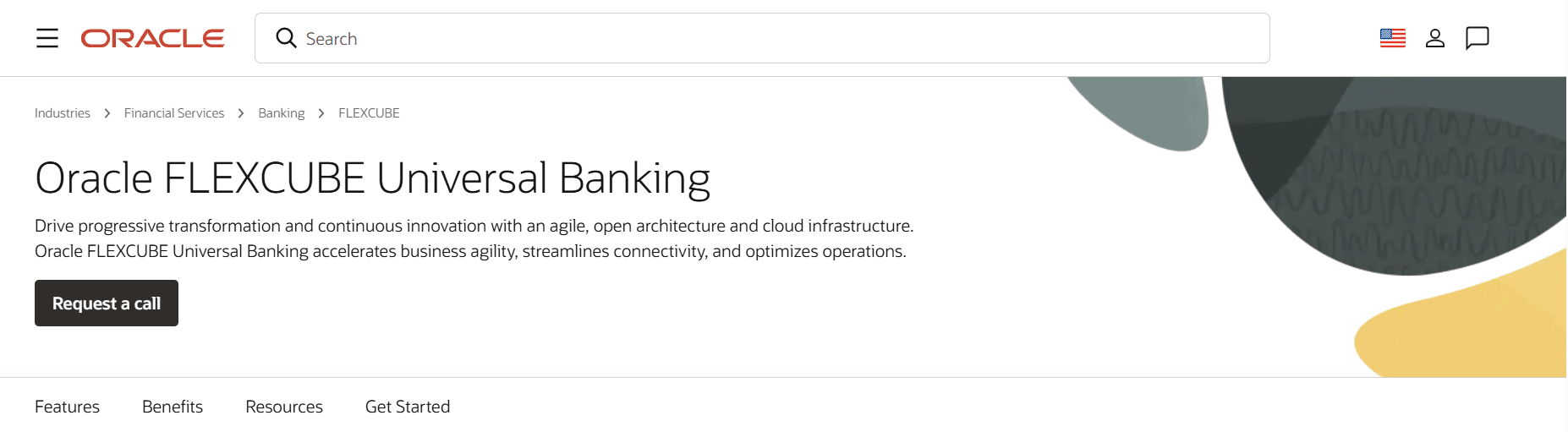
Best for: Universal banks, multinational banks and institutions with complex banking operations.
Oracle FLEXCUBE is a mature core banking software platform for universal banks, multinational banks and financial institutions with complex operational requirements. It is often evaluated by banks looking for enterprise-grade banking software with broad product and geographic coverage.
Key strengths:
- Mature enterprise core banking system
- Strong fit for universal banking
- Multi-country and multi-currency support
- Broad integration and enterprise technology ecosystem
- Suitable for large-scale regulated banking operations
Good fit for:
- Universal banks
- Multinational financial institutions
- Banks with complex product and compliance requirements
- Institutions already using Oracle enterprise technology
May not be the best fit for:
- Fintech startups and smaller digital finance companies
- Teams needing fast wallet, PSP or EMI product launch
- Companies that prioritize source-code control and deep infrastructure ownership
8. Finacle by Infosys: Digital Core Banking Software for Global Banks
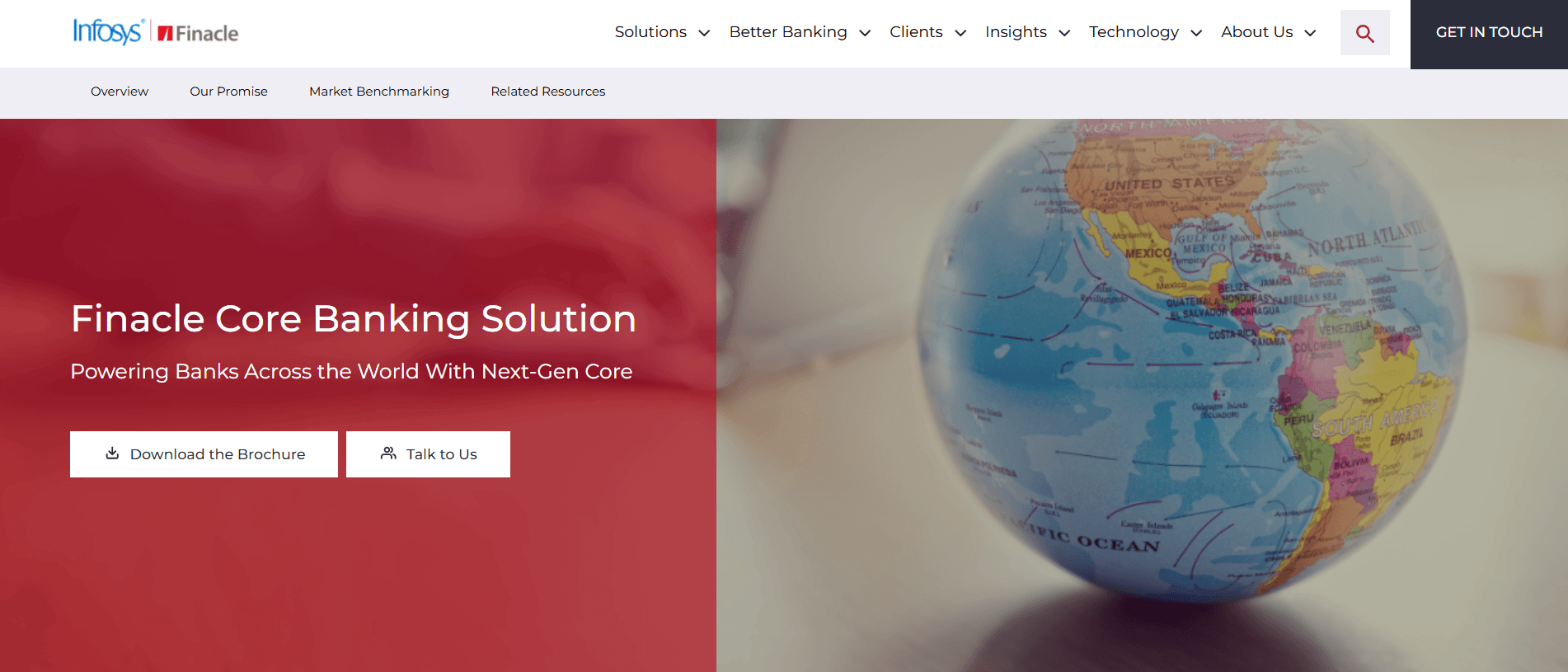
Best for: Global banks, retail banks, corporate banks and institutions pursuing digital transformation.
Finacle by Infosys is a global core banking software provider used by banks pursuing digital transformation, real-time processing and API-enabled banking services. It is one of the best-known banking software companies for international retail and corporate banking.
Key strengths:
- Strong global banking presence
- Real-time banking and digital transformation capabilities
- Open API support
- Broad retail and corporate banking functionality
- Backed by Infosys implementation and consulting expertise
Good fit for:
- Global banks
- Retail and corporate banks
- Institutions modernizing digital banking operations
- Banks needing broad international support
May not be the best fit for:
- Early-stage fintech companies
- PSPs, EMIs or wallet-first businesses needing ready fintech modules
- Companies looking for source-code ownership or builder-centric infrastructure
9. Finastra: Banking Software Vendor for Core, Lending and Payments
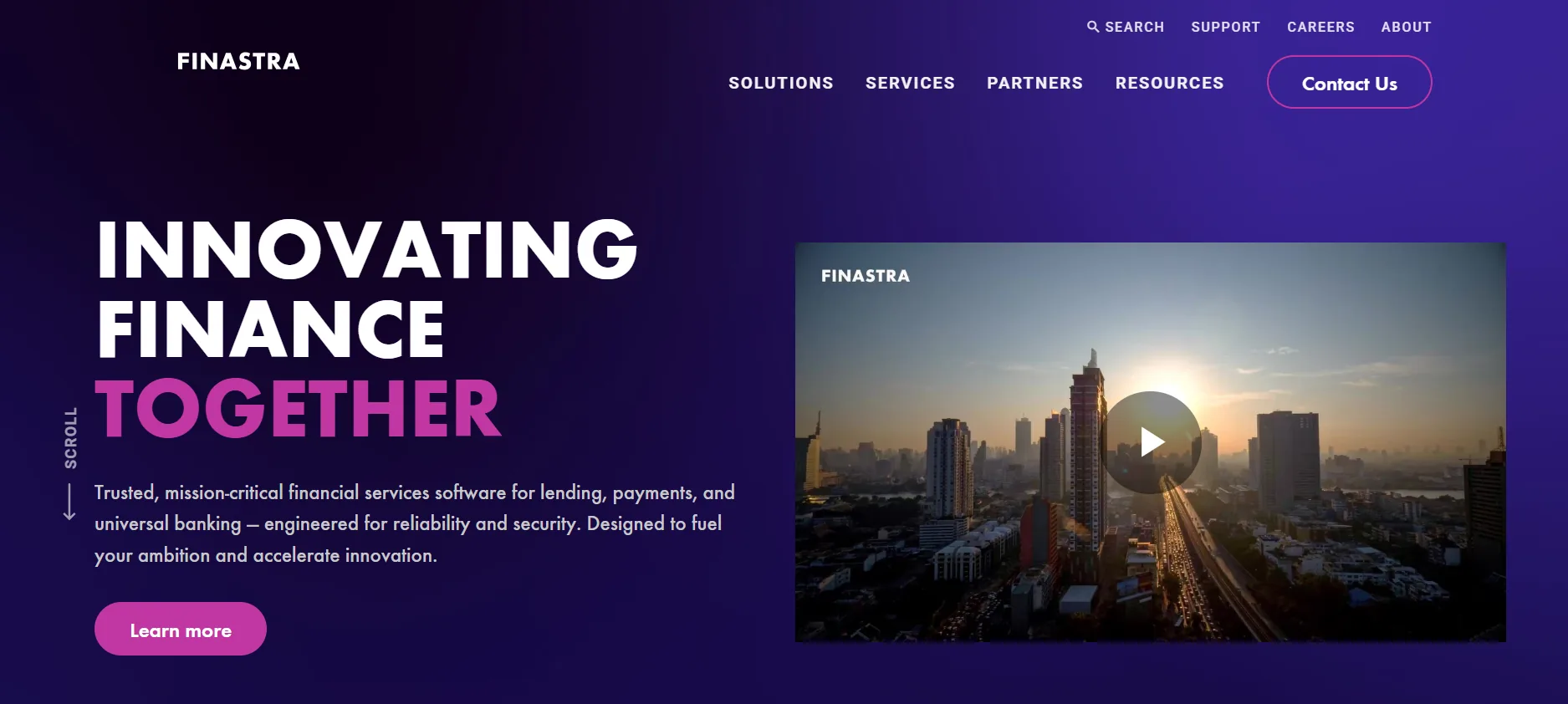
Best for: Banks and financial institutions looking for a broad suite across core banking, lending, payments and treasury.
Finastra is a broad banking software vendor offering core banking software, lending, payments, treasury and financial operations solutions. It is often included in core banking software lists for banks that need multiple banking technology modules from one established provider.
Key strengths:
- Broad suite across core banking, lending, payments and treasury
- Strong enterprise banking presence
- Open finance and ecosystem positioning
- Relevant for banks with multiple technology needs
- Suitable for regulated financial institutions
Good fit for:
- Banks needing multiple banking software modules
- Institutions focused on lending and payments
- Financial institutions modernizing legacy systems
- Banks seeking an established enterprise vendor
May not be the best fit for:
- Fintech builders that need a lightweight launch stack
- Wallet, PSP or EMI products requiring specialized operational tooling
- Companies seeking source-code ownership
10. TCS BaNCS: Enterprise Core Banking System for Large Institutions
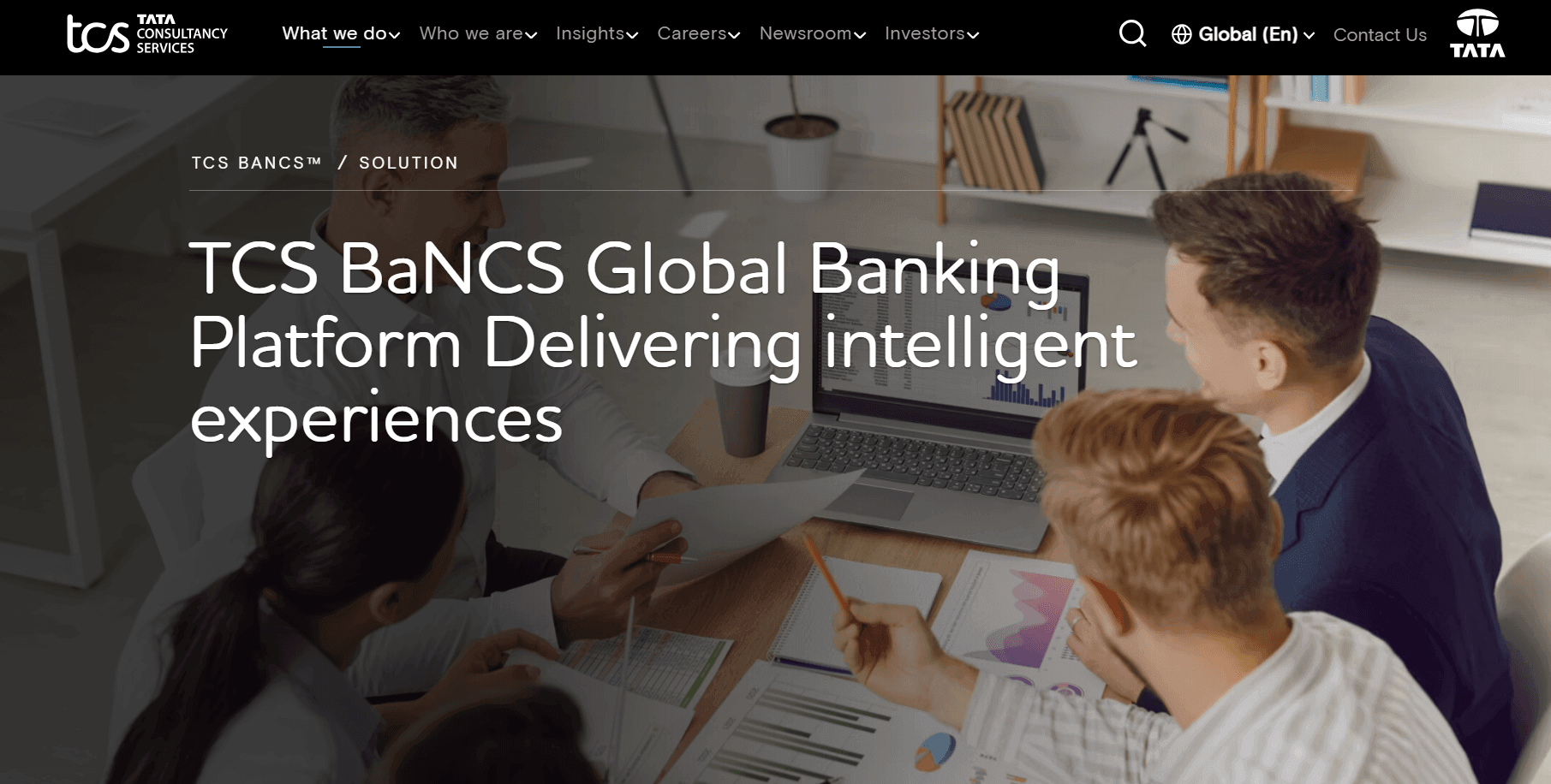
Best for: Large banks, financial institutions, securities firms and organizations needing broad financial services infrastructure.
TCS BaNCS is an enterprise core banking system used by large banks and financial institutions that need mature infrastructure across banking, securities and financial services. It belongs in a top core banking systems comparison for institutions with complex operational environments.
Key strengths:
- Enterprise-grade banking and financial services platform
- Strong fit for large institutions
- Broad product coverage across banking and financial services
- Backed by TCS implementation capabilities
- Suitable for complex operational environments
Good fit for:
- Large banks
- Financial institutions with complex infrastructure needs
- Banking groups requiring enterprise implementation support
- Institutions needing banking and securities capabilities
May not be the best fit for:
- Fintech startups or fast-moving product teams
- PSPs, EMIs and wallet-led businesses
- Companies looking for Cloud/SaaS speed plus source-code ownership
11. Jack Henry: Core Banking Software for US Community Banks
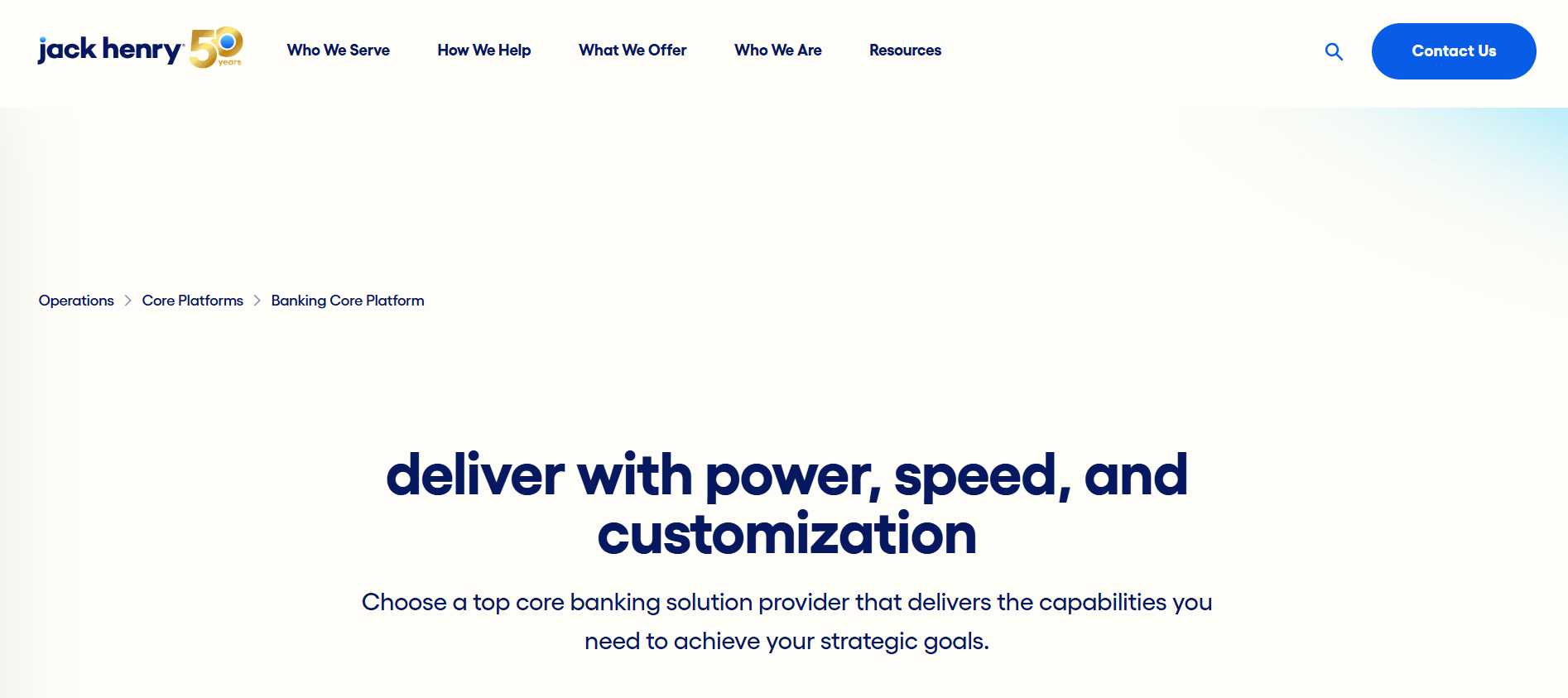
Best for: US community banks, regional banks and credit unions.
Jack Henry is a leading banking software company for US community banks, regional banks and credit unions. Its core banking software and digital banking solutions are designed for financial institutions that need reliable local-market banking infrastructure.
Key strengths:
- Strong US community banking presence
- Core banking and digital banking capabilities
- Long track record with regional financial institutions
- Relevant for credit unions and community banks
- Strong local market understanding
Good fit for:
- US community banks
- Credit unions
- Regional banks
- Institutions prioritizing local banking operations and support
May not be the best fit for:
- Global fintech companies
- PSPs, EMIs, marketplaces or crypto-friendly banking products
- Teams needing flexible source-code ownership or fintech-specific infrastructure
12. 10x Banking: Cloud-Native Core Banking Software for Product Agility
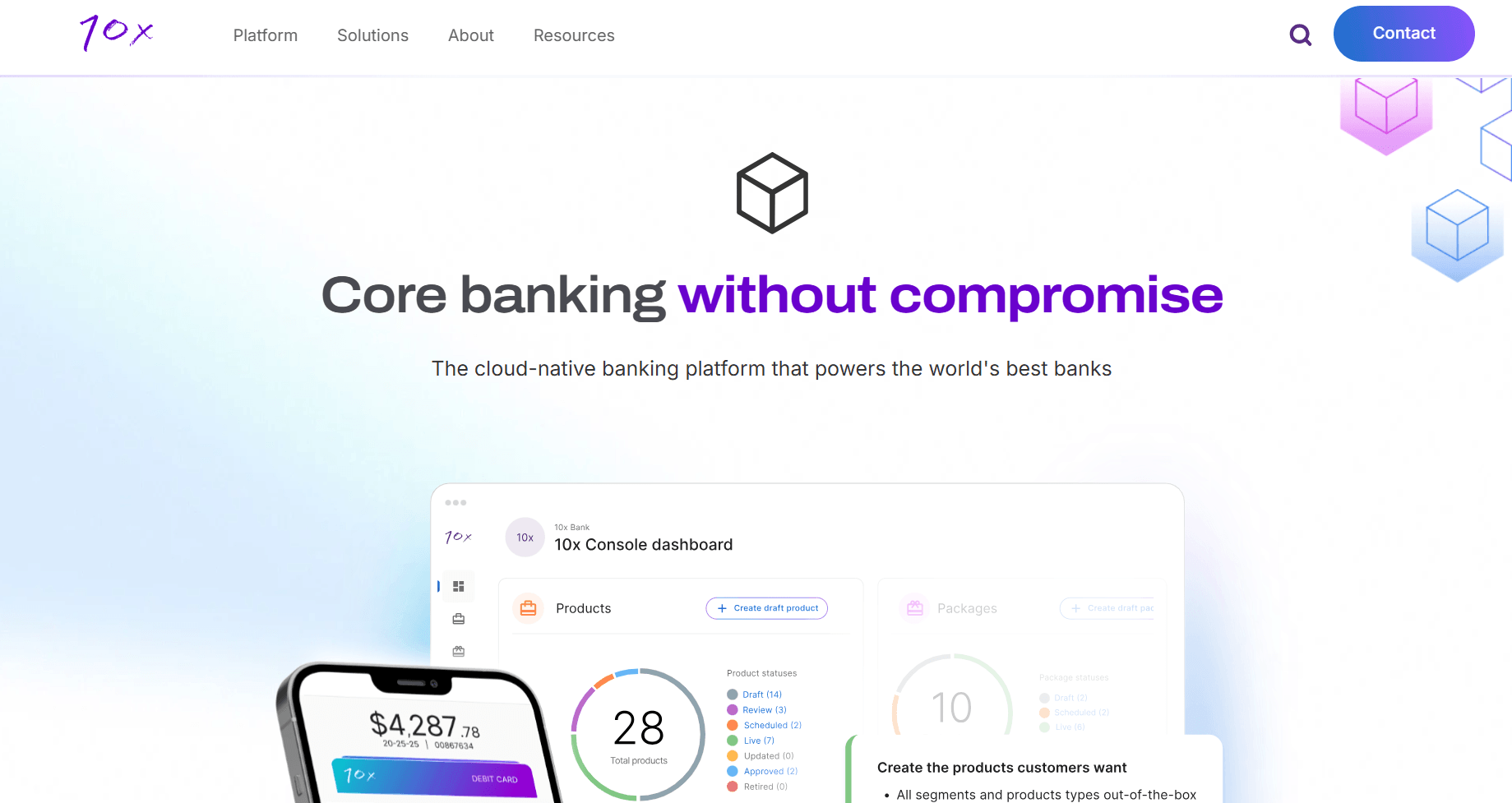
Best for: Banks and fintech companies looking for cloud-native core banking with modern product architecture.
10x Banking is a cloud-native core banking software provider focused on product agility, scalability and modern banking architecture. It is relevant for banks and fintech companies comparing top core banking systems for digital-first product launches.
Key strengths:
- Cloud-native banking platform
- Modern product configuration approach
- Strong fit for digital banking transformation
- Designed for scalability and product agility
- Relevant for banks moving toward SaaS-based infrastructure
Good fit for:
- Digital banks
- Banks modernizing core infrastructure
- Institutions needing cloud-native product agility
- Financial institutions launching new banking propositions
May not be the best fit for:
- PSPs, EMIs and wallet-first fintech companies needing broader payment operations
- Teams that require source-code ownership
- Companies looking for ready-made mobile/back-office fintech applications
13. Nymbus: Cloud Banking Software for US Digital Banks
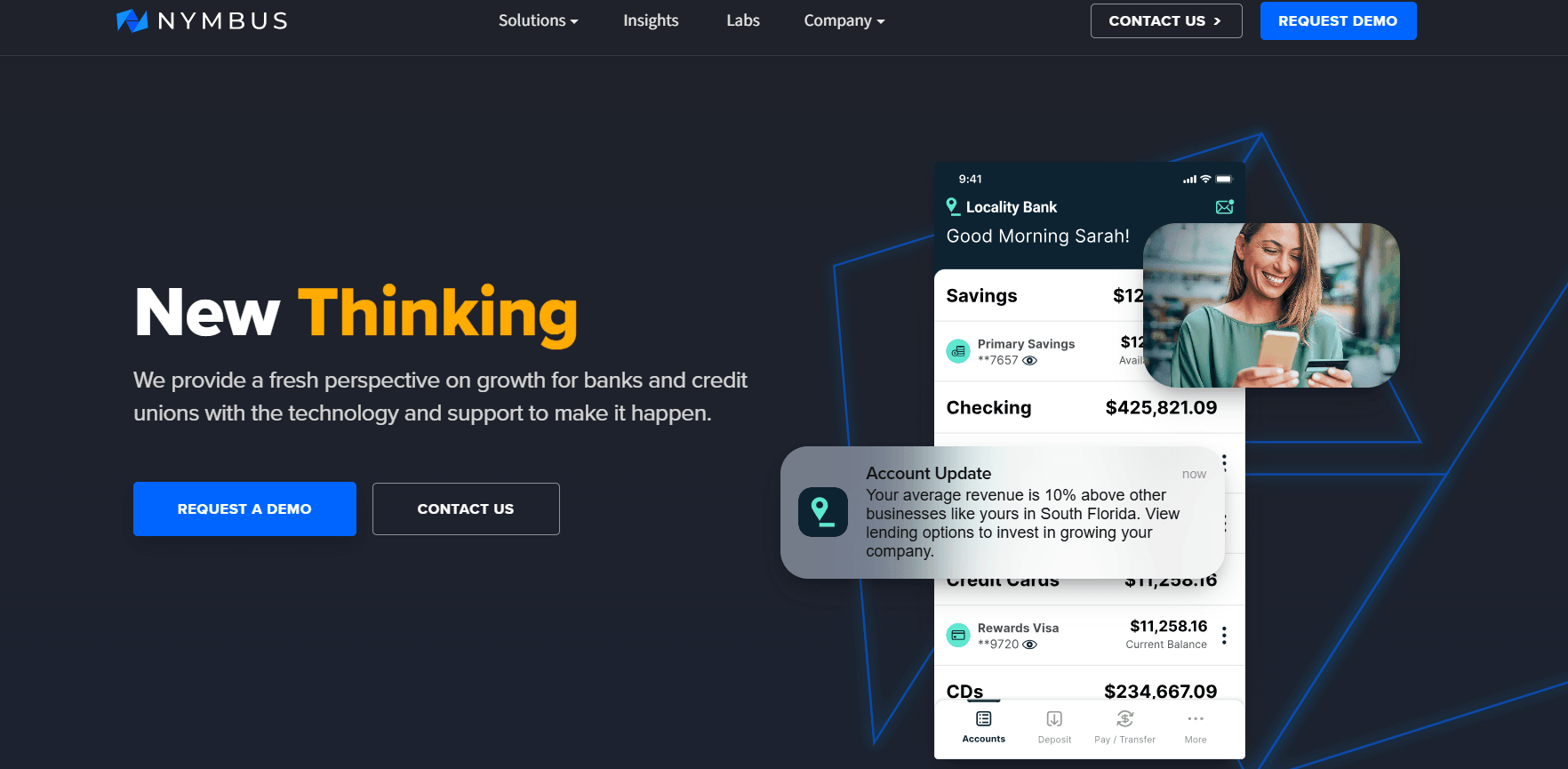
Best for: US banks, community banks, digital banks and niche banking launches.
Nymbus provides cloud banking software for US banks, community institutions and digital banking launches. It is often considered by financial institutions looking for a faster path to digital bank creation without building a full core banking system from scratch.
Key strengths:
- Cloud banking platform
- Strong US market relevance
- Support for digital bank launches
- Suitable for community and regional institutions
- Focus on speed and operational enablement
Good fit for:
- US community banks
- Digital-only banking propositions
- Niche banking products
- Regional financial institutions launching new brands
May not be the best fit for:
- Global fintech companies outside the US
- PSPs, EMIs or crypto-friendly banking products
- Teams requiring source-code ownership or deep platform customization
14. Skaleet: Modular Core Banking Software for Digital Finance
Best for: Digital banks, EMIs, fintech companies and institutions looking for modular SaaS core banking.
Skaleet is a modular core banking software provider for digital banks, EMIs and fintech companies. Its SaaS platform fits organizations looking for flexible banking software that supports digital financial products and API-based integrations.
Key strengths:
- Modular SaaS core banking architecture
- Strong fit for digital finance and fintech use cases
- API-based integration approach
- Relevant for EMIs and digital banks
- Flexible product configuration
Good fit for:
- Digital banks
- EMIs and fintech companies
- Institutions looking for modular SaaS banking
- Companies launching digital financial products
May not be the best fit for:
- Large banks needing traditional enterprise core replacement
- Companies that need source-code ownership
- Teams needing a broader payment, wallet and ready-app stack from one platform
15. Backbase: Digital Banking Software Vendor for Customer Experience
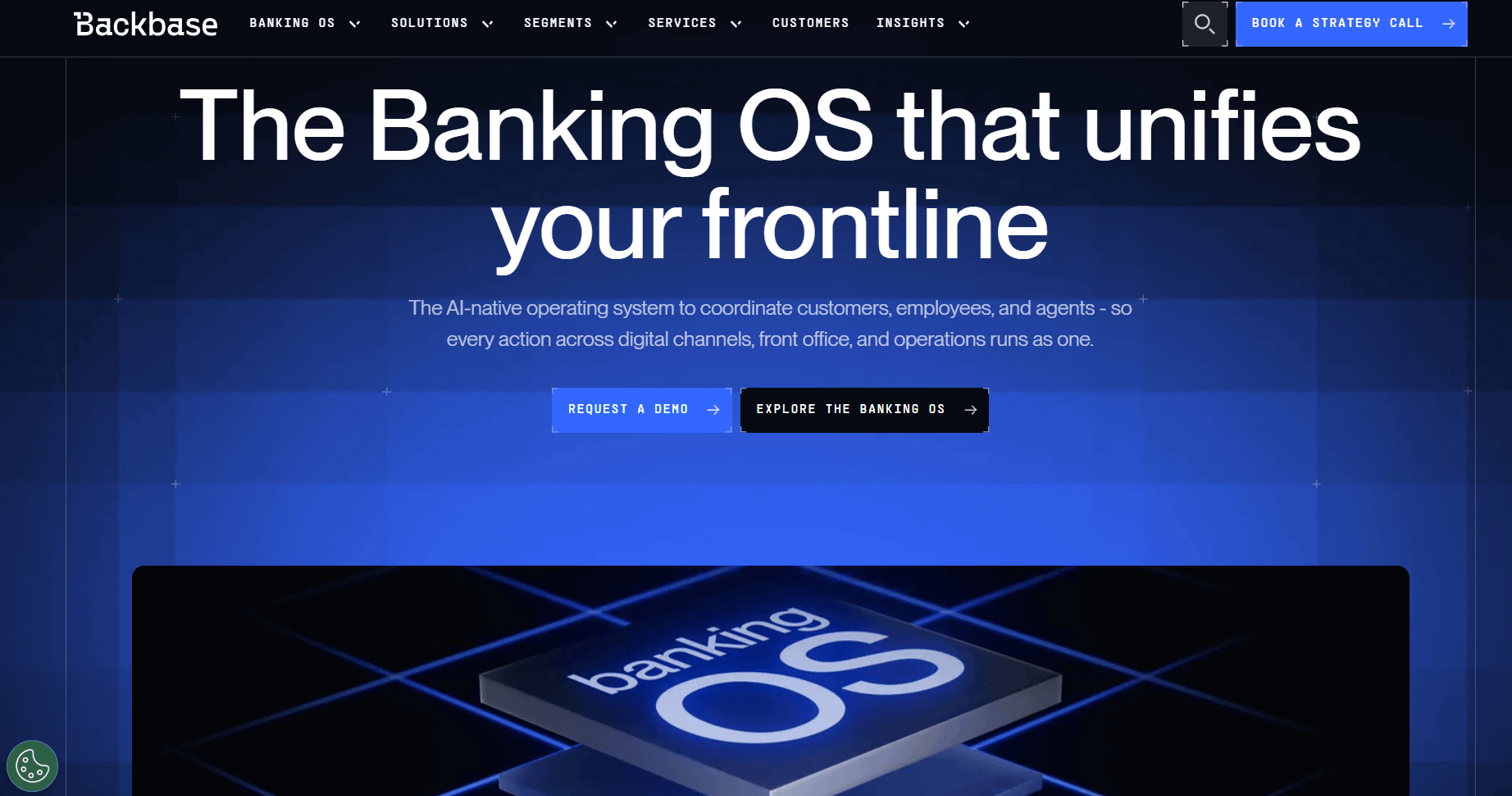
Best for: Banks and financial institutions focused on digital banking experience, customer engagement and omnichannel journeys.
Backbase is a digital banking software vendor focused on customer engagement, mobile banking and omnichannel banking experiences. It is not a traditional core banking software replacement, but it is often included in banking software vendor comparisons because it connects modern digital experiences with existing core systems.
Key strengths:
- Strong digital banking experience layer
- Omnichannel customer engagement capabilities
- Works with existing core banking systems
- Strong fit for banks modernizing front-end banking experiences
- Recognized brand in digital banking platforms
Good fit for:
- Banks improving digital customer experience
- Institutions modernizing mobile and online banking
- Banks that want to connect existing cores to modern digital channels
- Financial institutions focused on engagement and UX
May not be the best fit for:
- Companies looking for a full core banking replacement
- PSPs, EMIs or wallets needing ledger and payment infrastructure as the core
- Teams looking for source-code ownership or fintech infrastructure control
Other Notable Banking Software Providers
The vendors below are not always full core banking system providers, but they are relevant in the broader banking software and fintech infrastructure market.
- Q2: Digital banking software for banks and credit unions, especially in the US.
- nCino: Cloud banking software for lending, onboarding, account opening and banking operations.
- Galileo: Card issuing, payments and fintech infrastructure for digital banking and embedded finance products.
- Unit: US embedded banking and BaaS platform for accounts, cards and payments.
- Railsr: UK and European embedded finance platform for accounts, cards, wallets and payments.
- Solaris: European BaaS and embedded finance provider for cards, accounts, payments and digital banking products.
- Treasury Prime: US embedded banking infrastructure connecting fintech companies and software platforms with partner banks.
Core Banking Software Market Overview
The core banking software market includes both established enterprise vendors and modern cloud-native platforms. Research and market comparisons increasingly group providers such as SDK.finance, Mambu, Temenos and other core banking software companies within the broader shift toward modular, API-first and cloud-ready financial infrastructure.
For buyers, the key takeaway is that the market is no longer defined by one universal type of core banking system. Large banks, neobanks, PSPs, EMIs, wallets and embedded finance providers evaluate vendors by different criteria: scale, deployment model, API maturity, ledger capabilities, compliance readiness and speed to market.
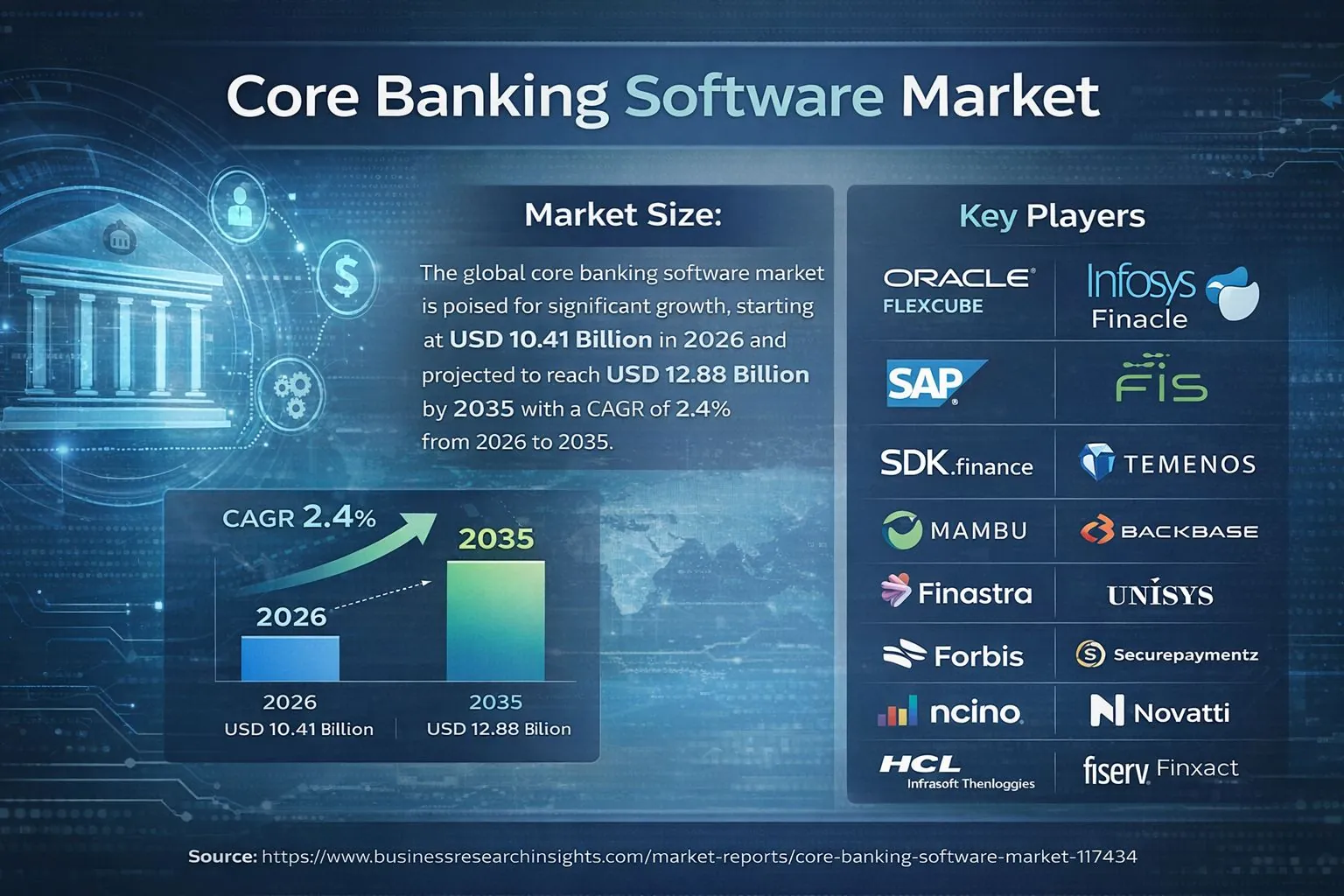
Core banking software market landscape featuring SDK.finance alongside other recognized providers such as Mambu and Temenos.
Top Core Banking Software Companies Compared
| Provider | Founded | Best for | Cloud/SaaS | Source-code option | Key differentiator |
|---|---|---|---|---|---|
| SDK.finance | 2013 | FinTechs, PSPs, EMIs, digital banks, neobanks, wallets, embedded finance, crypto-friendly banking | Yes | Yes | PCI DSS certified ledger, payments and wallet infrastructure for fintech and crypto-friendly products, available via Cloud or source-code deployment |
| Temenos | 1993 | Large banks, universal banks, global financial institutions | Yes | Enterprise model | Broad enterprise core banking functionality and global banking footprint |
| Mambu | 2011 | Neobanks, digital banks, lenders | Yes | No / limited | Composable SaaS core for lending, deposits and digital banking products |
| Thought Machine | 2014 | Modern banks, challenger banks, complex product configuration | Yes | No / limited | Highly configurable cloud-native core banking architecture |
| FIS | 1968 | Large banks, processors, financial institutions | Yes | Enterprise model | Large-scale financial infrastructure across banking, payments and processing |
| Fiserv / Finxact | 1984 / 2016 | US banks, credit unions, regional institutions | Yes | Enterprise model | US banking ecosystem plus Finxact cloud-native core capabilities |
| Oracle FLEXCUBE | 2005 | Universal banks, multinational banks | Yes | Enterprise model | Mature universal banking core for complex multi-country operations |
| Finacle by Infosys | 1999 | Global banks, retail and corporate banks | Yes | Enterprise model | Digital banking transformation and real-time global banking operations |
| Finastra | 2017 | Banks needing core, lending, payments and treasury | Yes | Enterprise model | Broad banking software suite across core, lending, payments and treasury |
| TCS BaNCS | 1990s | Large banks and financial institutions | Yes | Enterprise model | Enterprise platform spanning banking, securities and financial services |
| Jack Henry | 1976 | US community banks and credit unions | Yes | Enterprise model | Strong specialization in US community banks and credit unions |
| 10x Banking | 2016 | Digital banks and institutions seeking product agility | Yes | No / limited | Cloud-native core designed for fast product configuration and scaling |
| Nymbus | 2015 | US digital banks and community banks | Yes | No / limited | Digital bank launch model for US community and niche banking institutions |
| Skaleet | 2005 | Digital banks, EMIs and fintech companies | Yes | No / limited | Modular SaaS core banking for digital finance and EMI use cases |
| Backbase | 2003 | Banks focused on digital customer experience | Yes | No | Digital banking engagement layer that connects to existing core systems |
Conclusion: Aligning Your Core Banking Software with Your Business Model
The core banking software market in 2026 includes several different types of providers: enterprise core banking vendors, cloud-native platforms, digital banking software companies and fintech infrastructure providers. The right choice depends less on finding one universal “best” provider and more on matching the platform to your business model, regulatory requirements, product roadmap and desired level of control:
- For large banks and global financial institutions, enterprise core banking providers such as Temenos, FIS, Oracle FLEXCUBE, Finacle and TCS BaNCS are often better suited for complex modernization programs, multi-country operations and large-scale legacy migration.
- For digital-first institutions, neobanks, PSPs, EMIs, digital wallets, marketplaces, embedded finance providers and crypto-friendly banking products, the priorities are often different: faster launch, API maturity, ledger capabilities, payment infrastructure, ready applications, compliance workflows and deployment flexibility.
SDK.finance is designed for this second category of financial product builders. The platform combines ledger infrastructure, payments, wallets, ready mobile and back-office applications, integrations and flexible deployment options. Companies can start faster with Cloud/SaaS deployment or choose source-code ownership for deeper control, customization and long-term independence.
The right core banking software should support your growth strategy, not limit it. For companies building modern financial products, that means choosing infrastructure that can support launch speed, compliance, scalability and future product flexibility.
Ready to build or scale your financial product?
SDK.finance helps FinTech companies, PSPs, EMIs, digital wallets, neobanks and embedded finance teams launch faster with core banking infrastructure built around ledger, payments, wallets and flexible deployment.
Book a demo with SDK.finance to discuss your business model and scaling plans.
SDK.finance provides core banking infrastructure with ledger, payments, wallets, ready applications and flexible deployment options
Talk to Our Team