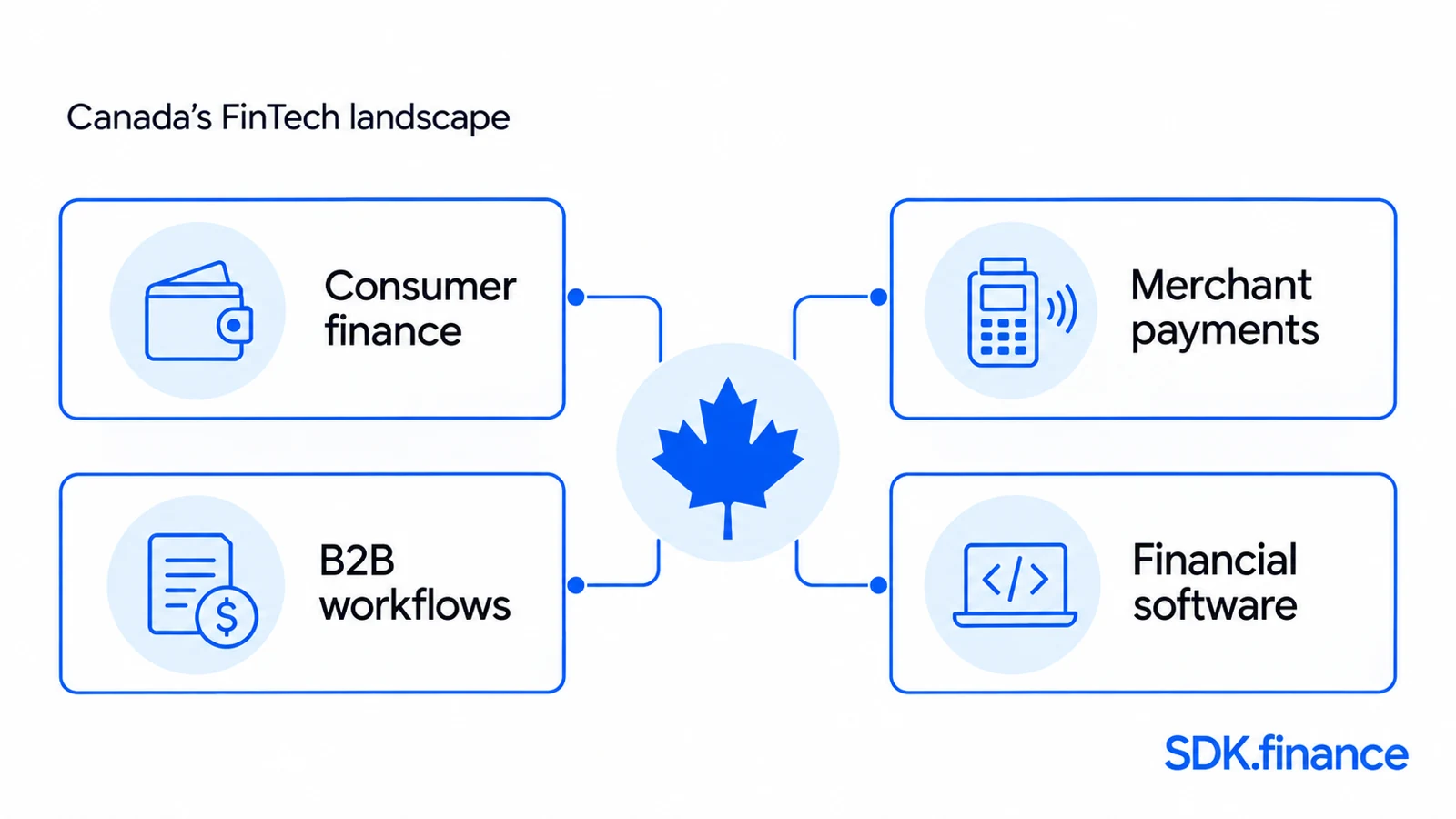
FinTech in Canada spans digital financial services and the technology behind them, from consumer apps and merchant payments to lending, investing, and business finance software. For founders and product teams, the opportunity is to solve a specific customer problem within this wider ecosystem.
This guide covers selected companies, payment habits, infrastructure, regulation, and practical product opportunities. You will also learn how SDK.finance, a FinTech software provider, supports businesses building financial products for the Canadian market with an account and transaction core.
Discover how the SDK.finance TPS can power high-speed, secure operations across banking, fintech, and retail
Talk to Our Team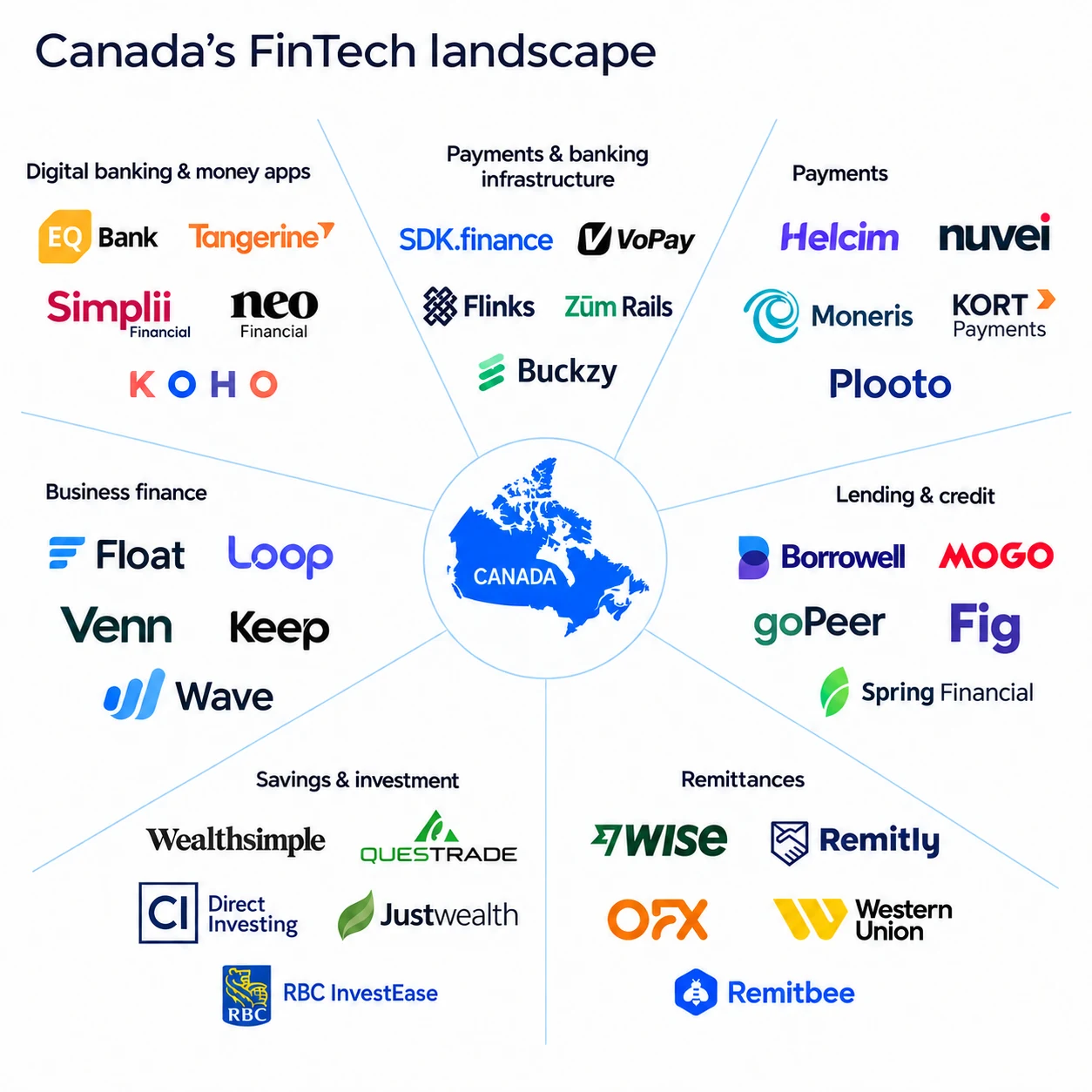
FinTech in Canada at a glance
The sector covers several different customer needs:
- Payments and transfers: accepting purchases, paying bills, and moving money domestically or across borders.
- Personal finance and investing: helping individuals manage spending, savings, and assets.
- Lending and credit: assessing applications, providing finance, and managing repayment.
- Business finance software: connecting invoices, accounts, reporting, and other financial operations.
- Insurance and regulatory technology: supporting insurance processes, identity checks, risk controls, and compliance work.
This guide focuses on accounts, payments, and the infrastructure relevant to founders and product teams. These segments overlap, but their business models and regulatory requirements differ.
FinTech companies and providers in Canada
This selection illustrates consumer finance, merchant payments, B2B receivables, and the software used to build financial products. It is not a ranking or a list limited to Canadian-headquartered companies. SDK.finance appears first as the publisher and software provider; the other entries illustrate services in the Canadian market.
| Provider | Entity or category | Role and example use |
|---|---|---|
| SDK.finance | FinTech software provider | Transaction Platform and separate General Ledger for teams building account, wallet, and payment products. |
| Wealthsimple | Consumer finance and investing | Digital investing and everyday financial products. The servicing entity and protection depend on the product. |
| KOHO | Personal finance | Spending, saving, and credit-building tools built around a prepaid card. KOHO is not a bank. |
| Neo Financial | Consumer finance | Spending, saving, and credit products. Neo Savings uses trust arrangements with CDIC member institutions. |
| Helcim | Merchant payments | Card acceptance and merchant tools for in-person sales, remote payments, and daily payment operations. |
| Nuvei | Payment technology | Payment acceptance and related infrastructure for merchants and platforms, subject to local service availability. |
| Versapay | B2B receivables | Invoice-to-cash tools for finance teams, including collections, payment matching, and reconciliation. |

SDK.finance
SDK.finance gives development teams an adaptable software foundation, so they can focus on their customer experience and business requirements without rebuilding common backend functions from scratch.

Wealthsimple
Wealthsimple brings several financial needs into one customer experience. For product teams, it offers a useful example of how an app can connect short-term money management with longer-term financial goals.

KOHO
KOHO’s proposition centres on everyday financial habits. Its app, card programme, interest feature, and credit-building services have distinct conditions, making clear explanations of fees and eligibility an important part of the customer experience.

Neo Financial
Rewards are part of Neo’s card-led customer proposition. Beyond the initial offer, the experience depends on helping customers understand eligible purchases, statements, and repayment obligations.

Helcim
Helcim’s virtual terminal lets a business take a payment through a computer or another supported device. This can suit service businesses collecting payments remotely, including over the phone.

Nuvei
Nuvei is relevant to businesses operating across markets. Its international scope makes country coverage, currencies, settlement arrangements, and access to transaction data practical points to assess for a Canadian merchant.

Versapay
Versapay connects receivables work with a company’s accounting or enterprise resource planning system.
Canada’s FinTech market: payment habits and unmet needs
Payment volumes and preferred methods
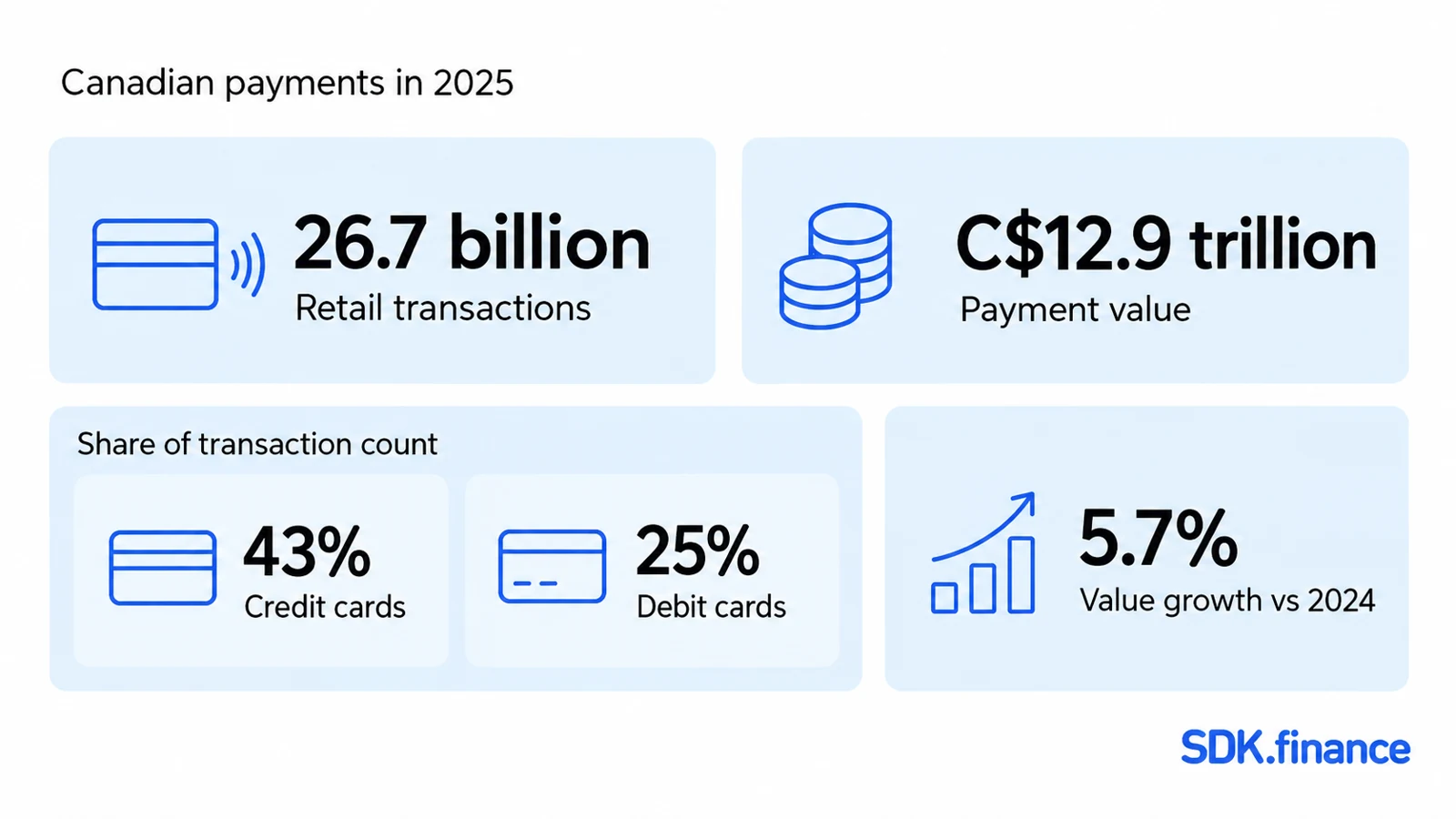
Canada’s payment activity shows both the scale of the market and the habits a new product must fit. Payments Canada’s Canadian payment methods and trends research reports 26.7 billion retail payment transactions worth C$12.9 trillion in 2025. Their value increased by 5.7% compared with 2024. These figures describe payments made across the economy, not FinTech company revenue or the addressable market for software.
Credit cards accounted for 43% of transaction volume and debit cards for 25%. These are shares of the number of payments, not their monetary value. Contactless is a way to make a payment and can overlap with either card category, so it should not be added as a separate share.
For merchant-facing products, card acceptance must fit the existing operation. Beyond checkout, merchants need clear records of refunds, disputes, charges, and payouts so they can explain the difference between a sale and the amount received.
Where business friction remains
In its October 2026 release, Payments Canada reports that 37% of SMEs identify payment delays as a significant pain point. This is a research finding about business experience, not a claim that 37% of payments fail. It points towards a product problem: businesses need more certainty about incoming and outgoing money.
The opportunity is to reduce uncertainty around collections and payouts, especially where businesses still rely on manual follow-up.
The Canadian ecosystem beyond one financial centre
Toronto, Montréal, and Vancouver are useful starting points for ecosystem research, but they are not a complete market map. Fintech Cadence’s Canadian Fintech Ecosystem Map helps readers explore organisations by category and location. Distinguish a company’s global headquarters, Canadian office, and actual service coverage when assessing a potential partner.
Resources for founders and product teams
Local networks can help teams find expertise and understand the market:
- Fintech Cadence offers startup support through mentorship, coaching, and connections with industry experts.
- Fintechs Canada publishes industry news and policy positions, providing context on the sector’s priorities.
- Canada Fintech Forum brings financial institutions, technology providers, and startups together to discuss trends and build connections.
Choose resources according to the decision ahead, such as finding an implementation partner or understanding a policy proposal. Check current programme eligibility and event details directly with the organiser.
Before expanding nationally, plan for:
- English and French customer journeys appropriate to the target audience.
- Support coverage across the time zones you serve.
- Province-specific requirements for the product and its activities.
The exact obligations depend on the operating model. A design validated in one province is not automatically ready for every Canadian customer.
Development partners can help translate these regional needs into language options, support tools, and product workflows. Agree which requirements belong in the initial launch and which depend on later geographic expansion.
Interac, batch payments and the transition to real-time infrastructure
Existing payment routes
A Canadian payment product must distinguish the service customers use from the infrastructure that clears and settles money. Several routes coexist, and they serve different purposes.
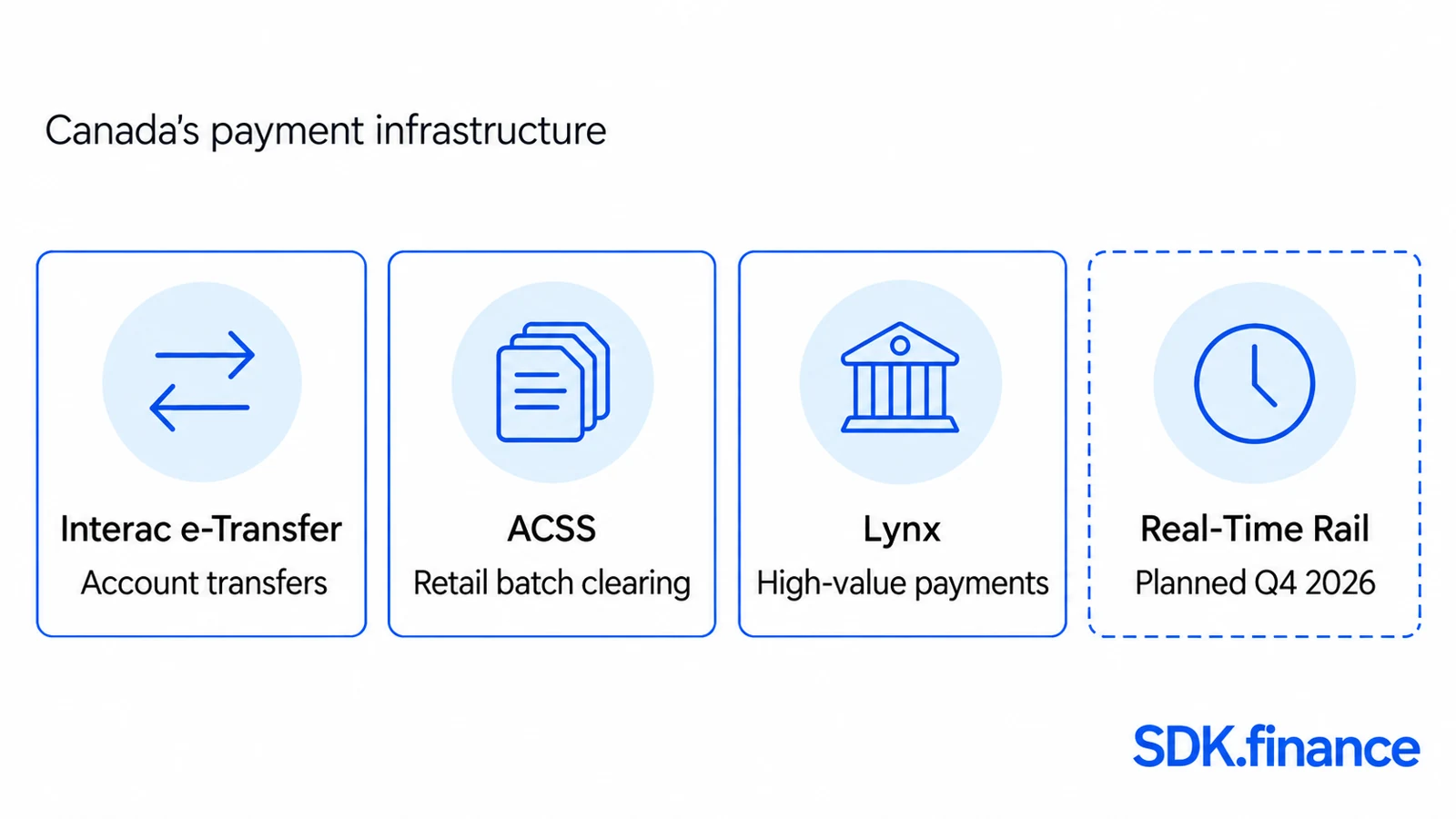
Interac e-Transfer for Business enables businesses to send, request, and receive funds through participating financial institutions. The institution and account determine the available features and limits. A familiar e-Transfer experience therefore does not establish that a new application has direct access to the service or every business capability.
Payments Canada’s retail batch payment system includes the Automated Clearing Settlement System, or ACSS, and the US Bulk Exchange application. Batch clearing brings payment items together and calculates participants’ net positions. For a product using a batch route, processing windows and the provider’s reporting affect the customer experience.
Lynx is Canada’s high-value payment system. Its role differs from both everyday e-Transfer services and retail batch clearing. Teams should select a route according to the payment’s purpose, value, availability requirements, and participant access, rather than assuming one rail suits every flow.
What changes with the Real-Time Rail
As checked in 2026, Payments Canada’s Real-Time Rail testing and launch plan targets Q4 2026. Launch remains dependent on successful testing, with participant onboarding deliberately sequenced. The plan places initial Interac e-Transfer clearing and settlement migration phases in 2027. It should not be read as universal availability on one launch date.
The RTR is designed for instant, data-rich payments at any time. That creates scope for products which give users a quicker, clearer view of money movement. Richer payment data can also help connect a transfer with its business purpose, provided the participating services preserve and expose that information.
For product design, keep three statuses distinct:
- Request accepted: the provider has received the instruction.
- Payment completed: the provider confirms the transaction has completed.
- Funds available: the recipient can use or withdraw the money under the applicable service terms.
Show only the status the provider can confirm, and retain enough detail for operations teams to investigate missing or failed confirmations.
Always-on payments require support beyond office hours. Agree who monitors service interruptions and investigates unresolved payments when the customer’s finance team is unavailable.
A sensible roadmap supports the routes available through the chosen partner today and allows additional ones later. Confirm the partner’s RTR participation, onboarding schedule, and service scope before committing a launch promise to customers.
Consumer-driven banking and the regulatory perimeter
Payment supervision and financial services
The regulatory starting point is the activity the business performs. Operating payment services, providing credit, holding deposits, and supplying software are different roles. A FinTech label does not determine which obligations apply.
Bank of Canada payment service provider supervision under the Retail Payment Activities Act took effect on 8 September 2025. The mandate covers requirements to manage risks and safeguard end-user funds. Registration under this framework should not be described as a banking licence or as permission to offer every type of financial service.
Map responsibilities around each money flow:
- Who receives the customer’s instruction?
- Who holds the funds?
- Who executes the payment?
- Who handles an incident or customer complaint?
Other obligations may apply alongside payment supervision. Businesses carrying out covered money-services activities need to assess FINTRAC registration and obligations, including the anti-money-laundering requirements relevant to their activities. Credit, securities, and provincial requirements need separate assessment where applicable. There is no single licence checklist that fits every Canadian FinTech product.
Make this allocation visible to customers: name the entity providing the financial service, explain the protections that apply to the account, and provide a clear complaints route. Contracts, customer explanations, and support tools should identify the same responsible parties.
Data access and customer consent
Consumer-driven banking, or open banking, enables secure financial-data sharing with customer permission. The Bank of Canada will administer Canada’s framework and supervise participating entities. Teams should verify available connections, data, and implementation status before designing a service around them.
Permission to read account information does not automatically authorise payments. Explain what data you need, why, and what customers can control. Assess collection, retention, sharing, and provider access against the federal and provincial privacy laws that apply to the operating model.
Discover how the SDK.finance TPS can power high-speed, secure operations across banking, fintech, and retail
Talk to Our TeamWhere Canadian FinTech businesses can differentiate
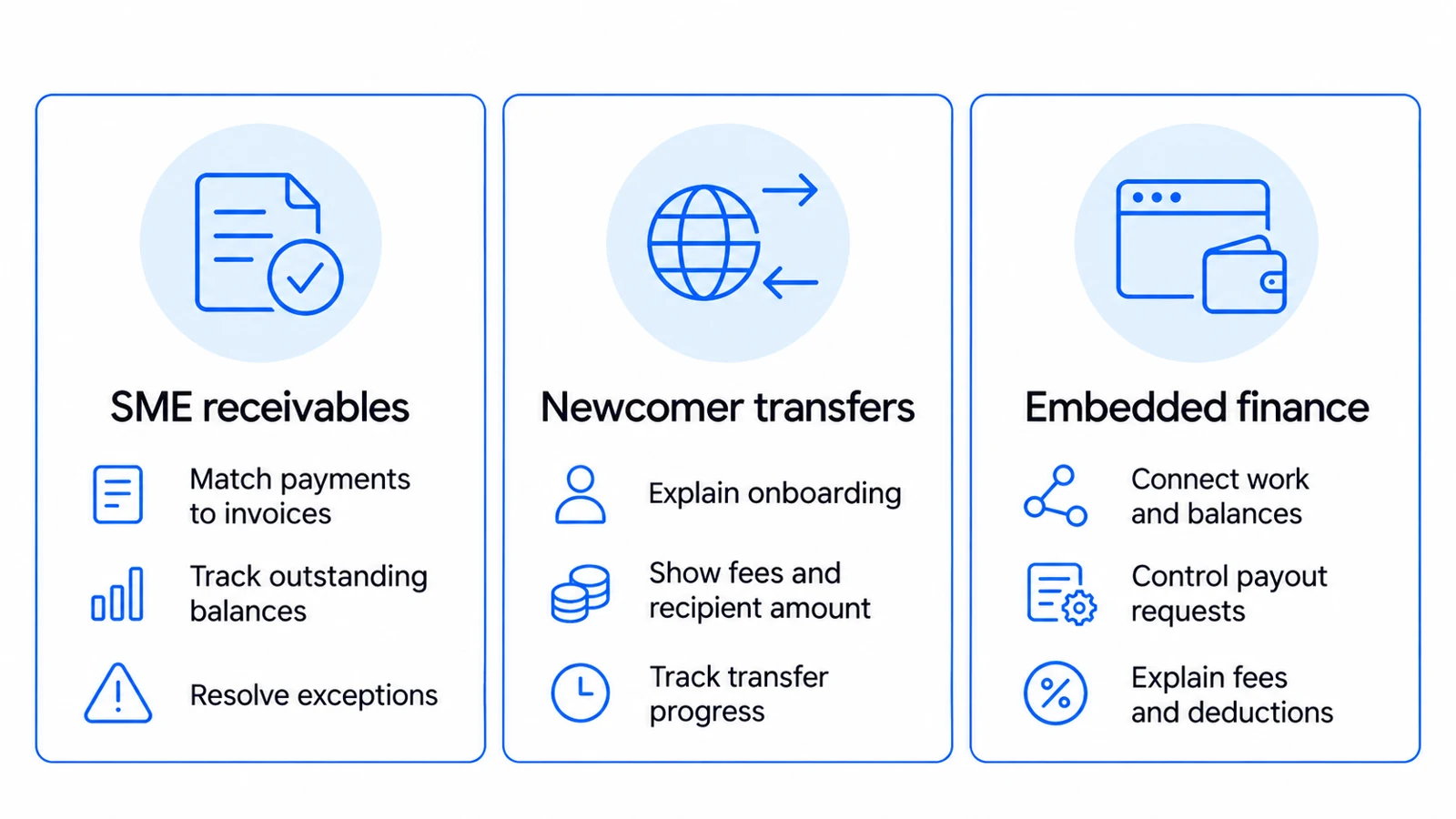
The following scenarios are editorial analysis, not forecasts or claims about a vendor’s results. Each begins with a customer problem and connects the proposed function to the external service it needs.
SME receivables and cash-flow visibility
An SME may have enough payment methods but still struggle to understand its receivables. Payments arrive with incomplete references, customers pay several invoices together, and staff spend time finding the explanation. A useful product could connect invoice records, payment notifications, outstanding balances, and an exception queue in one workflow.
Useful receivables functions include:
- Matching incoming payments to the invoices they cover.
- Prioritising overdue invoices and identifying customers who need a reminder.
- Showing partial payments, refunds, and items requiring review.
Every balance adjustment should retain a traceable explanation.
The collection partner must preserve the references needed to match payments with invoices. Testing underpayments and combined payments reveals whether the proposed workflow can handle everyday receivables.
Newcomers and cross-border users
A newcomer or cross-border worker may need to receive income in Canada, pay local expenses, and send money abroad. The product opportunity is a clearer journey across those tasks, with understandable eligibility, fees, exchange rates, and delivery expectations.
A focused cross-border service could offer:
- A clear explanation of the documents needed to start.
- The recipient amount and fees before confirmation, with indicative and fixed exchange rates distinguished.
- Meaningful transfer updates and a clear next step when money is delayed.
Delivery depends on the providers serving both ends of the transfer, the currencies and corridors they support, and the applicable customer checks. Faster domestic infrastructure does not make the foreign leg instant. Evaluate failed payouts, returned money, and support handoffs with the same care as the initial send-money screen.
Embedded financial workflows for platforms
A platform serving contractors, suppliers, or marketplace sellers can embed financial functions into an existing business process:
- A balance view linked to completed work.
- A controlled payout request.
- An explanation of fees, deductions, and refunds in the transaction history.
A seller may see an order in one place, payment activity in another, and a bank deposit later. Connecting those records gives each fee, deduction, and payout a clear business context.
The platform needs suitable payment or banking arrangements, and the integration must support the intended allocation and payout model. A comparison of embedded finance providers can help distinguish the software, banking, and payment services needed for this model.
How to evaluate a FinTech provider or software partner
Test the business model
Before choosing a provider, establish who will pay for the product and which task they want to improve. A merchant, a finance department, and an individual saver may value the same feature differently.
- For a business workflow, test willingness to pay a subscription for clearer records or less manual administration.
- For a transaction service, check whether revenue per transaction can cover provider charges and operating work.
- For a consumer proposition, establish why someone would change an existing habit and continue using the product.
Treat these as commercial hypotheses. Ask prospective customers what they use today, what switching would involve, and who approves the decision. Interest in a feature is not evidence of willingness to adopt or pay.
Check technical and operational fit
Compare candidates against the same customer journey and expected transaction volumes:
- Integration: request API documentation, sample events, and reports for the complete flow.
- Data: check transaction identifiers, statuses, references, and export options.
- Exceptions: test failed payments, refunds, repeated notifications, and support handoffs.
- Reconciliation: confirm how internal records will be compared with provider reports.
Use these checks to compare providers serving the same role. A payment processor, a consumer app, and a software platform solve different problems.
Compare the full operating cost
A headline transaction fee is only one part of the comparison. Ask each shortlisted provider to price the same illustrative monthly activity, using assumptions that reflect the proposed Canadian customer base. Separate the one-off work needed to launch from the costs that continue as the service grows.
- Include active accounts, transaction count and value, currency mix, and expected refund activity in the scenario.
- Ask which charges apply to unsuccessful attempts, additional reports, support, and changes to the integration.
- Estimate the internal time needed for manual reviews, customer enquiries, and unresolved reconciliation items.
- Check contractual minimums, data-export arrangements, and the work required to move to another provider.
A lower processing rate may be less attractive if the team spends more time investigating exceptions. Record the estimate’s assumptions so that changes in volume or customer behaviour can be evaluated clearly.
Run a focused pilot before expanding
A pilot should answer a business question as well as a technical one. For an illustrative receivables product, that question could be whether a finance team can identify and resolve unmatched receipts with less manual work. Agree on the starting position before introducing the new workflow, then compare results over a defined trial period.
- Choose a small customer group with a shared problem, rather than combining several unrelated use cases.
- Define success measures such as completion rate, time spent on a task, unresolved items, and support requests.
- Assign an owner to each exception and document how the team will pause or reverse an operation when necessary.
- Review the results with the people doing the work, including cases where the new process was slower or less clear.
Treat these as proposed measures, not promised outcomes. Use the pilot findings to decide what to improve, whether the operating model is sustainable, and when to test another customer segment. For a broader implementation roadmap, see the guide to the FinTech software development life cycle.
Building Canadian financial products with SDK.finance
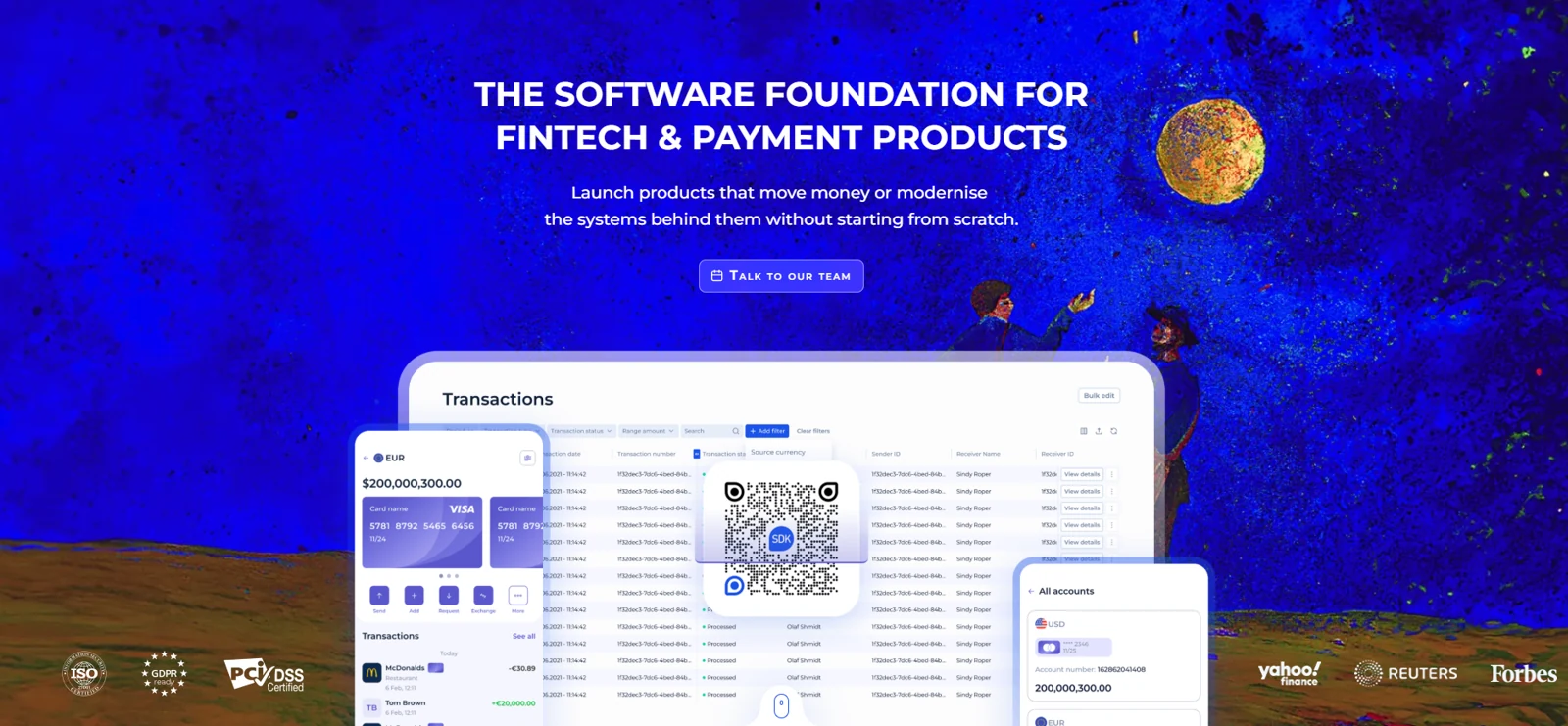
A Canadian marketplace, SME payment service, or consumer wallet needs a dependable core for managing money-related activity. The SDK.finance Transaction Platform provides the software foundation for accounts, transactions, and daily operations. Teams can build their customer experience around this core and configure fees, limits, and workflows for their business model.
Key capabilities include:
- Customer and business wallets. The SDK.finance digital wallet solution supports products with balances, transaction history, and transfers between users. For example, a Canadian marketplace could show sellers their recorded earnings and payout requests.
- Payment workflows and status tracking. Manage top-ups, withdrawals, and merchant payments through defined transaction flows. Connected financial providers handle external money movement, while operations staff use transaction statuses to investigate a delayed collection or an unsuccessful payout.
- Flexible fees and limits. Set charges and transaction limits by customer group or service. A product serving Canadian individuals and SMEs could apply different rules to personal wallets and business accounts, reflecting their expected transaction volumes.
- Reconciliation and accounting records. Compare internal transactions with provider reports to find missing or mismatched records. The separate SDK.finance General Ledger provides real-time ledger software for turning financial events into balanced debit and credit entries through configured accounting rules.
- Connections to financial partners. Use APIs to integrate the banks, payment processors, and verification services selected for the Canadian product. Each connection requires agreed provider access and integration scope before launch.
- Backoffice roles and permissions. Give support, finance, and operations staff access suited to their responsibilities. User-action history helps teams trace changes and investigate issues, including questions about a customer’s balance or transaction.
Choose the delivery model according to how your team wants to build and operate the product:
- SaaS. Access the platform through a subscription without direct access to its backend source code. SDK.finance manages the hosted application and scheduled software updates; your team maintains the databases, customer-facing deployment, and additional integrations. This can suit a Canadian launch that fits the available functions, configuration options, and API-based extensions. Custom development and new integrations fall outside the standard subscription scope and need separate planning.
- Source Code Licence. Use the ready-made account, wallet, and transaction core as the foundation of your own FinTech product. Your developers or implementation partner build the workflows, integrations, and customer experience required for your Canadian audience, adapting the code under the licence terms. You choose the deployment infrastructure and take responsibility for testing, security, maintenance, and future development.
In both models, the Canadian business must arrange the financial permissions, partner approvals, and payment access required for its services. SDK.finance supplies the software; access to Interac or other Canadian payment infrastructure depends on the chosen financial partners and integration scope.
The outlook for FinTech in Canada
Canada’s FinTech landscape combines established financial institutions, specialist providers, and software companies serving different customer needs. Payment habits and business challenges point to opportunities in SME receivables, cross-border services, and financial features embedded in everyday platforms. Developments in real-time payments and consumer-driven banking are also shaping the market, although access and implementation depend on the services and partners involved.
For Canadian FinTech businesses, differentiation comes from making financial tasks clearer and easier to manage. A useful customer experience depends on reliable software, suitable financial partnerships, and well-defined operating responsibilities. These elements connect the market’s opportunities with products that can meet practical needs for consumers and businesses.
Discover how the SDK.finance TPS can power high-speed, secure operations across banking, fintech, and retail
Talk to Our Team