Launching a digital bank or modernising an existing one means choosing software that supports both customer journeys and the day-to-day operations behind digital banking. White-label software can reduce what your team needs to build from scratch, but providers differ in functionality, flexibility and implementation requirements.
This guide compares SDK.finance, Crassula, Velmie, Akurateco, Swan, Mambu, Finastra and Temenos by software scope, customer interfaces, customisation and delivery model. It explains how their offerings differ – from transaction platforms and core banking software to payment orchestration and Banking-as-a-Service – so you can build a shortlist for your digital bank and identify the integrations and regulated partner arrangements your launch requires.
Create your digital banking solution in weeks
Talk to Our TeamWhite-label digital banking providers at a glance
The providers below serve different roles in a digital banking product, from branded banking software and core systems to embedded financial services and payment orchestration. Some cover several layers; others address a specific part of the launch.
| Provider | Product layer | Published timeline and scope | Delivery / control | Buyer fit |
|---|---|---|---|---|
| SDK.finance | Digital banking software | 2–3 weeks (SaaS setup) | SaaS / Source Code Licence | Branded banking and payment products |
| Crassula | Banking software and apps | 10 business days (rollout) | Branded software and APIs | Branded banking and wallets |
| Velmie | Digital channels and integration | Weeks (vendor claim) | Managed implementation | Institutions modernising systems |
| Akurateco | Payment orchestration | 5–7 days (SaaS setup) | SaaS / dedicated deployment | Payment routing and acceptance |
| Swan | Embedded financial services | Around 4 weeks | BaaS partnership | Embedded accounts and cards |
| Mambu | Core banking | 4–9 months (reported average) | SaaS | Deposit and lending core |
| Finastra Essence | Core banking | Under 6 months (BKN301 case) | SaaS | Core launch or modernisation |
| Temenos | Core and digital banking | 5 months (Flowe case) | Options include SaaS | Selected banking capabilities |
Best white-label digital banking platforms in 2026
The eight providers below cover account management, payments and customer-facing banking journeys through different software and service models.
SDK.finance
Headquarters: Vilnius, Lithuania; London, UK
Best for: Banks, FinTechs and enterprises launching branded banking products with customisable apps and account functionality.
Estimated time to launch: Typically 2-3 weeks for SaaS, depending on integrations and customisation.
Core strength: Customer branded apps, account management and back-office operations, with SaaS or source-code access.
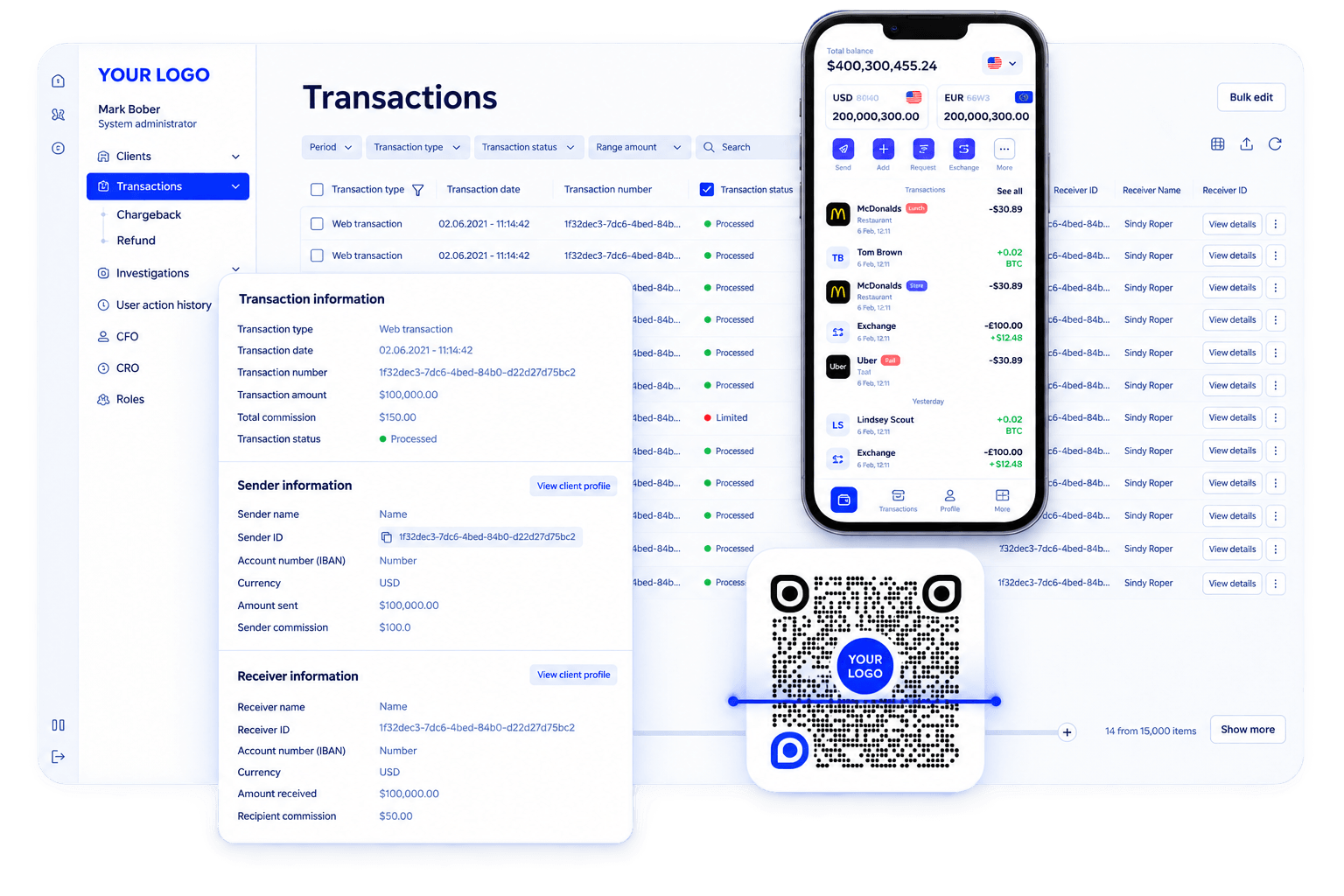
SDK.finance is a white-label digital banking platform combining pre-built web and mobile apps with account, payment and operational functionality. Teams building a white-label neobank can adapt the customer experience to their brand and connect the financial-service providers their product requires.
Main features
- White-label branded banking apps and onboarding: Branded web, iOS and Android interfaces for individual and business customers, with registration, KYC workflows and account access.
- Accounts, payments and cards: Multi-currency balances, transaction histories, transfers, top-ups and currency exchange, plus integrations for payment and card services.
- Admin panel and transaction accounting: Customer management, operational approvals, role-based access, account records and reconciliation. A separate General Ledger product supports more flexible accounting schemes.
- Fiat and crypto functionality: Fiat and crypto-denominated account records, with external integrations for blockchain, custody and exchange services.
- 650+ APIs and customisation: Extend the platform through provider integrations or choose a Source Code Licence for deeper changes.
Customer implementations and recognition: MPAY used SDK.finance for its wallet and payment ecosystem; Nebeus adopted its SaaS platform for transaction accounting and crypto-to-fiat workflows. In 2026, SDK.finance became a PayTech Awards finalist and was included in Everest Group’s Top 50 Core Banking Technology Providers report.
What to consider: SDK.finance provides software. Regulated banking, payment, card and crypto services require appropriate partner arrangements. Source-code deployment also requires engineering and maintenance capacity.
Create your digital banking solution in weeks
Talk to Our TeamCrassula
Locations: London, UK; Tallinn, Estonia; Riga, Latvia; Limassol, Cyprus
Best for: Teams evaluating branded digital banking, wallet and payment products.
Estimated time to launch: 10 business days for software rollout.
Core strength: Branded banking interfaces and connected account and payment functionality.
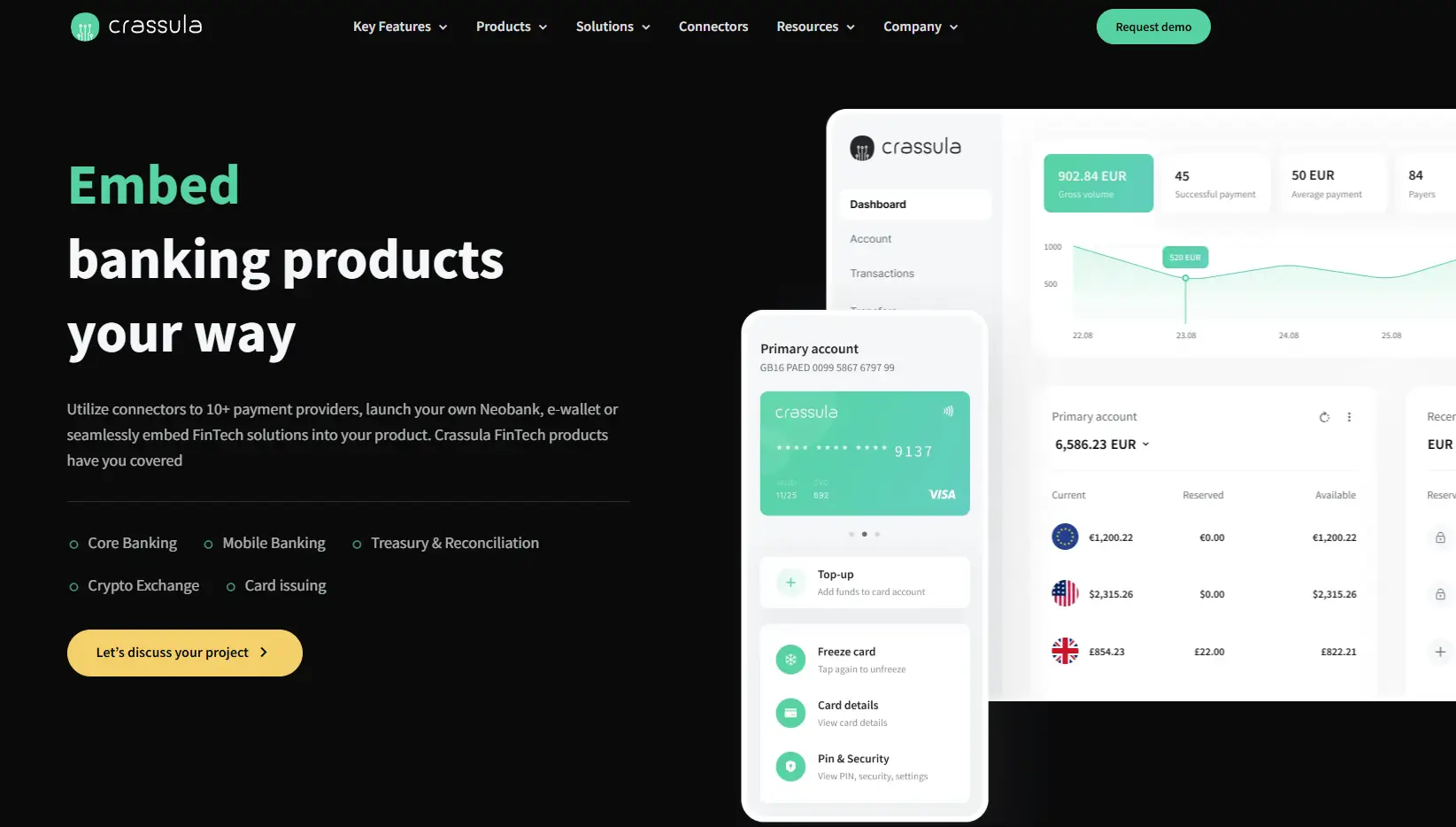
Crassula combines core banking software, a banking and payment API hub, and branded web and mobile apps for account-based financial products.
Main features
- Multi-currency accounts with IBANs, for both private and business banking
- Bank-transfer and payment-provider connectivity through its API hub
- Virtual and plastic card issuance and management
- Onboarding and KYC/KYB verification workflows
- Crypto account opening, fiat-to-crypto exchange and crypto transfers
- Branded web, iOS and Android interfaces, with localisation options
Customer implementations and recognition: Crassula’s published customer examples include Paysend and Multipass, covering business banking and international payments.
What to consider: Crassula combines banking software with connections to external financial-service providers. Its 10-business-day rollout refers to the software; banking, payment and verification services require the corresponding provider arrangements.
Velmie
Locations: New York, USA; London, UK; Dubai, UAE; Vilnius, Lithuania; Warsaw, Poland
Best for: Regulated institutions and FinTech operators planning digital-channel and systems-integration programmes.
Estimated time to launch: Within weeks for new products, according to Velmie.
Core strength: Digital channels, API middleware and implementation support.
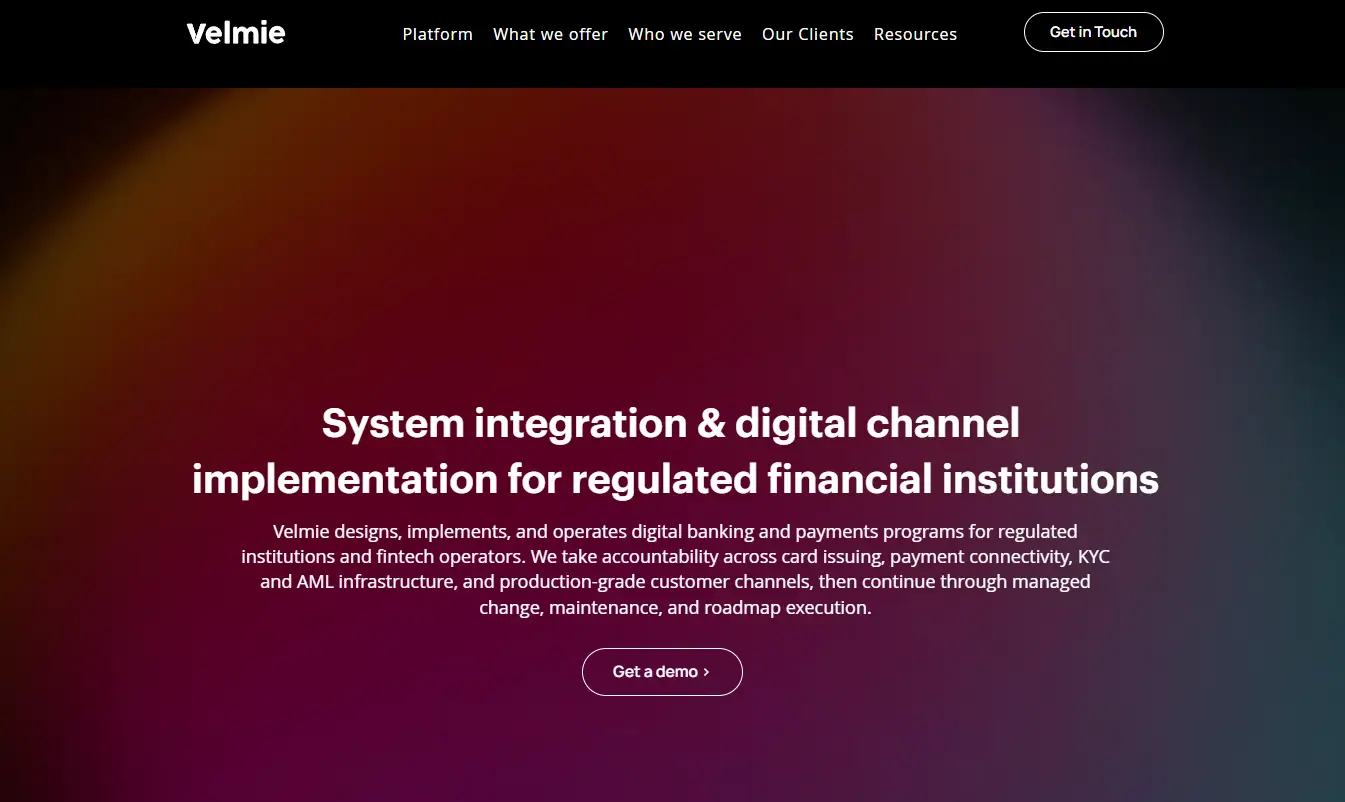
Velmie provides systems integration and digital-channel implementation for regulated financial institutions, with a focus on the Middle East and Africa. Its dedicated-team model covers implementation, maintenance and ongoing product development.
Main features
- A configurable digital banking layer covering onboarding, account servicing, cards, payments and lending journeys
- API middleware and orchestration, aimed at integrating and modernising existing systems incrementally
- Mobile and web channels built for regulated onboarding, consent flows and money movement
- Card issuing and processing integration, payment-rail connectivity and cross-border payment flows
- KYC, AML and compliance integrations
- A dedicated implementation and post-launch support team, with structured release governance
Customer implementations and recognition: Velmie’s customer examples include TAPP Engine, an investment platform connecting customer applications with banking and trading services.
What to consider: Velmie combines software with managed implementation and ongoing maintenance. Integration with existing core systems, payment rails and external providers forms a substantial part of its delivery model.
Akurateco
Headquarters: Amsterdam, Netherlands
Best for: PSPs, acquirers, and merchant aggregators needing smart routing and fraud prevention.
Estimated time to launch: 5-7 days for white-label SaaS setup with existing connectors; 10-20 business days for a new connector.
Core strength: Payment orchestration layer + fraud monitoring.
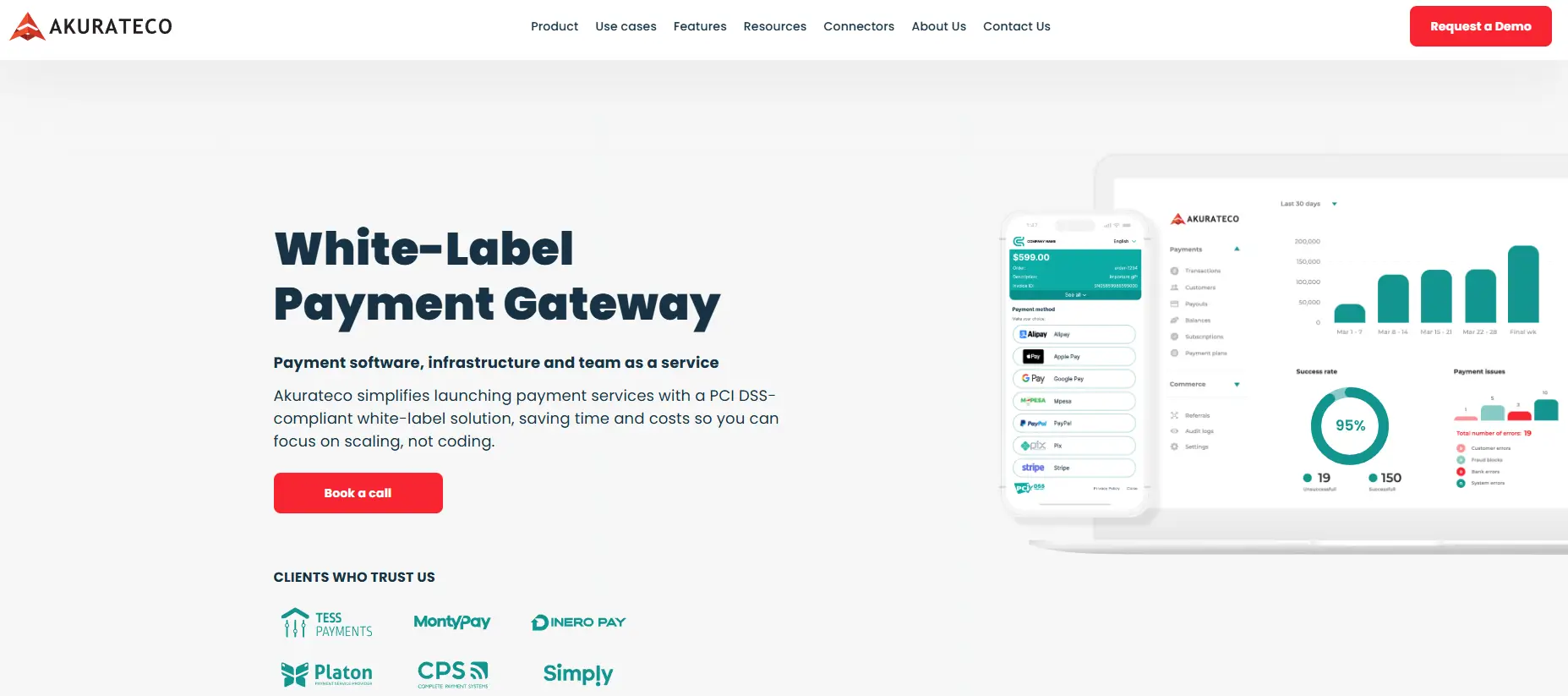
Akurateco provides white-label payment software and payment orchestration. It is an adjacent option for teams whose immediate requirement is payment acceptance and routing rather than a full account-based banking product.
Main features
- 700+ ready-to-use payment connectors, according to Akurateco
- Payment routing and cascading, with tokenisation and recurring-payment capabilities
- A real-time analytics dashboard and automated merchant onboarding
- Customisable, brandable payment pages and smart invoicing
- Fraud detection and prevention tooling
- SaaS and deployment on dedicated infrastructure or a preferred cloud
Customer implementations and recognition: Akurateco’s published implementations include payment infrastructure for TESS Payments and Apple Pay and Google Pay integration for AzeriCard.
What to consider: Akurateco focuses on payment acceptance and orchestration. Acquiring services come from external providers. Its SaaS setup timeline assumes existing connectors; dedicated deployment also involves the customer’s infrastructure.
Swan
Headquarters: Paris, France
Best for: European platforms evaluating embedded accounts, cards and payments.
Estimated time to launch: Around 4 weeks, including integration and compliance review, in Swan’s published launch journey.
Core strength: Embedded financial services through a BaaS partnership.
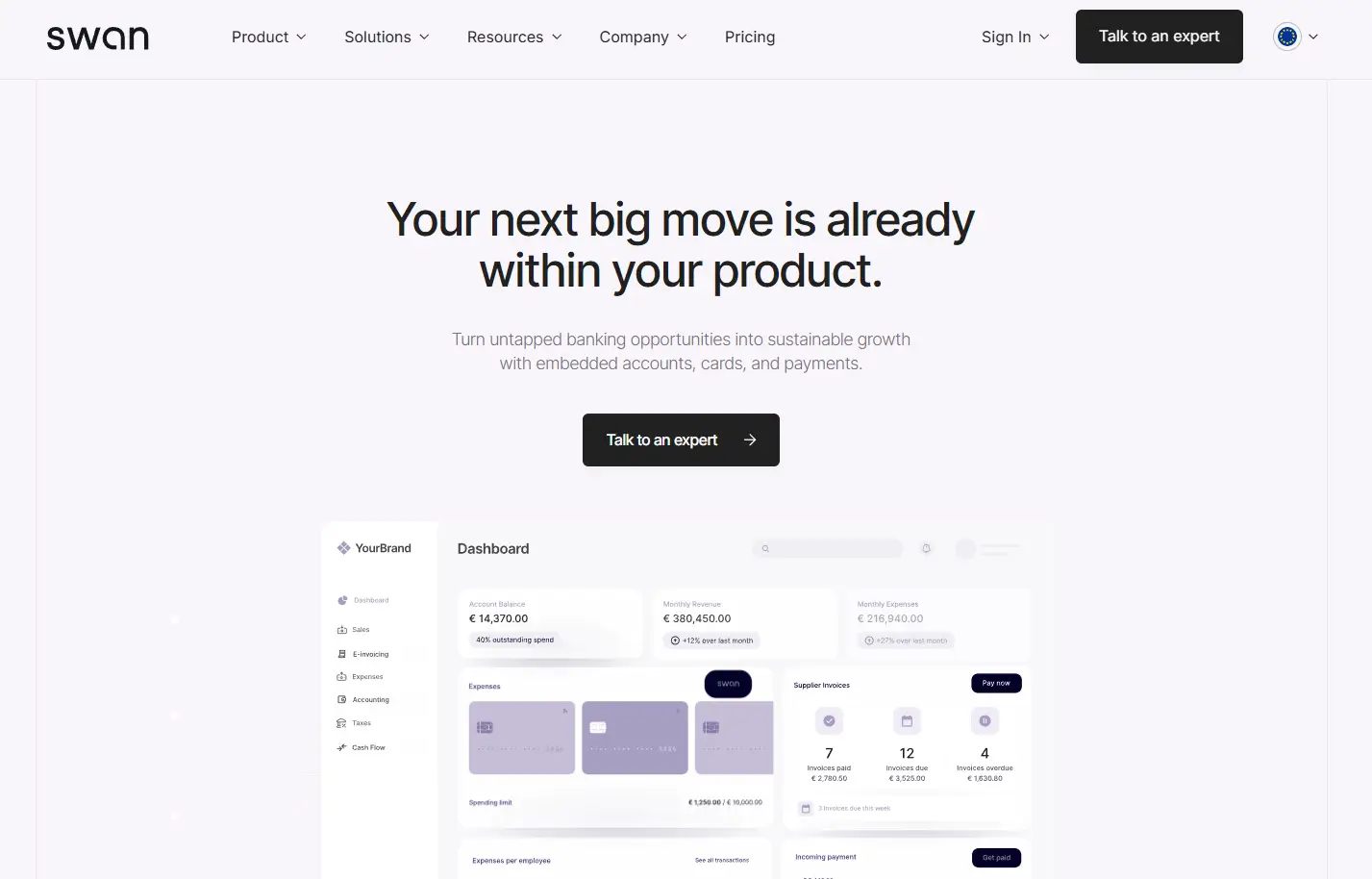
Swan offers embedded accounts, cards and payments for platforms. Assess the financial-service partnership and customer journey together, including the markets and business models Swan supports.
Main features
- Embedded business accounts with country-specific local IBANs
- Send- and accept-payment flows built into the partner’s own product
- Expense cards and employee benefit cards, with revenue-sharing options
- Card-programme configuration and issuance within the agreed service scope
- A configurable white-label web-banking interface with partner branding and multilingual support; required provider disclosures still apply
- Partner onboarding and financial-service operating arrangements
Customer implementations and recognition: Swan supports embedded accounts and payment services for software businesses including Pennylane and Indy.
What to consider: Swan supplies embedded financial services through an electronic-money institution model. Launch includes compliance approval, and service availability depends on the supported market and business model. E-money safeguarding differs from bank-deposit protection.
Mambu
Locations: Amsterdam, Netherlands; Berlin, Germany, and other international offices
Best for: Mid-to-large financial institutions needing composable SaaS core banking.
Estimated time to launch: 4-9 months, Mambu’s published average time to market.
Core strength: Cloud-native, composable architecture.
Mambu provides a SaaS core banking platform with lending, deposit and payment capabilities. Compare the core configuration with the customer channels, integrations and operating services your project also needs.
Main features
- Composable core banking, with a distinct Mambu Payments offering for payment orchestration and connectivity
- Deposit and lending product modules
- Configurable product logic and automated banking workflows
- Configuration through composable “building blocks” rather than source-code access
- An API-first backend that connects with customer channels and partner applications
- Professional services available for implementation and ongoing support
Customer implementations and recognition: N26 adopted Mambu’s core banking platform in 2016 to support its digital banking operations.
What to consider: Mambu delivers its core as SaaS. Customer channels, payment connections and migration work form additional parts of the implementation, while backend source-code ownership is outside the SaaS model.
Finastra
Headquarters: London, UK
Best for: Financial institutions evaluating a core banking launch or modernisation.
Estimated time to launch: Under 6 months for BKN301’s Essence implementation, including configuration, testing and go-live.
Core strength: Core banking functionality with configurable products and open integration.
For this comparison, assess Finastra Essence specifically rather than treating the wider Finastra portfolio as one platform. Essence supports retail, commercial and Shariah-compliant banking through a cloud-first core.
Main features
- Accounts, deposits, lending, payments, limits and fees
- Retail, commercial and Shariah-compliant banking scope
- Open APIs and an event-driven architecture for integration
- A no-code product composer and configurable business rules
- Embedded analytics and customer-view dashboards
- Multi-currency processing and customer-servicing workflows
Customer implementations and recognition: BKN301 implemented Finastra Essence for payment accounts, international transfers and financial records supporting its BaaS offering.
What to consider: Finastra Essence is a core banking product within a broader software portfolio. Digital channels, migration and integration add to the implementation scope. The under-six-month timeline comes from the BKN301 deployment.
Temenos
Headquarters: Geneva, Switzerland
Best for: Established banks needing cross-border, multi-regional digital banking.
Estimated time to launch: 5 months for Flowe’s SaaS deployment.
Core strength: Rich functionality + global coverage.
Temenos offers core banking, digital banking, payments and wealth products, with SaaS among its delivery options. Define which products are in the shortlist and how they connect to your existing systems.
Main features
- A composable architecture, letting banks adopt individual capabilities rather than a full core replacement
- AI and automation capabilities across selected banking products
- Retail, business, corporate, treasury and Islamic banking modules
- Deployment and operating model to be agreed for the selected products, including SaaS options
- Regional banking solutions and financial-crime mitigation products
- Analytics aimed at turning banking data into operational insight
Customer implementations and recognition: Italian digital bank Flowe launched using Temenos Transact and financial crime mitigation software delivered as SaaS.
What to consider: Temenos offers multiple core, digital banking and payment products. Implementation combines the selected modules with migration, integrations and an operating model. The five-month timeline comes from Flowe’s SaaS deployment.
Customisation and control vary by delivery model. Compare source-code rights, configuration options and operating responsibilities separately.
White-label banking software vs core banking vs BaaS
These terms describe different aspects of a banking product:
- White-label describes how software can be branded and delivered.
- Core banking describes the system that manages financial products and their records.
- Banking-as-a-Service (BaaS) describes access to financial services through a regulated provider.
They can overlap, and one provider may supply several layers.
| Model | What you get | What may still be needed |
|---|---|---|
| White-label banking software | Software you can adapt to your brand, often including customer apps, account and payment workflows, and back-office tools | External banking, payment, card and verification services; included functionality varies by vendor |
| Core banking software | The system that maintains financial accounts and applies product rules, such as interest, fees and loan repayments | Customer-facing apps, onboarding and connections to payment services |
| Banking-as-a-Service | Access to specified financial services, such as accounts, payments or cards, through a regulated provider’s arrangements | Your customer experience and integrations, subject to the provider’s eligibility, market coverage and contractual requirements |
For example, a branded banking app may use white-label software for its interface, a core system for financial records, and a BaaS provider for accounts and cards. These components may be bundled or supplied separately.
The distinction determines what your purchase covers: branded software, the underlying financial system, access to financial services or a combination of them.
What should a white-label neobank platform include?
A white-label neobank platform should connect customer journeys with payments, operational controls and financial records. Its capabilities span four areas, with regulated services supplied through the operator’s own authorisation or licensed partners.
Customer onboarding and account management
Digital onboarding covers registration, identity verification, document collection and application status. Individual and business accounts need balances, transaction history, statements and account controls. Business accounts also require member access and approval permissions. KYC and KYB workflows connect to verification providers, with manual review where needed.
Payments, cards and external integrations
Payment functionality includes transfers, funding, withdrawals, fees, limits and status tracking. Card features cover issuance requests, activation, spending controls and blocking through an issuing integration. Access to payment rails, foreign exchange and regulated services depends on arrangements with external providers.
Back-office operations and financial records
Operations teams need tools to manage customers, review transactions, handle exceptions and resolve support requests. Role-based permissions, approvals and user-action history control sensitive actions. Account and ledger records track balances, fees and money movements; reconciliation compares them with external-provider reports. Operational accounting and a separate general ledger may serve different reporting needs.
White-label mobile and web banking apps
Branded apps bring onboarding, account views, payments, card controls and support into one experience. Useful features include notifications, searchable transaction history, multilingual interfaces and secure authentication. Apps connect to the platform through APIs and require ongoing maintenance for mobile releases and backend compatibility.
Benefits and limitations of white-label digital banking software
Reusable software can reduce development work. The practical benefit depends on product fit, integration requirements and the operating team.
Faster delivery and implementation dependencies
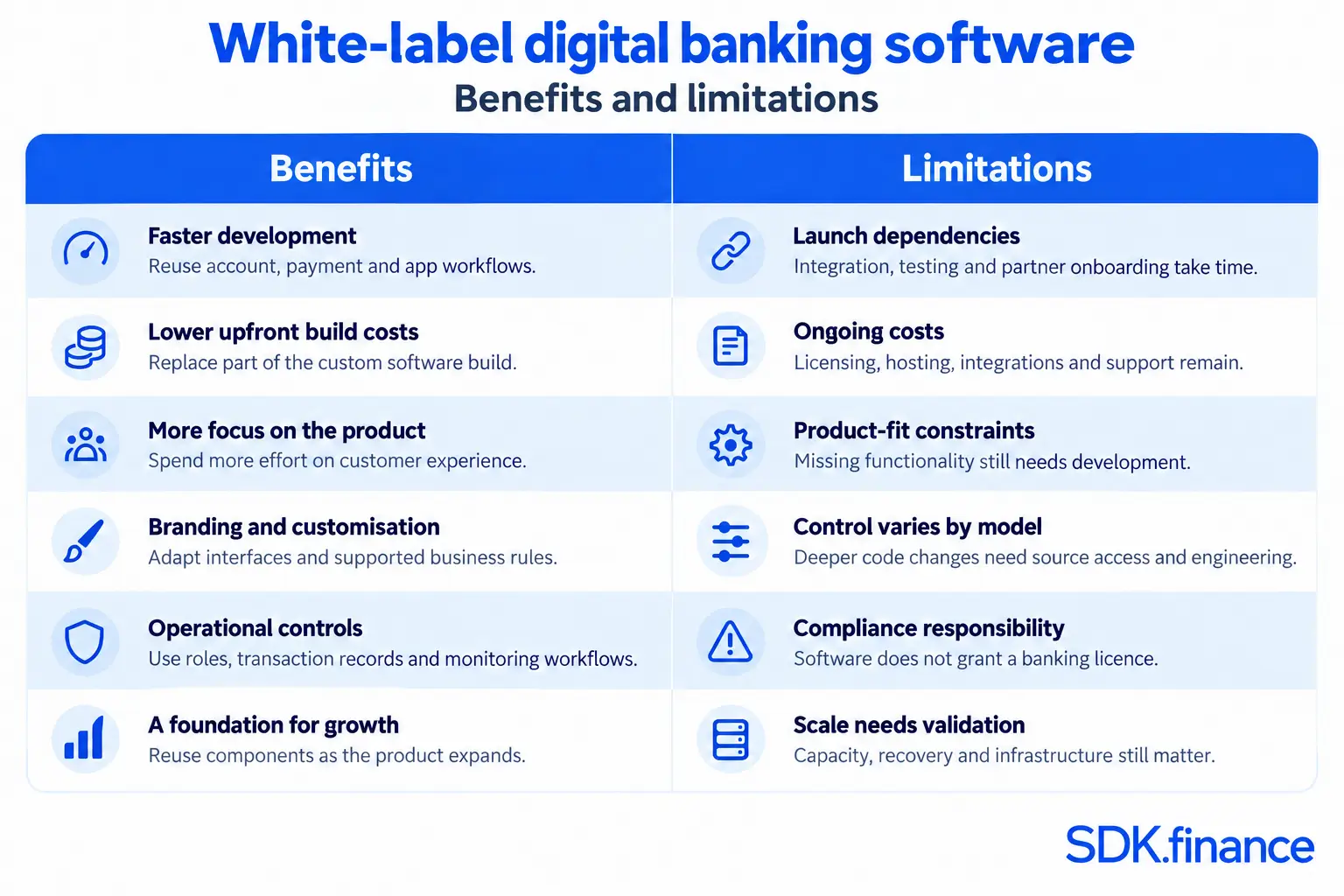
Reusable account, payment and customer-interface workflows can shorten development. Delivery still depends on configuration, integrations, migration, testing and partner onboarding. A software setup estimate does not guarantee the launch of a live regulated bank.
Lower initial development effort and ongoing costs
White-label software replaces part of a custom build with a licence or subscription, reducing initial development effort. Total costs also include hosting, implementation, external-provider integrations, maintenance and support.
Branding flexibility and customisation limits
Reusable components can free teams to focus on user experience and differentiated features. Flexibility depends on the product and contract: SaaS typically offers defined configuration and API extension points, while source-code access can enable deeper changes with greater engineering and maintenance responsibilities.
Operational support and ownership responsibilities
Documented workflows, support arrangements, permissions and audit trails can support day-to-day operations and compliance work. The operator remains responsible for regulatory requirements and for ensuring reconciliation, failure recovery, security and performance meet the needs of the actual deployment.
White-label software still has limitations. Customisation is bounded by the delivery model, while integrations, migration and partner approvals can extend launch timelines. Licensing, hosting and support add ongoing costs, and deeper source-code changes require engineering capacity. Regulatory responsibilities remain with the operator and its licensed partners.
How to choose a white-label digital banking provider
Once you’ve separated software from regulated services and reviewed how each app actually works, narrowing the shortlist comes down to five checks:
- Required product scope – which functionality is native to the software versus needs a separate integration
- External integrations – which KYC, card issuing, FX or payment providers the platform is pre-integrated with
- Operating responsibility – who runs and patches the system day to day – the vendor, your team, or both
- Demonstrated operational workflows – working onboarding, payment and customer-support journeys
- Implementation and running-cost drivers – licence or subscription, hosting, integration work, and ongoing support
White-label digital banking software: which model fits your launch
Build the shortlist around the layer you need. SDK.finance and Crassula offer foundations for branded account-based products; Velmie combines digital channels with systems-integration delivery. Mambu, Finastra Essence and Temenos warrant evaluation when core banking capabilities are central. Swan addresses an embedded financial-service partnership, while Akurateco focuses on payment software and orchestration.
Compare the specific products and contracts before making a choice: customisation, infrastructure operation and regulated-service provision are different responsibilities.
Launch your digital bank in weeks, not years
Talk to Our Team