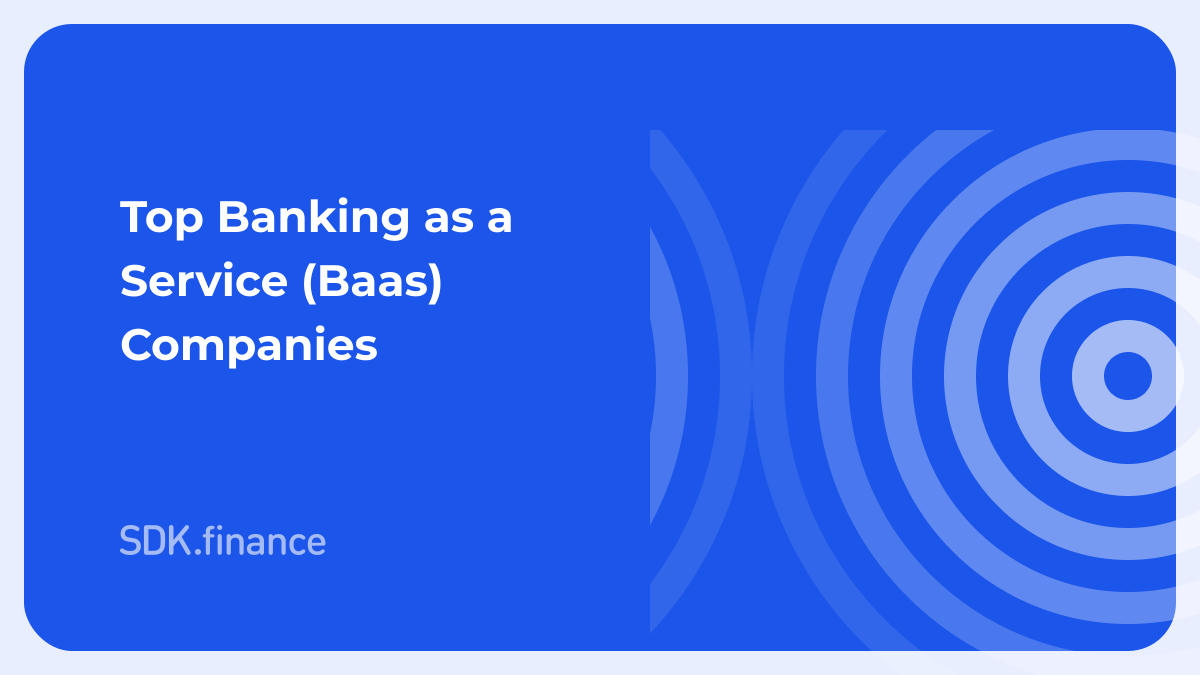
The market is large and still growing: Grand View Research sizes global BaaS revenue at USD 22.5 billion in 2022, on track for USD 74.6 billion by 2030 at a 16.2% CAGR, as retailers, telecoms and software platforms embed financial features alongside fintech startups.
This guide compares 10 companies across the BaaS ecosystem – SDK.finance, Marqeta, Solarisbank, SoFi Tech Solutions (formerly Galileo), Treezor, Stripe Treasury, ClearBank, Unit, Airwallex and Zeta – including licensed institutions, platforms working with partner banks, and software infrastructure providers, compared by role, supported markets, product scope and what a buyer depends on beyond the API.
What is banking as a service?
In practice, a BaaS provider supplies the underlying infrastructure, regulatory framework, and access to payment rails. The partner company focuses on customer experience and distribution, while the licensed institution holds funds and meets regulatory requirements.
Banking as a Service differs from traditional core banking software by packaging infrastructure, regulatory access, and API connectivity together. Depending on the provider, that can mean a fully licensed bank or Electronic Money Institution offering regulated services directly, a platform working through partner banks, or a software vendor supplying the technology while a separate regulated partner holds the licence.
Launch your digital bank in weeks, not years
Talk to Our TeamTypes of BaaS providers
| Provider type | What you get | Key dependency | Examples |
|---|---|---|---|
| Direct licensed BaaS providers | Banking or electronic-money services delivered through APIs by a licensed bank or EMI. | Services and markets depend on the provider’s licence and programme approval. Bank deposits and electronic money have different protections. | Solaris, ClearBank (banks); Treezor, Swan (EMIs) |
| BaaS platforms with sponsor-bank partners | APIs and programme-management capabilities connecting your product to financial services supplied by partner banks. | Onboarding, product availability and service continuity depend on both the platform and its banking partners. Contractual arrangements vary. | Unit; SoFi Tech Solutions (for relevant sponsor-bank programmes) |
| Card issuing and processing platforms | Infrastructure for card programmes, including issuing APIs, processing, transaction controls and programme management. Some also support account capabilities through partners. | An appropriate issuing-bank or EMI arrangement is required. Available capabilities and responsibilities depend on the programme. | Marqeta, Stripe Issuing |
| Banking technology infrastructure providers | Software for managing accounts, wallets, transactions, ledger records and back-office workflows, with integrations to financial service providers. | Customisation, hosting and maintenance responsibilities vary by delivery model. Financial partner integrations depend on the product and target market. | SDK.finance, Zeta |
Banking as a service providers comparison
The clearest way to compare BaaS providers is by the role each one actually plays, not by founding year or headquarters. The table below classifies each provider’s role – including where a provider is software rather than a regulated service – the markets and products it currently supports, and what a buyer depends on beyond the API. Every dated or numeric claim below carries a source note, checked September 2026.
| Provider | Role | Supported market | Product scope | Buyer fit & dependency |
|---|---|---|---|---|
| SDK.finance | Software vendor, not regulated | Global (software); customer arranges its own partner | Transaction Platform: accounts, wallets, payments, ledger, back office. 650+ APIs. SaaS or Source Code Licence. | Banks, EMIs, PSPs, fintechs wanting direct control over transaction/ledger logic; arranges its own regulated partner |
| Marqeta | Processor (issuing & payments) via sponsor banks | US-based; other markets via partner banks | Card issuing, payment processing, digital wallets – no deposit accounts | Card-led products; needs a separate bank/EMI. Sponsor banks incl. Evolve Bank & Trust |
| Solarisbank (Solaris) | Bank – full German licence | Germany and EU via passporting | Accounts, cards, lending and payments under its own licence | EU-regulated products; mid-transition to “AI-native bank” |
| SoFi Tech Solutions (formerly Galileo) | Sponsor-bank platform; rebranded Apr 2026 | Primarily US | Card issuing, accounts and payments via partner banks, incl. SoFi’s own charter | Part of SoFi’s bank holding company; check independence for non-SoFi customers |
| Treezor | EMI, France | France and EU via passporting | Payment processing, e-wallets, card issuance, KYC | Owned by Société Générale; sale to Shares in exclusive talks since Jan 2026, not closed |
| Stripe Treasury | Sponsor-bank platform, technology layer | UK and US public preview; Australia private preview | Embedded accounts, money movement, card functionality | Best for platforms on Stripe payments; confirm availability by market |
| ClearBank | Bank – UK clearing bank, expanding into Europe | UK; Dutch/EU entity holds MiCA CASP | Clearing, embedded banking, UK schemes (Bacs, Faster Payments, CHAPS); EUR/USD stablecoin via EU entity | Regulated UK or EU rail access; confirm which entity applies |
| Unit | Sponsor-bank platform | US | Accounts, cards and payments; sponsor banks incl. Thread Bank | US software companies embedding financial features |
| Airwallex | Regulated financial institution, multiple jurisdictions | APAC, Europe, North America; adding licences (Israel Jul 2025; Malaysia Apr 2026 | Cross-border payments, FX, card issuing, embedded finance APIs | Cross-border platforms; licence coverage varies by country |
| Zeta | Software vendor / processor – card & core banking tech, partners with banks | India, Middle East and other markets | Card issuing and processing infrastructure, core banking technology | Technology vendor, not a licence-holder; regulated partner still required |
Best banking as a service companies in 2026
SDK.finance – software infrastructure for BaaS products
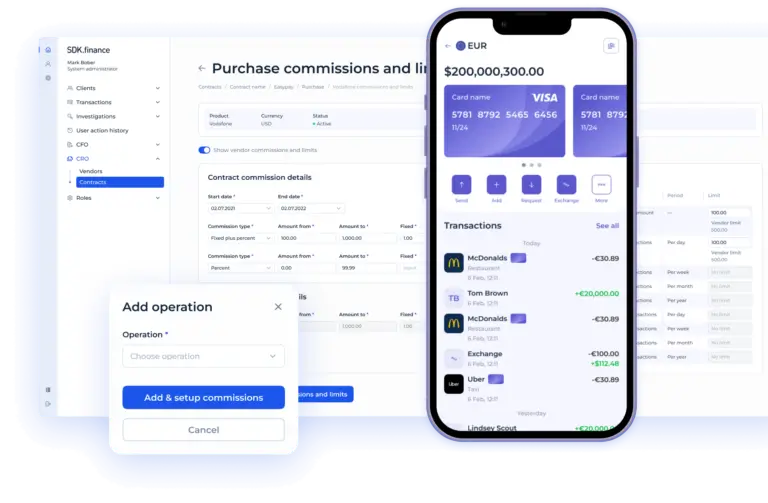
SDK.finance provides the software layer for building financial products that connect to regulated banking and payment services. Within a Banking as a Service ecosystem, it supports the accounts and multi-currency wallets, transaction logic, ledger records and back-office workflows behind the customer-facing product.
Banks, EMIs and payment institutions can use SDK.finance alongside their own regulated capabilities. Fintechs and other businesses can combine the platform with services from appropriately licensed partners. SDK.finance supplies the technology; it does not itself provide a banking licence, hold customer funds or replace the regulated institution.
The platform brings together 60+ modules and 650+ APIs, with pre-built web and mobile interfaces for customers and internal teams. Businesses can choose SaaS within its supported scope or a Source Code Licence for deployment and customisation by their own technical team.
Main features
- Accounts and multi-currency wallets, with configurable fees, limits and commissions.
- Transaction processing and ledger records supporting payment operations.
- Payment workflows and integrations with external financial service providers.
- Card issuing integrations through partner providers.
- KYC/KYB workflow orchestration and integrations with AML and anti-fraud services.
- Customer-facing interfaces and back-office tools for managing financial operations.
How it fits into a BaaS product
For a fintech launching a branded wallet, SDK.finance can provide the wallet software, transaction records, business rules and operating interfaces. A licensed partner provides the regulated account, payment or card services required by the programme. The integration scope depends on the product, jurisdiction and selected partners.
Best for: banks, EMIs, PSPs and fintechs that need a configurable software foundation for their financial product, with delivery options ranging from SaaS to source-code ownership.
What to consider: businesses must define their licensing model and arrange the necessary regulated services. Partner selection, integrations and compliance responsibilities remain part of the implementation scope.
Marqeta
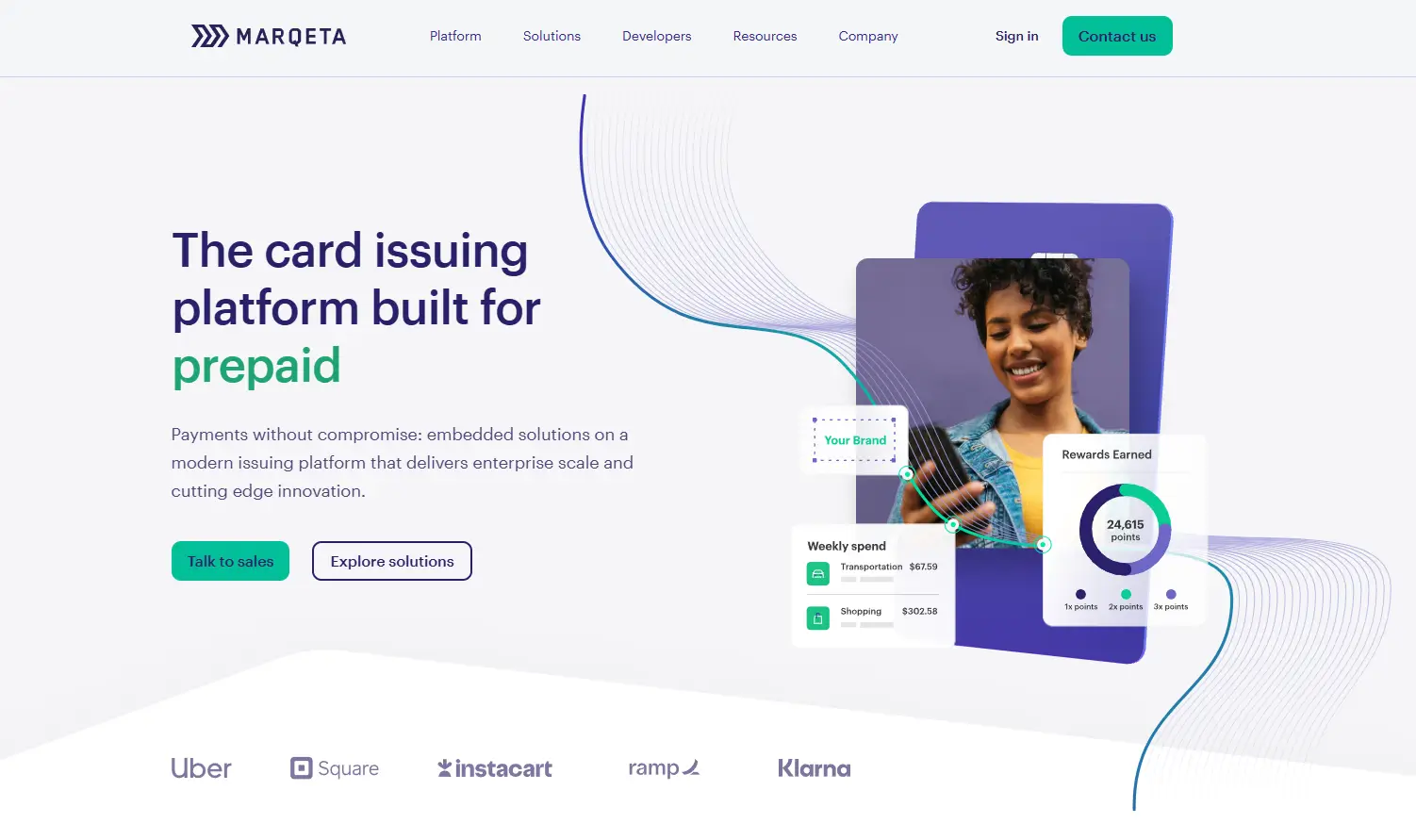
Although Marqeta is primarily known for card issuance, the company is also active in the BaaS space. The company provides APIs for card issuance, payment processing, and digital wallets, enabling businesses to develop innovative payment solutions. Marqeta targets industries such as FinTech, eCommerce, and on-demand services, offering features such as instant approval, customisable payment management, transaction analytics, and comprehensive developer support.
Main features:
- Card issuing APIs for virtual and physical cards
- Real-time transaction processing and authorisation controls
- Programme management through sponsor-bank partners, including Evolve Bank & Trust
- Developer sandbox and transaction analytics
Best for: card-led products – co-branded, corporate expense or on-demand-economy cards – where issuing and processing flexibility matters most; buyers still need to secure their own bank or EMI relationship for the underlying account.
What to consider: Marqeta issues and processes cards but does not hold accounts itself – you still need your own bank or EMI relationship for the underlying account, and your programme depends on Marqeta’s sponsor-bank partnerships, including Evolve Bank & Trust.
Solarisbank
Solarisbank is a Berlin-based banking as a service provider offering a range of financial services and APIs for companies operating in Europe. The company positions itself as a banking-licensed technology company that enables businesses to develop and offer financial products without having to obtain a banking licence themselves.
Main features:
- Full German banking licence with EU passporting
- Account, card and lending APIs
- Built-in KYC/AML compliance tooling
- Currently repositioning toward an “AI-native bank” model
Best for: businesses building EU-regulated financial products that want a single licensed entity covering accounts, cards and lending rather than assembling their own partner stack; worth monitoring through its ongoing “AI-native bank” transition.
What to consider: Solarisbank is currently repositioning toward an “AI-native bank” model – confirm how this transition affects product roadmap and support before committing to a long-term integration.
SoFi Tech Solutions (formerly Galileo)
Galileo Financial Technologies announced its rebrand to SoFi Tech Solutions on 29 April 2026; the “Galileo” name continues as a product-line name (Cyberbank Core, Cyberbank Digital, Cyberbank Konecta) under the new brand. It remains recognised as one of the top banking as a service providers, known for its powerful API platform, debit card issuance and other financial services. One of its strengths is its flexibility – the platform is designed to support a wide range of financial services, allowing companies to tailor their offerings to their specific needs and audiences.
Main features:
- Card issuing and processing APIs
- Fast digital account opening and onboarding
- Access to real-time payment rails, including FedNow
- Now operates under the SoFi Tech Solutions brand, backed by SoFi’s bank charter for sponsor-bank programmes
Best for: US-focused card and account programmes, particularly ones that can benefit from direct proximity to SoFi’s banking infrastructure – now formalised under the SoFi Tech Solutions brand – and real-time payment rails such as FedNow.
What to consider: SoFi Tech Solutions operates as part of SoFi’s bank holding company, and the rebrand from Galileo was still in transition as of publication – customers outside the SoFi group should confirm platform independence and roadmap priority.
Treezor
Treezor, a European banking as a service company, offers a wide range of financial services, including payment processing, electronic wallets, card issuance, and KYC compliance. The offering is particularly suitable for financial institutions, mobility services, neobanks, and employee benefit programmes.
Main features:
- E-money issuance and account APIs
- Physical and virtual card issuance
- Built-in KYC and compliance tooling
- Proposed sale to fintech Shares: exclusive negotiations with Société Générale announced January 2026, not yet confirmed closed
Best for: France- and EU-based e-money and card programmes, especially in mobility and employee-benefits use cases; confirm current ownership given the proposed Société Générale to Shares transaction, still in exclusive negotiations.
What to consider: Treezor’s ownership is in proposed transition – Société Générale’s exclusive negotiations to sell Treezor to fintech Shares were announced in January 2026 but not yet confirmed closed, so confirm current ownership before signing a long-term contract.
Stripe Treasury
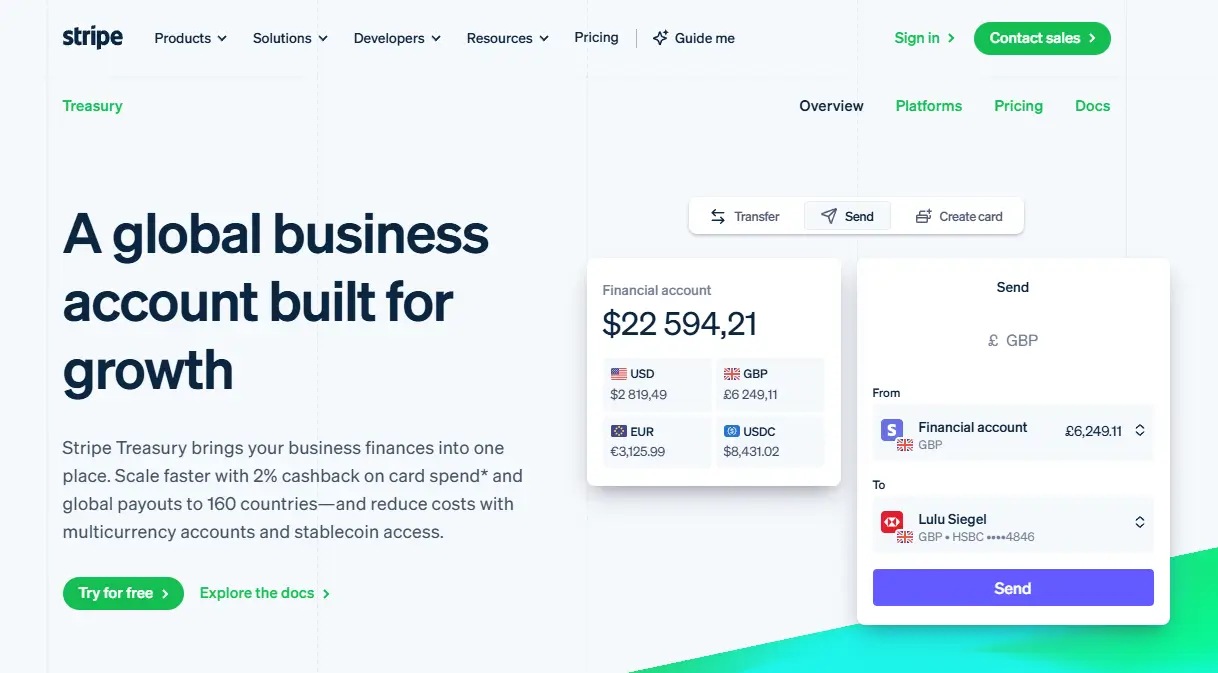
Stripe, through Stripe Treasury, enables platforms to embed financial accounts, money movement, and card functionality directly into their products. Its global footprint and strong developer ecosystem make it relevant for SaaS platforms and marketplaces entering financial services.
Main features:
- Embedded bank accounts via API
- Money movement: ACH, wire and instant payouts
- Card issuing integration through Stripe Issuing
- UK and US in public preview; newer markets such as Australia in private preview – contact sales to confirm availability
Best for: platforms and marketplaces already built on Stripe payments that want embedded accounts and card issuing without a separate infrastructure integration, in markets where general availability – not preview – is confirmed.
What to consider: availability varies by market and preview stage – the UK and US are currently in public preview, while newer markets such as Australia remain in private preview, so confirm access and timeline with Stripe sales before planning a launch date.
ClearBank
ClearBank is a UK clearing bank providing BaaS infrastructure with direct access to UK payment schemes. It is commonly used by fintechs and financial institutions seeking regulated access to domestic payment rails.
Main features:
- Direct access to UK payment schemes (Faster Payments, Bacs, CHAPS)
- Multi-currency clearing accounts
- Embedded banking APIs
- EU entity with MiCA crypto-asset service provider status
Best for: fintechs and financial institutions that need direct, regulated access to UK payment schemes, or – through its EU entity – euro and dollar stablecoin settlement under MiCA.
What to consider: ClearBank operates through separate UK and EU entities with different scopes – UK clearing-scheme access versus MiCA stablecoin settlement via the EU entity – so confirm which entity and licence applies to your target market.
Unit
Unit is a US-based API-first BaaS platform focused on helping software companies embed accounts, cards, and payments into their products through sponsor bank partnerships.
Main features:
- Accounts, cards and payments APIs
- Built-in compliance and risk tooling
- Multiple sponsor-bank partners, including Thread Bank
- Pre-built UI components for faster launch
Best for: US software companies that want a single API-first layer for accounts, cards and payments and prefer sponsor-bank programme management handled for them.
What to consider: Unit’s coverage is US-only and depends on its sponsor-bank partnerships, including Thread Bank – it isn’t a fit for programmes that need coverage outside the US or want a single, direct banking relationship.
Airwallex
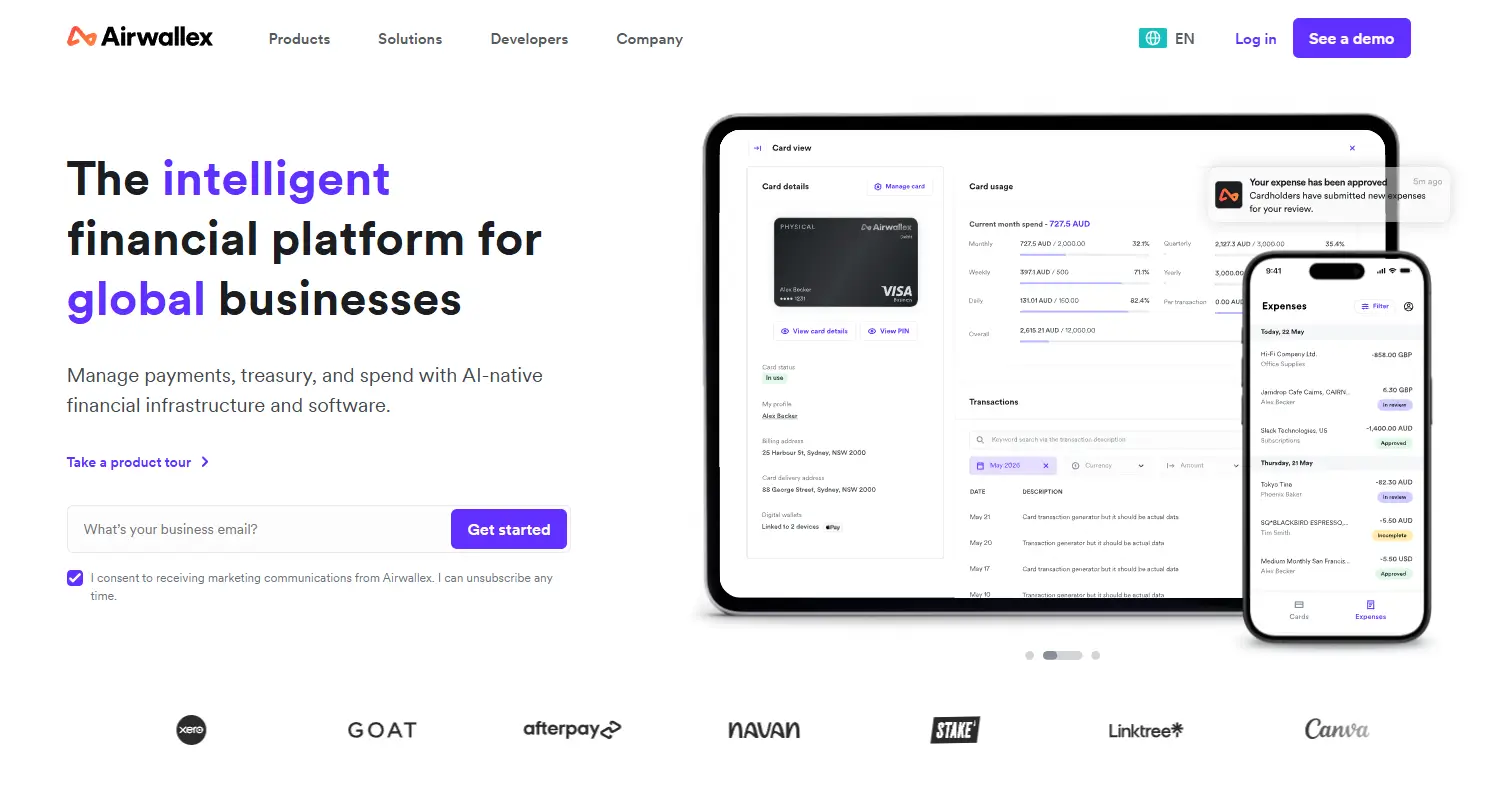
Airwallex offers global payments and financial infrastructure with strong coverage across Asia-Pacific, Europe, and North America. It supports embedded finance use cases for cross-border businesses.
Main features:
- Multi-currency global accounts
- Cross-border FX and payments
- Virtual and physical card issuing
- Licensed in multiple jurisdictions, still expanding (Israel added July 2025, Malaysia added April 2026)
Best for: cross-border platforms and marketplaces that need multi-currency accounts, FX and card issuing across several jurisdictions at once, rather than a single-market deployment.
What to consider: licence coverage varies by country and is still expanding – confirm which licences apply to your specific target markets rather than assuming the full global footprint is available everywhere today.
Zeta
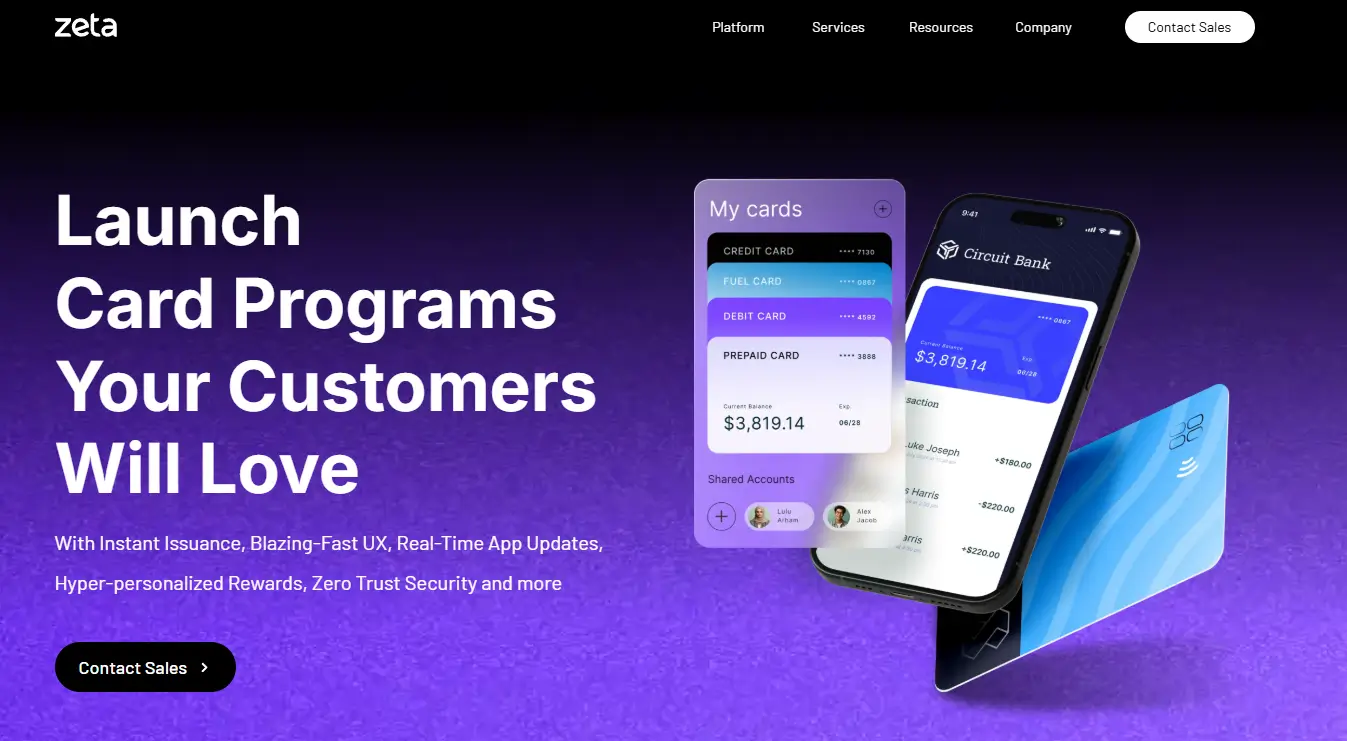
Zeta provides modern banking technology and card processing infrastructure, working with banks and fintech companies across India, the Middle East, and other global markets.
Main features:
- Card issuing and processing platform
- Core banking technology modules
- API-first, cloud-native architecture
- Works directly with banks and fintechs rather than holding a licence itself
Best for: banks and fintechs in India, the Middle East and similar markets that want modern card-processing and core-banking technology while keeping their own banking licence and regulatory relationship.
What to consider: Zeta is a technology vendor, not a licensed institution – you still need your own banking licence or a regulated partner relationship, since Zeta doesn’t hold one itself.
Banking as a service examples and partnerships
The banking as a service model encompasses various industries, from technology companies to e-commerce, that provide banking services through a partnership with financial institutions. Below are some examples of partnerships and collaborations that involve banking as a service companies.
FinTech startups and traditional banks
In this case, a fintech startup partners with a traditional bank to offer a digital wallet service. For example, Cash App has long partnered with Sutton Bank and Marqeta to provide its customers with a personalised debit card that enables both in-store transactions and hassle-free ATM cash withdrawals.
In addition, Lincoln Savings Bank enriches the Cash App experience by providing account and routing numbers, facilitating the processing of incoming and outgoing ACH payments.
Transportation companies and brick-and-mortar banks
Uber and the State Bank of India have partnered to provide vehicle financing to drivers, with SBI offering fleet partners a tailored, low-cost vehicle loan. Driver partners interested in working on the Uber platform can apply for a vehicle loan, approved through an integrated digital offering.
E-commerce platforms and payment services
Shopify Balance, Shopify’s built-in money-management feature, is a clear current example of this model. Shopify names Stripe Payments Company as its money-transmission and account-services partner, with customer funds held at Fifth Third Bank, N.A. Shopify Balance’s Visa cards are powered by Stripe and issued by Celtic Bank under a licence from Visa U.S.A. Inc.
Three participants, three different responsibilities: the customer-facing platform, the technology infrastructure, and the regulated financial institution actually holding the funds – the buyer lesson is to identify each one separately rather than treat “powered by Stripe” as a single answer.
Collaboration between banking SaaS companies and traditional financial institutions is changing the landscape of modern banking services, as banking as a service companies bring a new level of agility and flexibility to the financial industry.
How do banking as a service companies work?
Banking as a Service providers (BaaS) enable non-banks, including fintech startups and technology companies, to offer banking services and financial services to their customers without having to build an entire banking system from scratch.
This is achieved by connecting to the established infrastructure of traditional banks via APIs, giving fintech companies a consistent user experience without building that infrastructure themselves.
Here is a typical breakdown of the process:
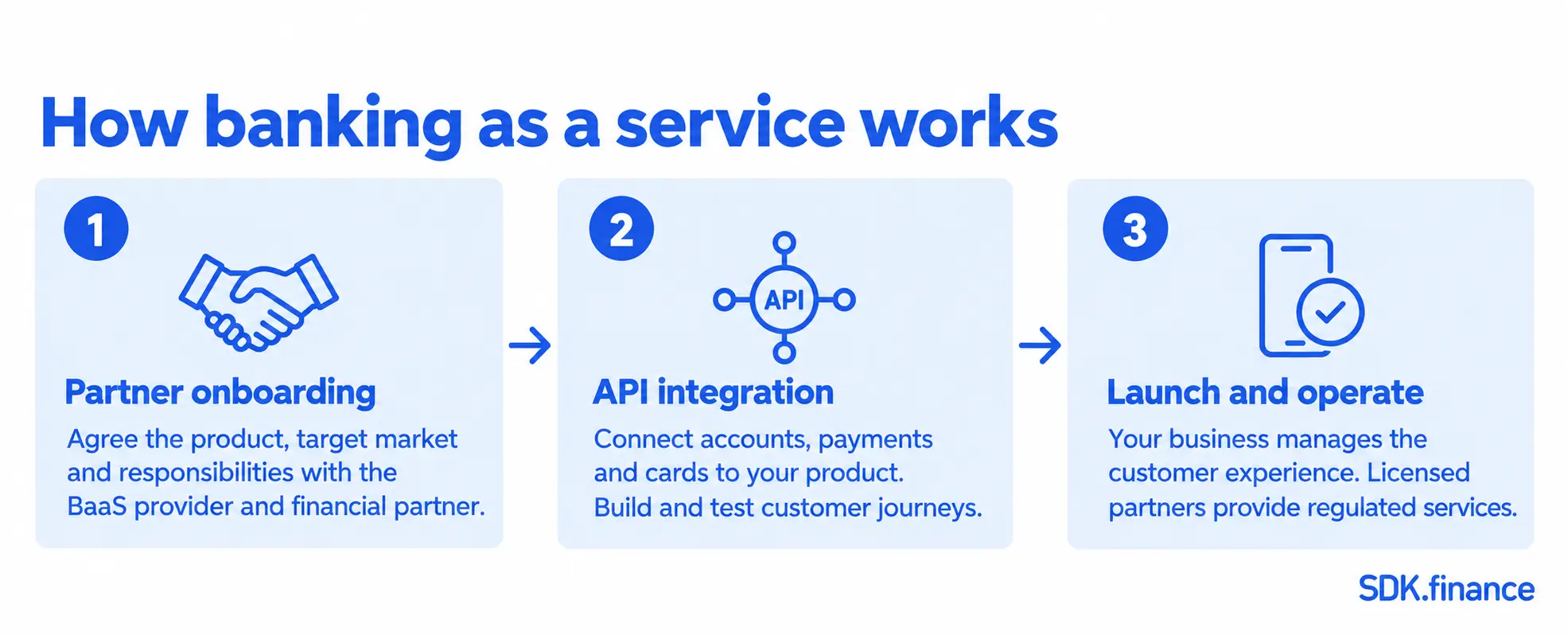
- Engagement. Fintech companies subscribe to the BaaS platform.
- Solution development. Using APIs, these fintech companies develop innovative financial services solutions tailored to their target audience.
- Collaboration. Established financial institutions serve as banking as a service providers and grant fintech companies access to their APIs to integrate their solutions.
Essentially, banking as a service companies facilitate a mutually beneficial relationship between traditional banks and non-bank institutions by giving the latter the tools to offer financial products directly, while drawing on the former’s existing expertise and infrastructure.
BaaS provider availability in the US, UK and Europe
Provider availability is not the same as company headquarters – where a BaaS provider is based says little about where it can actually support your product. Four things are worth checking before you shortlist a provider for a specific market.
- Programme geography. A provider’s core licence may cover one country, with other markets offered only through partner passporting or a separate local entity. Confirm which entity holds the licence for your target market, not just the brand name.
- Customer eligibility. Onboarding rules differ by business type: some providers support consumer products only, others focus on SME or platform accounts, and eligibility can vary by country even within one provider’s stated coverage.
- Currency and settlement. Multi-currency support does not always mean local settlement rails in every currency – check whether payments actually clear locally or route through a correspondent arrangement, since that affects both cost and speed.
- Regulated stage. Some providers publish “coming soon” or preview-stage access for new markets well before general availability – Stripe Treasury, for example, distinguishes public and private preview and asks new applicants to contact sales. Do not assume a provider’s stated global footprint means every product is available everywhere today.
In the US, UK and Europe specifically, the practical differences are regulatory. UK and EU coverage usually needs two separate regulated entities since Brexit, each licensed and supervised locally. US coverage depends on which state-chartered or federally regulated sponsor bank a provider works with, which can itself limit the product types and customer segments available.
- United States. Marqeta (card issuing via sponsor banks), SoFi Tech Solutions (accounts, cards and real-time payments via SoFi’s bank charter), Unit (accounts, cards and payments via sponsor banks), Stripe Treasury (embedded accounts, public preview), and SDK.finance (software platform, available globally – pair with a licensed US partner).
- United Kingdom. ClearBank (UK clearing bank with direct scheme access), Stripe Treasury (embedded accounts, public preview), and SDK.finance (software platform, available globally – pair with a licensed UK partner).
- Europe. Solarisbank (German licence with EU passporting), Treezor (French EMI, EU passporting), ClearBank’s EU entity (MiCA crypto-asset service provider status), Airwallex (multiple EU licences), and SDK.finance (software platform, available globally – pair with a licensed EU partner).
How to choose a BaaS provider
Choosing a BaaS provider comes down to five decisions, each with a question worth asking directly and evidence worth requesting before you sign.
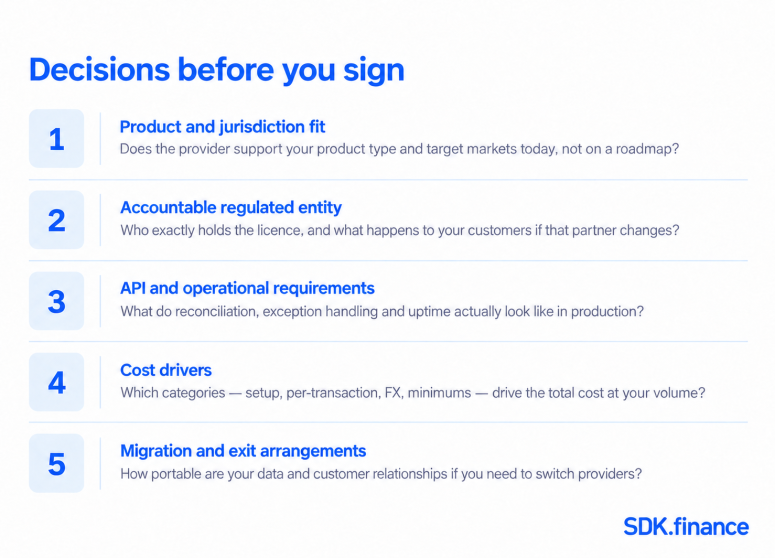
- Product and jurisdiction fit. Confirm the provider supports your product type and target markets today, not on a roadmap, and ask for evidence of a comparable live deployment.
- Accountable regulated entity. Identify exactly which entity holds the licence behind the product, and what happens to customer funds and accounts if that partner relationship ends.
- API and operational requirements. Ask a question like “How will we reconcile provider balances to our ledger?” and request report formats, identifiers, exception workflows and sample files – not just API documentation.
- Cost drivers. Rather than asking for a single price, request the categories that drive cost at your volume: setup, per-transaction fees, FX margin, minimum commitments and any implementation charges.
- Migration and exit arrangements. Ask how customer data and account relationships transfer if you need to switch providers later, and what notice period and support the provider offers during a transition.
Request the same operational evidence from every provider on your shortlist: throughput under realistic load, the uptime definition written into the contract rather than the marketing number, rate limits per endpoint, how reconciliation exceptions are reported, and the incident-handling process when something breaks in production. Providers rarely volunteer this detail on their own – it has to be requested.
Benefits of BaaS
Banking as a Service (BaaS) offers several compelling benefits to businesses, making it an attractive option for companies looking to enhance their financial offerings:
- Increased customer loyalty. By offering financial services directly within their products, businesses can increase customer loyalty and retention. Customers appreciate the convenience of accessing financial services without leaving the platform they are already using.
- Improved customer experience. BaaS enables businesses to provide an integrated, user-friendly experience for their customers, improving overall satisfaction. Integrated financial services reduce friction and enhance the user journey.
- New revenue streams. BaaS enables businesses to generate new revenue streams by offering financial services to their customers. This diversification can lead to increased profitability and business growth.
- Reduced costs. BaaS can reduce costs for businesses by changing how the banking relationship is organised rather than removing it – the regulated dependency remains, but companies avoid building and running that infrastructure themselves, which can save on development and operational expenses.
- Increased financial inclusion. BaaS can increase financial inclusion by providing access to financial services for underserved populations. By integrating financial services into widely used platforms, BaaS helps bridge the gap for those who may not have access to traditional banking.
These benefits demonstrate how BaaS can transform the way businesses interact with their customers, offering enhanced financial services and driving customer loyalty.
Trends for banking as a service in 2026
Banking as a service continues to scale quickly. Banking SaaS companies have seen a significant upsurge, including fintech startups and tech giants that are increasingly recognising the potential to change how financial services are delivered.
Open banking
Open banking is driving the evolution of BaaS by encouraging data sharing, driving innovation, and enabling collaboration. BaaS providers using open banking are well-positioned to deliver more customer-centric and advanced financial services while navigating the changing regulatory landscape.
Digital-only banking
Today, there are a number of banks without physical branches that offer competitive financial products and enhanced user experiences. By integrating digital-only banking practices, BaaS providers can offer technologically advanced, user-friendly, and accessible financial services.
RegTech
RegTech, or regulatory technology, is an important trend in BaaS. As financial regulations become more complex and stringent, RegTech solutions are gaining importance in helping BaaS providers and their customers effectively address compliance challenges.
Platform banking
A growing number of banks are adopting a platform-based strategy and expanding their service offerings beyond traditional banking to include offerings such as insurance, investments, and utility bill payments.
Future of financial services
Embedded finance is expected to keep expanding as AI-driven personalisation and fraud detection, broader financial inclusion, and tighter regulatory oversight all shape how BaaS providers and their software partners build products. None of these trends changes the two decisions that matter most when evaluating a provider: who holds the regulated licence, and what your team is responsible for building and operating on top of it.
Conclusion
Choosing the right partner comes down to what you need to control. If you want a single regulated entity handling licensing, compliance and funds directly, a fully licensed BaaS bank or EMI – such as Solarisbank, ClearBank, Treezor or Airwallex – is the more direct route. If your priority is a fast, API-first launch with sponsor-bank relationships already in place, a platform such as Marqeta, SoFi Tech Solutions, Stripe Treasury or Unit removes most of the banking-partner search from your roadmap. If you want direct control over your own transaction and ledger logic – and are prepared to arrange your own regulated banking or EMI partner separately – SDK.finance’s software foundation, delivered as SaaS or a Source Code Licence, gives your team that flexibility.
Whichever path you choose, confirm the accountable regulated entity, the operational evidence behind the provider’s claims, and the migration terms before you sign.
Talk to our team and get a development approach tailored to your business model.
Get a FinTech development estimate