


Oracle FLEXCUBE vs. Finacle: Core Banking Platforms Comparison
Choosing a core banking platform means deciding how your organisation will manage accounts, balances, transactions, and banking products. Oracle FLEXCUBE, Finacle, and SDK.finance offer different functional scopes, integration approaches, and levels of control over development. The right choice depends on your banking model and modernisation requirements.
Start with the comparison below, then explore each provider’s capabilities and the delivery options relevant to your project.
Oracle FLEXCUBE vs Finacle vs SDK.finance
The table distinguishes core capabilities from complementary products. The final scope depends on the selected modules, integrations, and commercial agreement.
| Criterion | Oracle FLEXCUBE | Finacle | SDK.finance |
|---|---|---|---|
| Primary focus | Core banking and banking product servicing | Core banking and complementary banking solutions | Core banking software for account management and transaction processing |
| Functional coverage | Accounts, deposits, consumer loans, and overdrafts | Deposits and lending; complementary payments and corporate banking solutions | Accounts, wallets, balances, and payment workflows |
| Customisation | Parameterised products, pricing, and workflows | Product factories and modular components | Configurable fees and limits; code modification under Source Code Licence |
| Integration | REST APIs and an integration hub | Open APIs and event-driven processing | APIs, webhooks, and provider integrations |
| Digital channels | Complementary Oracle Banking Digital Experience product | Online, mobile, and digital engagement solutions | Web and mobile interfaces, depending on the selected Solution |
| Delivery and deployment | Deployment options include Oracle Cloud Infrastructure | Private, public, hybrid cloud, and SaaS | SaaS or customer deployment under Source Code Licence |
Oracle FLEXCUBE: core banking capabilities
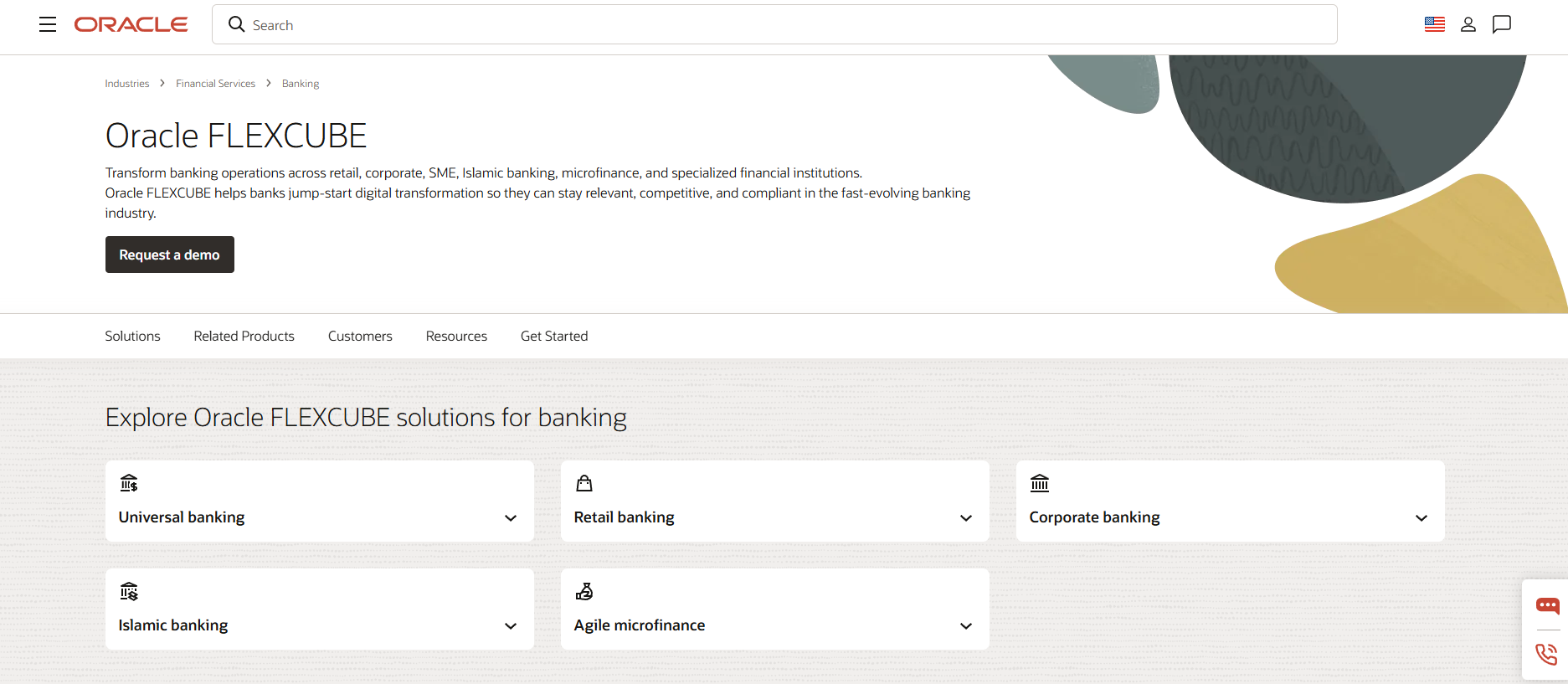
Oracle FLEXCUBE Universal Banking supports banks in managing products and their day-to-day operations. It is part of Oracle’s wider banking offering, which includes complementary software for digital experiences, payments, and origination.
Its main capabilities include:
- Accounts and deposits: current and savings accounts, fixed deposits, and recurring deposits.
- Lending: secured and unsecured consumer loans, alongside overdrafts.
- Product configuration: rules, workflows, interest calculations, and pricing parameters for different offerings.
- Integration: REST APIs and an integration hub for connecting Oracle and third-party systems.
The broader FLEXCUBE offering also addresses Islamic banking and microfinance. Digital channels and other complementary Oracle products should be distinguished from the core banking configuration being purchased.
FLEXCUBE is relevant when a project requires deposit and lending operations across an established banking business. Evaluate the selected modules against your product rules, existing systems, and migration needs.
Finacle: core banking and complementary solutions
Finacle is a banking software business within EdgeVerve Systems, a wholly owned subsidiary of Infosys. Its Core Banking Solution supports real-time processing and configurable products across retail, corporate, commercial, and Islamic banking.
The wider Finacle portfolio includes:
- Deposits: a dedicated Deposits Suite for deposit and account operations.
- Lending: solutions for consumer and business lending requirements.
- Payments: a Payments Suite for banks’ payment-processing needs.
- Digital channels: online banking, mobile banking, and digital engagement solutions.
- Corporate banking: cash management, trade finance, and treasury solutions.
Finacle’s core architecture uses modular components, open APIs, and event-driven processing. Deployment options include private, public, and hybrid cloud environments, as well as SaaS.
Consider Finacle for core modernisation or projects spanning several banking functions. The relevant comparison is the proposed combination of components, rather than the entire portfolio: establish which capabilities and interfaces are included in the implementation.
SDK.finance: core banking software for digital banking products
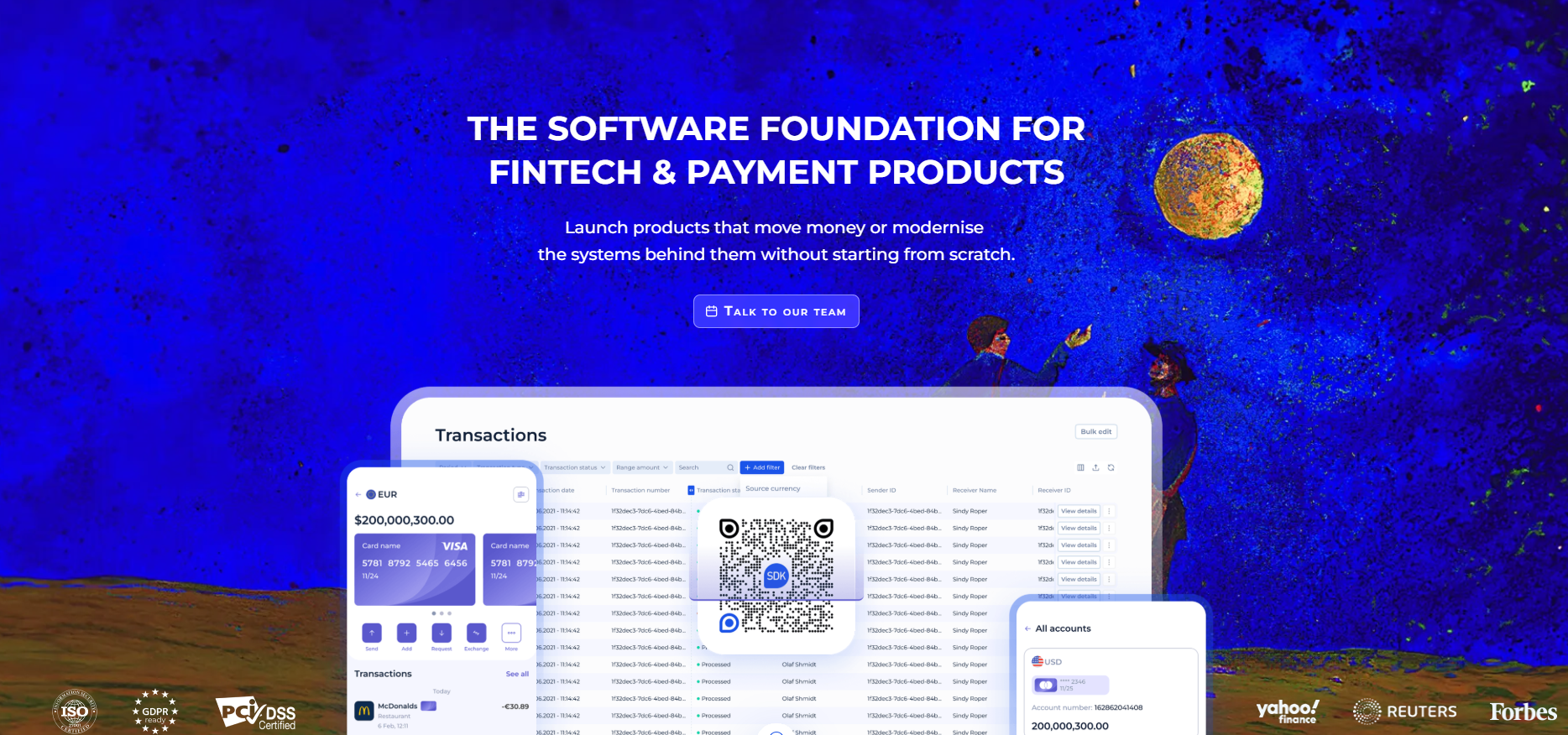
SDK.finance is a FinTech software provider offering core banking software for digital banking products. Its Transaction Platform manages internal customer accounts, multi-currency balances, transfers, fees, and limits, with backoffice tools for monitoring and investigating transactions. Banks and financial institutions can use these capabilities to build account-based services and connect them to digital channels and external financial providers.
In a core banking architecture, SDK.finance manages internal accounts and transaction workflows, while APIs connect digital channels and external financial providers. Its suitability for a full core replacement depends on the required product coverage, particularly complex deposit and lending operations.
Core banking capabilities
- Accounts and balances: create and manage internal customer accounts and wallets, with balances tracked separately for each currency.
- Transaction workflows: transfers, top-ups, withdrawals, and currency exchange, with external money movement supported through provider integrations.
- Commercial rules: configure fees and limits for supported operations and customer contracts.
- Operational tools: inspect transactions, handle withdrawal requests, and manage investigations through the backoffice.
- Integration capabilities: connect applications and services through APIs and webhooks, with 650+ APIs across the Platform.
For custom accounting requirements, SDK.finance General Ledger is available as a separate accounting layer alongside the Transaction Platform or an existing core.
Why consider SDK.finance for your banking core?
SDK.finance lets teams build on existing account and transaction logic rather than develop a banking backend from scratch. Configurable fees and limits support product rules, while backoffice tools help operations teams trace transactions and investigate exceptions. For banks developing differentiated digital services, source-code access adds the ability to adapt business logic and control deployment within the licence terms.
Source Code Licence or SaaS: what is the difference?
- A Source Code Licence gives your team access to the code to customise business logic, build integrations, and deploy on your own infrastructure or preferred cloud, within the licence terms. It suits projects needing substantial changes and a technical team to manage development, testing, and maintenance.
- SaaS provides subscription-based access to the standard platform, with updates and support under the service agreement. It suits teams that can work within the available configuration and supported integrations. SDK.finance manages application hosting and updates, while the customer manages the databases. SaaS does not include source-code access for independent modification.
SDK.finance supplies software; regulated financial services require the relevant licences or partners.
Explore SDK.finance core banking software to assess its fit with your banking architecture.
Which option fits your project?
Compare FLEXCUBE, Finacle, and SDK.finance against the banking products and operations your core must support. FLEXCUBE and Finacle address broad banking requirements; SDK.finance merits consideration for digital banking projects that need configurable account management, transaction processing, and backoffice operations.
Compare implementation and operating costs for the same scope, including integrations, migration, and support. Ask suppliers to demonstrate your key customer journeys and operational workflows.
Share your requirements with the SDK.finance team to assess product fit and the most suitable delivery model.
You may also like
- Best Core Banking Software Providers in 2026: Platforms, Vendors Compared
- Core Banking Software: Top Features Banks Need in 2026
- Ledger vs Core Banking System: What’s the Difference?
FAQ
How should banks compare Oracle FLEXCUBE and Finacle?
Compare the modules proposed for your banking products, rather than the vendors’ entire portfolios. Test deposit and lending rules, integrations, migration requirements, deployment options, and operational workflows, then compare implementation and ongoing costs for the same scope.
When is SDK.finance relevant to a core banking project?
SDK.finance is relevant when the project needs internal account management, multi-currency balances, transaction workflows, configurable fees and limits, and backoffice operations. For a full core replacement, verify coverage of every required banking product, especially complex deposit and lending operations.
Do core banking platforms include digital banking channels?
Digital channels may be separate products or components within a wider portfolio. Confirm whether web and mobile interfaces, their APIs, and the required integrations are included in the proposed implementation, rather than assuming they are part of the core licence.
How do SDK.finance SaaS and Source Code Licence differ?
SaaS provides subscription-based access: SDK.finance manages application hosting and updates, while the customer manages the databases. A Source Code Licence allows code customisation and customer-controlled deployment within the licence terms, with the customer’s technical team responsible for development and maintenance.
Can SDK.finance General Ledger work alongside an existing core?
Yes. SDK.finance General Ledger is a separate accounting layer that can operate alongside the Transaction Platform or an existing core. It supports custom accounting requirements without making a full core replacement a prerequisite; the integration and accounting scope must be defined for the project.